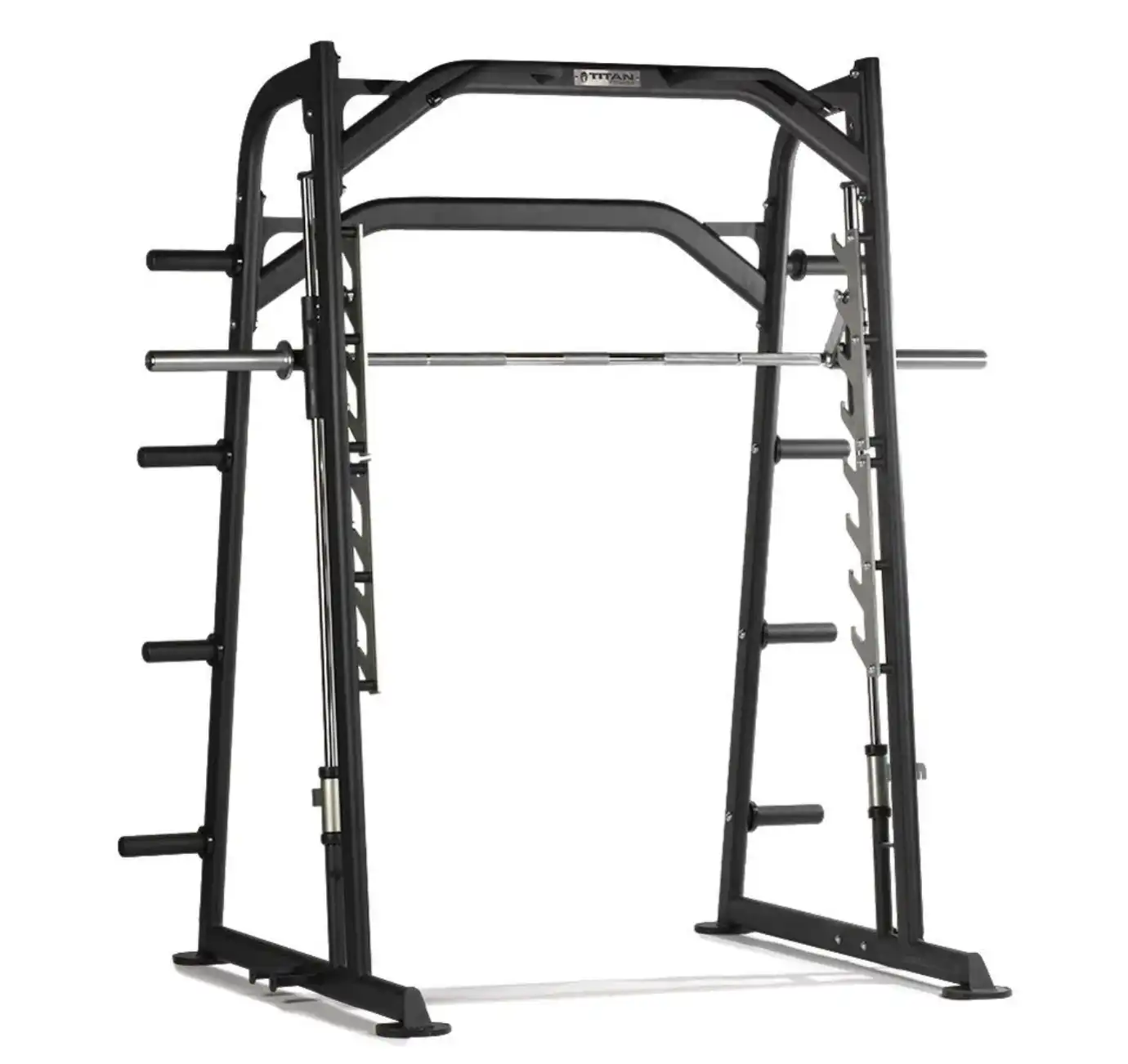
In the vast landscape of fitness equipment, few machines spark as much debate and curiosity as the Smith machine. Often found as a cornerstone in commercial gyms, this robust piece of equipment is increasingly making its way into home gym setups, promising a unique blend of safety, versatility, and muscle-building potential. For beginners seeking a stable foundation to master movement patterns, or intermediate lifters aiming to push their limits without a spotter, the Smith machine stands as an invaluable ally.
Beyond its reputation as a "fixed-path" alternative to free weights, the Smith machine offers a controlled environment to isolate muscles, perfect form, and safely engage in progressive overload. It’s not just a machine; it’s a strategic tool that, when understood and utilized correctly, can accelerate your journey towards a stronger, more sculpted physique.
This comprehensive guide will delve deep into the world of the Smith machine, revealing its true capabilities. We’ll explore why it deserves a prime spot in your training regimen, break down essential exercises for every major muscle group, provide actionable workout plans, and offer expert tips to maximize your results. Prepare to unlock the full potential of this powerful apparatus and transform your home gym into a hub of strength and progress.
The Unsung Hero of Home Gyms: Why the Smith Machine Deserves Your Attention
While free weights offer unparalleled benefits for functional strength and stabilizer muscle development, the Smith machine carves out its own niche by providing advantages that are particularly appealing to those building confidence, recovering from injury, or simply seeking a safer, more focused training experience at home.
Safety and Stability: Your Built-in Spotter
One of the most compelling reasons to integrate a Smith machine into your routine is its inherent safety features. The barbell is fixed within vertical (or slightly angled) rails, allowing for a controlled, predictable movement path. Crucially, it incorporates adjustable safety stops and hooks along its track. This design provides:
- Reduced Fear of Failure: Unlike free weights, where a missed rep can lead to dangerous situations, the Smith machine allows you to quickly re-rack the bar at any point by twisting your wrists. The safety stops act as a fail-safe, preventing the bar from crushing you if you can’t complete a lift. This psychological comfort encourages you to push closer to muscle failure, a key component of muscle growth, with greater confidence.
- Solo Training Empowerment: For individuals working out alone at home, the Smith machine effectively eliminates the need for a human spotter for many heavy compound movements like squats and bench presses. This independence is invaluable for consistent training schedules.
- Consistent Form Guidance: The fixed path helps guide your movement, making it easier to maintain proper form, especially when learning new exercises or lifting heavier loads. This can be a huge benefit for beginners to ingrain good movement patterns before transitioning to the less forgiving nature of free weights.
Unmatched Versatility for Every Muscle Group
Far from being a one-trick pony, the Smith machine is a powerhouse of versatility. With just this single piece of equipment, often paired with an adjustable bench, you can effectively target every major muscle group in your body. Its design accommodates a wide array of exercises that might otherwise require multiple pieces of equipment or a complex free weight setup.
Imagine being able to perform:
- Leg exercises: Squats, lunges, Romanian deadlifts, calf raises.
- Chest exercises: Bench press (flat, incline, decline).
- Shoulder exercises: Overhead press, shrugs.
- Back exercises: Bent-over rows, inverted rows.
- Accessory movements: Hip thrusts, triceps extensions, bicep curls (with careful positioning).
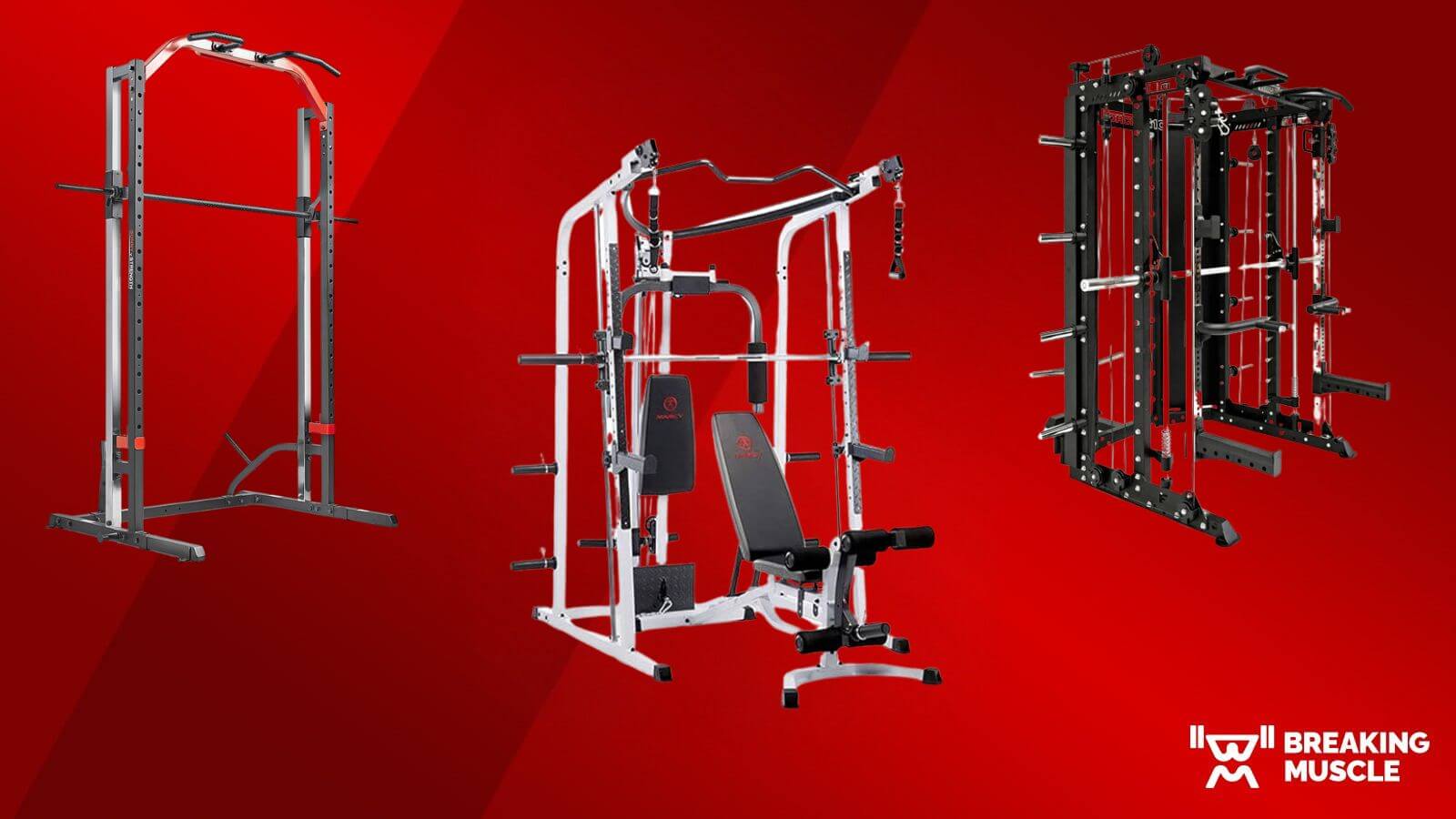
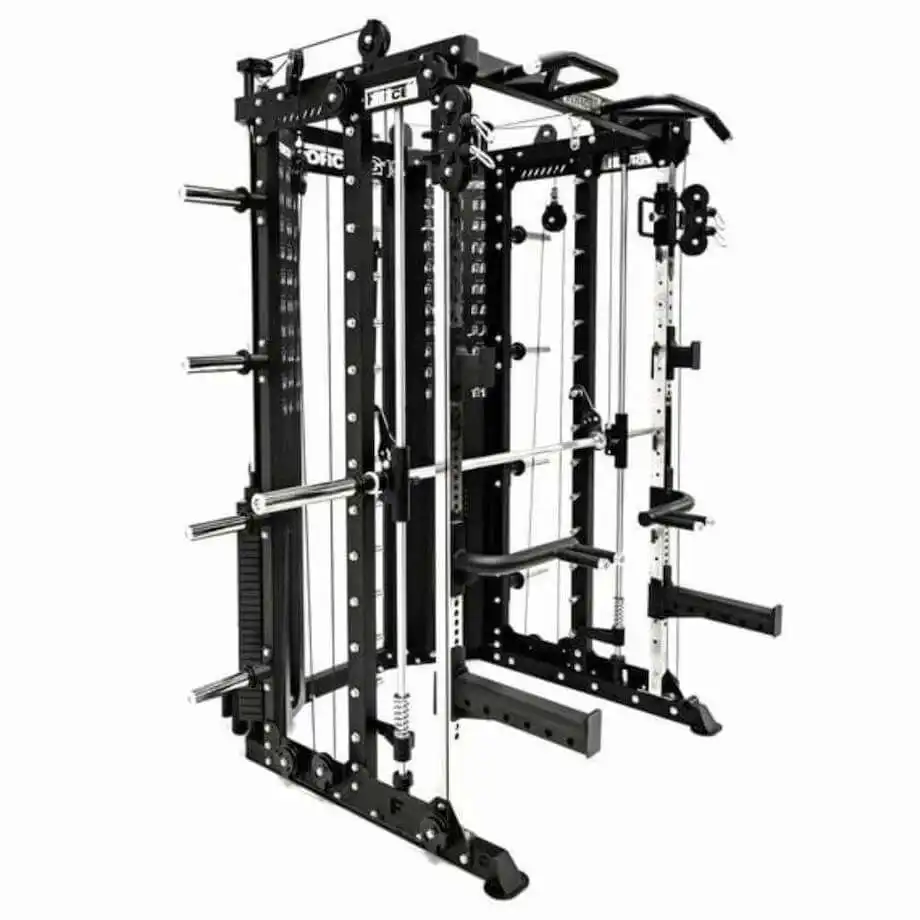
Many modern Smith machines, particularly "all-in-one" trainers, further expand this versatility by integrating cable pulley systems, pull-up bars, dip stations, and even landmine attachments, effectively creating a complete home gym solution within a compact footprint.
Perfecting Form and Muscle Activation
While the fixed path can be seen as a limitation by some, it’s a significant advantage for others, particularly those focused on isolating specific muscles and perfecting their mind-muscle connection. Because the machine handles the stabilization aspect, you can:
- Focus on the Target Muscle: With less energy spent on balancing the bar, you can direct your mental and physical effort entirely into contracting the muscle you intend to work. This can lead to a deeper pump and more effective muscle stimulus.
- Pre-Exhaustion Techniques: The Smith machine is excellent for pre-exhaustion sets, where you isolate a muscle (e.g., chest flyes with dumbbells) before moving to a compound movement (Smith machine bench press) to ensure the target muscle is fully fatigued.
- Controlled Eccentric Phase: The fixed path allows for a very controlled eccentric (lowering) phase of a lift, which is critical for muscle growth and minimizing injury risk.
Rehabilitation and Progressive Overload
For individuals returning to training after an injury or those with specific mobility concerns, the Smith machine offers a controlled and safe environment to reintroduce resistance. Its guided motion minimizes erratic movements and allows for precise adjustments in weight, making it an ideal tool for:
- Gradual Strength Building: You can start with very light loads and meticulously increase resistance as strength and confidence return, ensuring a safe and effective rehabilitation process.
- Joint-Friendly Movements: The ability to adjust foot and hand placement, combined with the stable path, can often allow for comfortable execution of exercises that might be painful or challenging with free weights due to stabilization demands.
Furthermore, the Smith machine simplifies the application of progressive overload, the fundamental principle for increasing muscle size and strength. With clearly marked weight increments and the ability to add small plates, you can easily:
- Increase Weight: Add small plates to the bar to incrementally increase the resistance.
- Increase Reps/Sets: Perform more repetitions or additional sets with the same weight.
- Decrease Rest Time: Challenge your cardiovascular system and muscular endurance by shortening rest periods between sets.
By consistently applying these principles, you ensure your muscles are constantly challenged, leading to continuous adaptation and growth.
Mastering the Movements: Essential Smith Machine Exercises
The true power of the Smith machine lies in its versatility. By understanding how to position yourself and execute movements correctly, you can effectively train every major muscle group. Remember, the key is to focus on the mind-muscle connection and controlled execution, taking advantage of the machine’s stability.
Lower Body Powerhouse
Your legs are the foundation of your strength, and the Smith machine offers numerous ways to build powerful glutes, quads, and hamstrings.
1. Smith Machine Squat Variations
The Smith machine squat allows for unique foot placements that can emphasize different muscle groups, all while maintaining excellent stability.
- Standard Squat: Position your feet directly under the bar, shoulder-width apart, toes slightly out. Descend by pushing your hips back and bending your knees, keeping your chest up. Focus on driving through your heels.
- Sumo Squat: Take a wider stance with toes pointed further out. This targets the inner thighs (adductors) and glutes more intensely.
- Close-Stance Squat: Place your feet closer together, directly under your hips. This emphasizes the outer quads (vastus lateralis).
- Front Squat (with straps or crossed arms): Position the bar across your front deltoids. This strongly targets the quads and challenges core stability. Use straps to secure the bar if comfort is an issue.
2. Smith Machine Lunges / Split Squats
These exercises are fantastic for building unilateral leg strength and balance (though the machine’s stability reduces the balance challenge).
- Smith Machine Reverse Lunge: Start with the bar on your upper back. Step one foot back, lowering your rear knee towards the floor while keeping your front shin vertical. Push off your front heel to return. The fixed path makes this very stable.
- Smith Machine Bulgarian Split Squat: Place your back foot on a raised surface (bench or box) behind you. This intensifies the stretch and activation in the front leg’s glute and quad. The Smith machine’s stability allows you to focus purely on the muscular contraction.
3. Smith Machine Romanian Deadlifts (RDLs)
A phenomenal exercise for hamstring and glute development. The fixed bar path helps ensure you maintain a straight bar path, which is crucial for safety and effectiveness.
- Stand with the bar over your mid-foot, feet hip-width apart. Hinge at your hips, keeping a slight bend in your knees and your back straight. Lower the bar until you feel a deep stretch in your hamstrings. Focus on pushing your hips back, not just bending over.
- Tip: If the bar feels restrictive, you might need to adjust your foot position slightly forward or backward to find a natural hinge.
4. Smith Machine Calf Raises
Perfect for isolating the calves and achieving a deep stretch and contraction.
- Position the bar on your upper back. Place the balls of your feet on a raised platform (e.g., a weight plate) with your heels hanging off. Lower your heels to get a full stretch, then powerfully raise onto your tiptoes, squeezing your calves at the top.
Upper Body Sculptor
From a powerful chest to broad shoulders and a strong back, the Smith machine facilitates effective upper body training.
1. Smith Machine Bench Press (Flat, Incline, Decline)
The safety features of the Smith machine make it an excellent choice for pressing movements, especially when training heavy or alone.
- Flat Bench Press: Lie on a flat bench positioned under the bar. Grip the bar slightly wider than shoulder-width. Lower the bar to your mid-chest, keeping your elbows tucked slightly. Press up forcefully.
- Incline Bench Press: Use an adjustable bench set to an incline. This emphasizes the upper chest.
- Decline Bench Press: Use an adjustable bench set to a decline. This targets the lower chest.
- Tip: Experiment with your bench position relative to the bar’s path. For some, having the bench slightly forward or backward allows for a more natural pressing groove.
2. Smith Machine Overhead Press
Build strong, defined shoulders with confidence.
- Seated or Standing: Position a bench (if seated) or stand directly under the bar, with the bar at shoulder height. Grip the bar slightly wider than shoulder-width. Press the bar straight overhead, locking out your elbows. Control the descent.
- Tip: Be mindful of your lower back. Keep your core tight to prevent arching, especially when standing.
3. Smith Machine Bent-Over Rows
An effective exercise for building back thickness and strength.
- Stand facing the bar, feet shoulder-width apart. Hinge at your hips, keeping your back straight and a slight bend in your knees. Grip the bar with an overhand grip, slightly wider than shoulder-width. Pull the bar towards your lower chest/upper abdomen, squeezing your shoulder blades together. Control the negative.
- Tip: Because the bar path is fixed, you might need to adjust your foot position to allow for a full range of motion without the bar hitting your legs prematurely.
4. Smith Machine Shrugs
Target your traps for a more powerful upper back and neck.
- Stand under the bar with your feet hip-width apart. Grip the bar slightly wider than shoulder-width, palms facing you. Keep your arms straight and shrug your shoulders up towards your ears, squeezing your traps. Control the descent.
Core and Isolation Work
The Smith machine can also be adapted for specific isolation exercises and even core work.
1. Smith Machine Hip Thrusts
One of the best exercises for glute development, made safer and easier to load with the Smith machine.
- Sit on the floor with your upper back against a bench, knees bent, feet flat. Roll the bar over your hips (use a pad for comfort). Drive through your heels, lifting your hips towards the ceiling until your body forms a straight line from shoulders to knees. Squeeze your glutes hard at the top.
2. Smith Machine Inverted Rows (Bodyweight)
If your Smith machine bar can be lowered sufficiently, this is an excellent bodyweight exercise for back strength.
- Set the bar at waist height or lower. Lie on your back underneath it, gripping the bar with an overhand grip. Pull your chest towards the bar, keeping your body straight. Adjust foot position to modify difficulty.
Building Your Smith Machine Workout: Sample Programs & Progression
Effective training isn’t just about knowing exercises; it’s about structuring them into a progressive program. The Smith machine can be the cornerstone of your strength regimen, especially for beginners and intermediates focused on consistent progress.
Beginner Full-Body Routine (3 Days/Week)
This routine focuses on compound movements to build foundational strength and muscle across your entire body. Perform on non-consecutive days (e.g., Monday, Wednesday, Friday).
Warm-up (5-10 minutes): Light cardio (jumping jacks, marching in place), dynamic stretches (arm circles, leg swings, bodyweight squats).
Workout:
- Smith Machine Squats: 3 sets of 8-12 repetitions
- Smith Machine Bench Press (Flat): 3 sets of 8-12 repetitions
- Smith Machine Bent-Over Rows: 3 sets of 8-12 repetitions
- Smith Machine Overhead Press: 3 sets of 8-12 repetitions
- Smith Machine Romanian Deadlifts: 2-3 sets of 10-15 repetitions (focus on form and stretch)
- Smith Machine Calf Raises: 2-3 sets of 15-20 repetitions
Cool-down (5-10 minutes): Static stretches, holding each for 20-30 seconds (quad stretch, hamstring stretch, chest stretch, triceps stretch).
Intermediate Split Routine (4 Days/Week)
This split allows for more volume per muscle group and can be adapted to Push/Pull/Legs or Upper/Lower splits. Here’s an example of an Upper/Lower split:
Day 1: Upper Body
- Warm-up (5-10 minutes)
- Smith Machine Incline Bench Press: 3-4 sets of 6-10 repetitions
- Smith Machine Bent-Over Rows: 3-4 sets of 8-12 repetitions
- Smith Machine Overhead Press (Standing): 3 sets of 8-12 repetitions
- Smith Machine Flat Bench Press (Close Grip for triceps): 3 sets of 10-15 repetitions
- Smith Machine Shrugs: 3 sets of 12-15 repetitions
- Optional: Bicep curls (with dumbbells if available, or cable attachment if an all-in-one).
- Cool-down (5-10 minutes)
Day 2: Lower Body & Core
- Warm-up (5-10 minutes)
- Smith Machine Back Squats: 4 sets of 6-10 repetitions
- Smith Machine Romanian Deadlifts: 3 sets of 10-15 repetitions
- Smith Machine Bulgarian Split Squats: 3 sets of 8-12 repetitions per leg
- Smith Machine Hip Thrusts: 3 sets of 12-15 repetitions
- Smith Machine Calf Raises (Standing): 3 sets of 15-20 repetitions
- Optional: Core work (planks, crunches).
- Cool-down (5-10 minutes)
Day 3: Rest or Active Recovery
Day 4: Upper Body (Different Focus)
- Warm-up (5-10 minutes)
- Smith Machine Flat Bench Press: 3-4 sets of 6-10 repetitions
- Smith Machine Seated Row (if cable attachment): 3-4 sets of 8-12 repetitions, or Inverted Rows.
- Smith Machine Decline Bench Press: 3 sets of 8-12 repetitions
- Smith Machine Upright Rows: 3 sets of 10-15 repetitions (use caution with shoulder mobility)
- Smith Machine Close Grip Press: 3 sets of 10-15 repetitions
- Optional: Face pulls (if cable attachment) or dumbbell lateral raises.
- Cool-down (5-10 minutes)
Day 5: Lower Body & Core (Different Focus)
- Warm-up (5-10 minutes)
- Smith Machine Front Squats: 4 sets of 8-12 repetitions
- Smith Machine Single-Leg RDLs (holding onto machine for balance): 3 sets of 10-15 repetitions per leg
- Smith Machine Walking Lunges: 3 sets of 10-12 repetitions per leg
- Smith Machine Glute Bridges (lying on floor): 3 sets of 15-20 repetitions
- Smith Machine Seated Calf Raises (if possible with bench/plate): 3 sets of 15-20 repetitions
- Optional: Core rotation exercises.
- Cool-down (5-10 minutes)
Days 6 & 7: Rest or Active Recovery
The Principle of Progressive Overload
Regardless of your chosen routine, the bedrock of muscle growth and strength gain is progressive overload. This means continuously challenging your muscles in some way. On a Smith machine, this can be achieved by:
- Increasing Weight: The most straightforward method. Once you can comfortably complete the target reps for all sets, increase the weight by the smallest increment possible (e.g., 2.5 lbs on each side).
- Increasing Repetitions: If you can’t increase weight, aim for an extra rep or two within your target range for each set.
- Increasing Sets: Add an extra set to an exercise.
- Decreasing Rest Time: Reduce the rest between sets to increase intensity.
- Improving Form: While not directly overload, perfecting your form allows you to lift more effectively and safely, creating a stronger stimulus.
- Adding Intensity Techniques: For intermediates, consider techniques like drop sets (immediately reducing weight after reaching failure) or supersets (performing two exercises back-to-back with no rest).
Tracking Your Progress: Keep a workout log! Note down the exercises, sets, reps, and weight used for each session. This objective data is crucial for seeing your progress and knowing when to apply overload.

Integrating Free Weights (If Applicable)
While the Smith machine is highly effective, it’s beneficial to incorporate some free weight exercises if you have access to dumbbells or a barbell outside the machine. Free weights challenge stabilizer muscles and mimic more real-world movements. Consider using the Smith machine for your heaviest compound lifts where safety is paramount, and then using free weights for accessory work or movements where a fixed path might feel unnatural. The two can complement each other beautifully.
Maximizing Your Smith Machine Experience: Tips for Success
To truly unlock the potential of your Smith machine, go beyond just performing the movements. These tips will help you get the most out of every session.
Focus on Mind-Muscle Connection
Since the Smith machine removes much of the stabilization demand, it provides an excellent opportunity to truly feel the target muscle working. Instead of just moving the weight, consciously squeeze and contract the muscle throughout the range of motion. For example, during a Smith machine bench press, focus on squeezing your pecs at the top of the movement. This heightened awareness can lead to more effective muscle activation and growth.
Vary Your Foot/Hand Placement
Don’t stick to just one position. Small adjustments can significantly alter muscle engagement:
- Squats: Moving your feet forward slightly can put more emphasis on the quads, while bringing them back can engage the glutes more.
- Presses: A wider grip on the bench press targets the outer chest, while a narrower grip works the triceps and inner chest.
- Rows: Varying your grip width and angle can shift focus between different parts of your back.
Experiment safely to find what feels best and targets your desired muscles effectively.
Don’t Neglect Supporting Muscles
While the Smith machine reduces the need for stabilizer muscles, it doesn’t eliminate them entirely, and you still need a well-rounded physique. Complement your Smith machine workouts with:
- Bodyweight Exercises: Push-ups, pull-ups (if your machine has a bar), planks, glute bridges.
- Dumbbell Exercises: Lateral raises, bicep curls, triceps extensions, core rotations. These help build strength in smaller, stabilizing muscles that support your compound movements and improve overall functional fitness.
Listen to Your Body
Always prioritize proper form over lifting heavy weight. If an exercise feels uncomfortable or causes pain, stop and reassess your form. It’s also crucial to:
- Prioritize Recovery: Muscle growth happens during rest. Ensure you’re getting adequate sleep (7-9 hours) and consider active recovery (light walks, stretching) on rest days.
- Fuel Your Body: A balanced diet rich in protein, complex carbohydrates, and healthy fats is essential for muscle repair and energy.
Consider Attachments and Accessories
Many Smith machines, especially all-in-one trainers, come with or can be upgraded with various attachments that dramatically increase their utility:
- Adjustable Bench: Essential for all pressing movements (flat, incline, decline) and can be used for seated exercises.
- Cable Pulley Systems: For exercises like lat pulldowns, cable rows, triceps pushdowns, and chest flyes, adding a new dimension of constant tension.
- Dip Handles: For triceps and chest dips.
- Landmine Attachment: Allows for rotational exercises and unique pressing/rowing variations.
- Resistance Bands: Can be integrated with the bar for accommodating resistance, making the top of the lift more challenging.
By thoughtfully incorporating these tips, you’ll not only maximize your Smith machine workouts but also build a more robust, injury-resilient body.
Choosing Your Smith Machine: General Considerations
When considering adding a Smith machine to your home gym, think about its place in your overall fitness ecosystem. While we’re not reviewing specific models, understanding the general types and features will guide your decision.
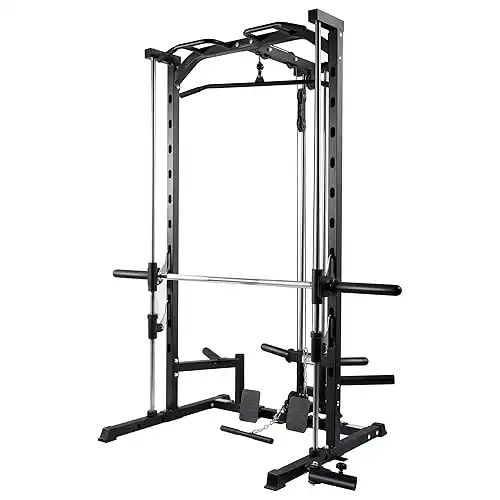
Space and Footprint
Home gyms often have limited space, making footprint a critical factor:
- Standalone Smith Machines: These are dedicated units that offer only the Smith machine function. They can still be quite large.
- Smith Machine Rack Attachments: For those who already own a power rack, certain attachments can convert your rack into a Smith machine, saving significant floor space. This is a clever way to add functionality without a massive new piece of equipment.
- All-in-One Trainers: These are comprehensive units that combine a Smith machine with a power rack, functional trainer (cable machine), pull-up bar, and sometimes a dip station. While they have a larger overall footprint, they consolidate multiple pieces of equipment, making them very space-efficient for the functionality they offer.
Measure your available space carefully, considering not just the machine’s dimensions but also the clearance needed for exercises and moving around it.
Build Quality and Smoothness
A Smith machine is an investment, so durability and user experience are paramount:
- Sturdy Construction: Look for heavy-gauge steel in the frame. A heavier machine often correlates with greater stability and less wobble during use.
- Smooth Bar Glide: The bar should move up and down the rails effortlessly, without sticking, grinding, or excessive friction. This indicates quality bearings and a well-engineered design. Test the bar’s movement through its full range.
- Robust Safety Catches: Ensure the hooks and safety stops are sturdy and easy to engage and disengage.
Weight Capacity and Ratio
These factors relate directly to how much and how effectively you can lift:
- Weight Capacity: Check the maximum weight the Smith bar and frame can safely hold. Ensure it comfortably exceeds your current and projected lifting capacity.
- Weight Ratio: Some Smith machines have counterbalanced bars, making the effective weight of the bar itself feel lighter (e.g., a 45lb bar might feel like 15lbs). Others have a 1:1 ratio, meaning the weight you load is the weight you lift.
- Pulley Systems: In all-in-one machines with cable attachments, pay attention to the pulley ratio (e.g., 1:1, 2:1, 4:1). A 1:1 ratio means the resistance is exactly what you load. A 2:1 ratio means you lift half the loaded weight, making it smoother for lighter resistance but requiring more weight plates for heavier lifts.
Additional Features
Consider what extra functionality would benefit your training:
- Integrated Pull-up Bar: A common and highly valuable addition.
- Cable Pulleys: For a full range of cable exercises.
- Plate Storage Pegs: Keep your weights organized and