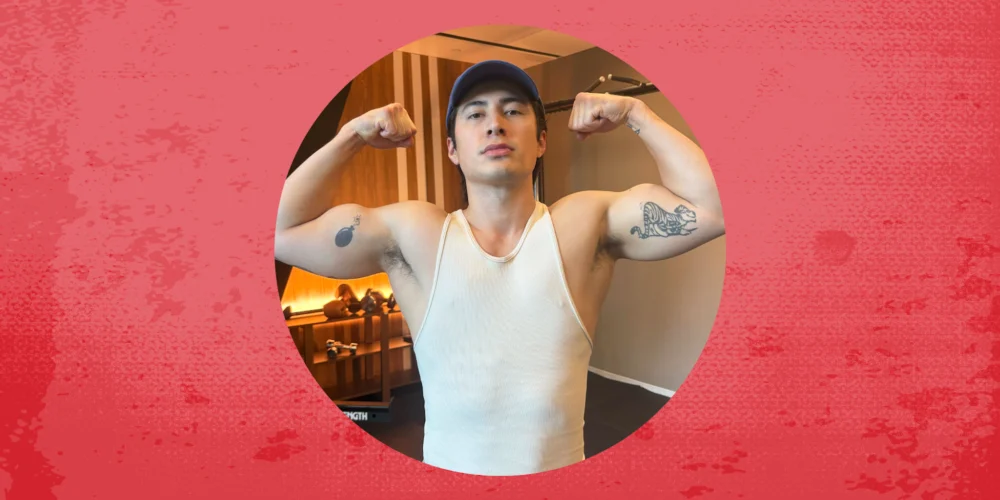
Hudson Williams, the breakout star of the critically acclaimed Crave/HBO series Heated Rivalry, is more than just a compelling presence on screen. Behind the portrayal of a Canadian hockey sensation lies a dedicated athlete committed to a physique that demands attention. While his on-screen persona requires a certain level of athletic conditioning, Williams is vocal about his specific goal: building formidable lower body strength and size, particularly focusing on the glutes.
For fitness enthusiasts ranging from those just starting their journey to those looking to break through plateaus, understanding how a working actor balances demanding schedules with specific aesthetic goals offers invaluable insight. Williams’ routine isn’t about celebrity excess; it’s about consistency, focus, and executing fundamental movements with intent.
This comprehensive guide breaks down the principles behind Williams’ training philosophy and details the exact movements he employs to maintain his sculpted physique while driving serious lower-body development.
The Philosophy: Consistency Over Intensity (When Time is Short)
Williams understands the reality of a professional actor’s life: travel, long shooting days, and unpredictable schedules. His approach prioritizes maintaining a baseline level of high-quality training rather than chasing endless, grueling sessions.
He aims for five training days per week when possible, but pragmatically settles for a minimum of three full-body sessions. This flexibility is crucial for long-term adherence.
Total-Body Focus for Efficiency
For Williams, the goal isn’t to isolate one muscle group for an entire hour. His 45 to 60-minute sessions are designed to maximize metabolic demand and muscle recruitment across the entire body. This total-body structure ensures that even on lighter weeks, no major muscle group is completely neglected.
Key Takeaway for Beginners: Don’t feel pressured to train six days a week. Three structured, focused total-body sessions are far more effective than six haphazard ones.
Evolving Aesthetic Goals
Initially, Williams was guided toward a physique resembling a "wiry strong" hockey player. However, observing his co-stars—and realizing the high visual standard required for television—shifted his focus. He recognized the value in building noticeable, balanced muscle mass, particularly emphasizing the development of his posterior chain (glutes and hamstrings).
This shift mirrors a common journey in fitness: moving from a generalized goal ("get in shape") to a specific, measurable objective ("add X pounds of muscle," or "improve lower body strength by Y percentage").
Building the Foundation: Williams’ Full-Body Blueprint
The workout structure Williams demonstrated is a masterclass in efficiency, hitting the major movement patterns—push, pull, squat, hinge—while integrating specific isolation work to drive targeted growth, especially in the glutes.
Here is a detailed look at the exercises and the underlying principles of this routine.
1. Upper Body Strength: Pressing and Pulling
To build the broad shoulders and strong back required for a commanding screen presence, Williams incorporates foundational compound movements.
Dumbbell Chest Fly (3 sets of 8–10 reps)
While many associate chest development with heavy pressing, the fly is excellent for isolating the pectoral muscles and improving range of motion.
- Actionable Tip: Focus on the squeeze at the top of the movement and control the eccentric (lowering) phase. Do not let your elbows drift too far down; keep a slight bend in your elbows throughout. This targets the stretch better than a simple press.
Seated Single-Arm Cable Row (3 sets of 8–10 reps per side)
Unilateral (single-limb) work is vital for addressing muscle imbalances—something that often becomes noticeable under high-definition lights.
- Actionable Tip: Concentrate on driving your elbow back toward your hip pocket, rather than just pulling toward your chest. Pull your shoulder blade back before you initiate the arm movement. Ensure your torso remains stable and does not twist excessively.
2. Driving Lower Body Power: The Glute Focus
Williams explicitly targets his glutes, understanding they are essential for both aesthetics and athletic function. The Bulgarian Split Squat is a powerhouse for this goal.
Bulgarian Split Squat (3 sets of 8–10 reps per side)
This unilateral squat variation is unmatched for creating tension in the gluteus maximus and medius while simultaneously challenging core stability.
-
Execution Mastery:

- Stance: Position your rear foot elevated on a bench, about two feet behind your front foot.
- Lean: To emphasize the glute over the quad, incorporate a slight forward lean from the hip (keeping your back straight).
- Depth: Aim to drop your back knee toward the floor, achieving a deep stretch in the working glute at the bottom.
- Tempo: Control the descent for a count of three seconds.
-
Real-Life Example: If you find yourself unable to achieve depth without your lower back rounding, reduce the weight initially. Master the depth and control first; the weight will follow.
3. Arm and Shoulder Definition: Isolation for Shape
To achieve the "big ass shoulders" he desires for Season Two, Williams includes specific isolation movements that target the medial and lateral deltoids (the "caps" of the shoulder).
Lying Dumbbell Curl (2–3 sets of 8–10 reps)
This variation maximizes the stretch on the bicep, particularly the long head, leading to better peak development over time.
- Actionable Tip: Lie perpendicular on a bench so your arms hang straight down. This eliminates momentum and forces the bicep to do all the work through a full range of motion.
Cable Lateral Raise (3 sets of 8–10 reps)
The lateral raise is the key to shoulder width. Using cables ensures constant tension throughout the entire arc of the movement, superior to using free weights where the tension drops off at the bottom.
- Form Check: Keep a slight bend in the elbow and lead with the elbow, thinking about pouring water out of a pitcher as you raise your hand. Do not let your traps take over; stop raising when your arm is parallel to the floor or slightly below.
4. Triceps and Core Finisher
A balanced physique requires attention to the often-neglected triceps and a rock-solid core.
Overhead Triceps Extension (3 sets of 8–10 reps)
This exercise effectively targets the long head of the triceps, which contributes significantly to arm mass when viewed from the side.
- Pro Tip: Use a neutral grip (palms facing each other) if a straight bar causes elbow discomfort. Focus on keeping the elbows pointed upward throughout the movement, minimizing movement in the shoulder joint.
Dragon Flag (3 sets of 3–5 reps)
This advanced core movement demands extreme control and strength, directly engaging the entire rectus abdominis and hip flexors.
- Progression for Beginners: If the full Dragon Flag is too challenging (where the body moves as one rigid unit from floor to vertical), start with a Hanging Knee Raise or a Weighted Plank. The goal is controlled tension, not just completing the rep.
Training Nutrition: Fueling the Build
While the article focuses on the workout, Williams’ stated goal of adding 10 pounds of muscle necessitates a supportive nutritional strategy. You cannot build significant mass without adequate fuel.
Protein Intake is Non-Negotiable
To support muscle repair and growth, especially when aiming for size increases, protein intake must be prioritized.
- Actionable Advice: Aim for 0.8 to 1 gram of protein per pound of body weight daily. Distribute this intake relatively evenly across 4–5 meals or feeding windows to maximize muscle protein synthesis throughout the day.
Strategic Caloric Surplus
Building muscle mass requires a slight caloric surplus—consuming more energy than you expend.
- Beginner Strategy: Start by adding 250–350 calories above your maintenance level, focusing those extra calories on quality carbohydrates (for energy during workouts) and healthy fats. Track your weight weekly; if you are gaining more than 0.5–1 pound per week, you may be adding too much unnecessary body fat, and the surplus should be slightly reduced.
The Mentality: Inspiration and Aspiration
Williams draws motivation from respected figures in his sport, like Sidney Crosby and Connor McDavid, valuing their work ethic and commitment. This mirrors a healthy fitness mindset: focusing on process and character rather than just superficial results.
His aspiration to match or surpass his co-star’s physique demonstrates healthy competitive drive—a useful tool for staying motivated through plateaus.
Key Training Mindset Shifts:
- Focus on the Next Rep: Instead of worrying about the entire hour, focus entirely on executing the current set perfectly.
- Embrace Unilateral Work: Single-limb exercises like the Bulgarian Split Squat and Single-Arm Row build functional strength that translates across all activities.
- Progressive Overload: To get "bigger, juicier, thicker," you must consistently challenge your muscles. This means increasing weight, increasing reps, slowing down the tempo, or decreasing rest time across training cycles.
Conclusion: Your Journey, Your Intensity
Hudson Williams’ dedication to his craft is reflected in his commitment to the gym. His routine, while demanding, is built upon fundamental, high-yield exercises designed for efficiency and serious muscle development, with a clear emphasis on the powerful glute muscles.
Whether you are training for a role, a competition, or simply to feel more capable in your daily life, the blueprint remains the same: Consistency, focused execution, and progressive challenge.
Don’t get bogged down in complexity. Take the proven movements from Williams’ blueprint—the strategic split squat, the controlled row, the deliberate isolation work—and apply them with intention to your next session. The physical results you desire are built one controlled repetition at a time. Commit to the process, and watch your own physique ascend.