The quest for a stronger, healthier body is a journey many embark on with enthusiasm. We envision ourselves lifting heavier, running faster, and moving with effortless grace. Yet, for countless individuals, this journey can become a frustrating cycle of intense starts, stalled progress, and eventual burnout or injury. The common culprit? An imbalanced approach that prioritizes one aspect of fitness while neglecting others, often leading to a fragile foundation that cannot sustain long-term growth.
True fitness isn’t just about how you look or how much weight you can lift for a single rep; it’s about building a resilient body – one that supports you through daily life, adapts to challenges, and remains vibrant and capable for decades to come. It’s about creating a harmonious synergy between strength, cardiovascular endurance, and flexibility/mobility. This comprehensive blueprint is designed for beginners and intermediate fitness enthusiasts alike, offering a practical, actionable roadmap to cultivate a body that doesn’t just perform, but endures. Forget the quick fixes and extreme regimens; our focus is on sustainable habits, intelligent training, and a holistic understanding of what it truly means to be fit.
The Foundation: Why a Holistic Approach Matters
In a world saturated with specialized training programs – be it powerlifting, marathon running, or extreme yoga – it’s easy to fall into the trap of tunnel vision. While specialization has its place for elite athletes, for the vast majority of us seeking general health, improved performance, and injury prevention, a balanced, holistic approach is paramount.
Beyond Aesthetics: True Fitness is Functional
The mirror often dictates our fitness goals, driving us towards visible muscle or a lower body fat percentage. While these can be motivating, they overshadow the deeper, more profound benefits of a well-rounded fitness regimen: functionality. Functional fitness is the ability to perform daily activities with ease and efficiency, reducing the risk of injury and enhancing quality of life. Think about lifting groceries, playing with children, climbing stairs, or simply maintaining good posture throughout the day.
- Strength provides the power to move and lift.
- Cardiovascular endurance gives you the stamina to sustain activity.
- Flexibility and mobility ensure your joints move freely and your muscles don’t restrict motion.
Each component contributes uniquely, but their combined impact creates a body that is truly capable and resilient.
The Pitfalls of Imbalance
Imagine a house built with incredibly strong walls but a shaky foundation, or a powerful engine in a car with worn-out brakes. This is analogous to an imbalanced fitness routine.
- Strength-only focus: While impressive, neglecting cardiovascular health can lead to poor endurance, compromised heart health, and inefficient recovery. Stiff muscles and limited range of motion can increase injury risk, especially as loads increase.
- Cardio-only focus: Excellent for heart health, but a lack of strength can leave muscles weak, making daily tasks challenging and increasing susceptibility to musculoskeletal injuries. Bone density might also suffer over time.
- Flexibility-only focus: While promoting range of motion, without adequate strength, "floppy" joints can become unstable and prone to injury. Flexibility needs to be paired with control and strength.
An imbalanced approach not only limits your potential but also significantly increases the risk of injury, plateaus in progress, and ultimately, burnout. When your body isn’t working as a cohesive unit, it sends warning signals – pain, fatigue, and a general lack of enthusiasm.
The Synergy Effect: Greater Than the Sum of Its Parts
The magic happens when these three pillars – strength, cardiovascular endurance, and flexibility/mobility – work together.
- Strength training builds robust muscles and bones, providing the framework for all movement. It also boosts metabolism and improves insulin sensitivity.
- Cardiovascular training strengthens your heart and lungs, enhancing oxygen delivery to muscles, improving stamina, and accelerating recovery from strenuous workouts. A healthier heart means you can push harder and recover faster in your strength sessions.
- Flexibility and mobility ensure your joints operate through their full, healthy range of motion, preventing stiffness, reducing muscle imbalances, and significantly lowering the risk of strains, sprains, and chronic pain. Better mobility allows for better form in strength exercises, enabling you to lift more safely and effectively.
When integrated intelligently, each pillar supports and amplifies the benefits of the others, leading to a truly resilient, high-performing, and healthy body.
Pillar 1: Cultivating Strength for a Solid Core
Strength training is more than just building big muscles; it’s about fortifying your entire system. From enhancing bone density and boosting metabolism to improving functional movement and preventing age-related muscle loss, the benefits are profound and far-reaching. For beginners to intermediate lifters, the focus should be on mastering foundational movements and consistently applying progressive overload.
Mastering the Fundamentals: Compound Movements
Compound exercises are movements that involve multiple joints and muscle groups simultaneously. They are incredibly efficient and effective for building overall strength, coordination, and muscle mass.
- Squats (Lower Body & Core): The king of lower body exercises.
- Actionable Advice: Start with bodyweight squats, focusing on depth (hips below knees) and keeping your chest up. Progress to goblet squats (holding a dumbbell or kettlebell at your chest) before considering barbell squats. Ensure your knees track in line with your toes.
- Deadlifts (Full Body & Posterior Chain): A powerful exercise for the entire posterior chain (glutes, hamstrings, back).
- Actionable Advice: Begin with Romanian Deadlifts (RDLs) using light dumbbells or just a PVC pipe, emphasizing the hip hinge movement (pushing hips back) while keeping a flat back. Once comfortable, you can explore conventional deadlifts, always prioritizing a neutral spine.
- Presses (Upper Body & Shoulders): Builds pushing strength.
- Actionable Advice: Master push-ups (on knees or full body) before moving to overhead presses with dumbbells or a barbell. For chest, bench presses (dumbbell or barbell) are excellent, but push-ups offer a great starting point and build core stability.
- Pulls (Upper Body & Back): Essential for balanced upper body development and posture.
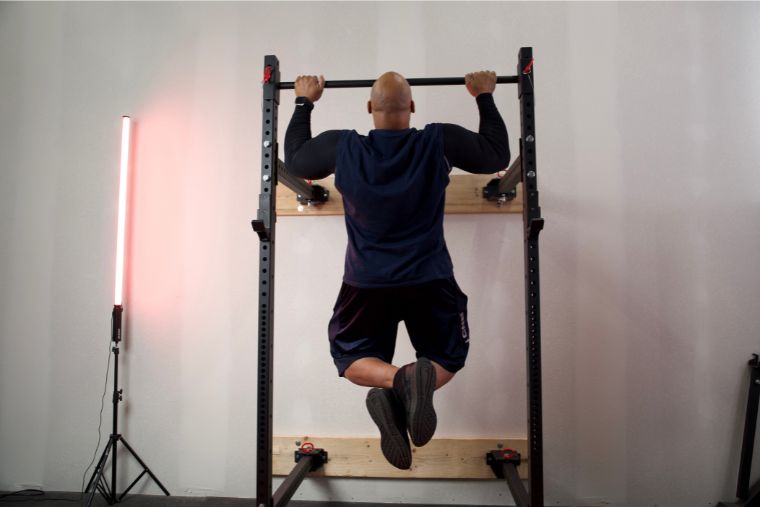
- Actionable Advice: Start with dumbbell rows or resistance band rows. Progress to assisted pull-ups or lat pulldowns. Work towards full pull-ups or chin-ups.
- Core Stability (Midsection): Supports all movements and protects the spine.
- Actionable Advice: Incorporate planks (front and side), bird-dog, and dead bugs. Focus on bracing your core as if preparing for a punch, rather than just sucking in your stomach.
Key Tip: Always prioritize perfect form over heavy weight. Watch instructional videos, record yourself, and don’t hesitate to seek guidance from a qualified coach. Lifting with poor form is a fast track to injury.
Progressive Overload: The Engine of Growth
Your muscles grow stronger by adapting to increasing demands. This principle is called progressive overload, and it’s the single most important factor for continuous strength gains. Without it, your body has no reason to get stronger.
Methods of Progressive Overload:
- Increase the Weight: The most common method. If you can comfortably perform your target reps with good form, increase the weight slightly.
- Increase Repetitions: If increasing weight isn’t feasible, try to do more reps with the same weight.
- Increase Sets: Add an extra set to your workout (e.g., from 3 sets of 8 to 4 sets of 8).
- Decrease Rest Time: Shorter rest periods between sets can increase intensity and endurance.
- Improve Form/Technique: Better form allows you to engage muscles more effectively, making the same weight feel heavier.
- Increase Time Under Tension: Slow down the eccentric (lowering) phase of a lift to increase the muscle’s work.
- Increase Frequency: Train a muscle group more often (e.g., twice a week instead of once).
Practical Example:
A beginner might start with 3 sets of 10 bodyweight squats. Once that feels easy, they might move to 3 sets of 12. Then, they could introduce a dumbbell for goblet squats, starting again with 3 sets of 10 at a lighter weight, and gradually increasing the weight or reps from there. This systematic progression ensures constant adaptation and growth.
Crafting Your Strength Routine
- Frequency: Aim for 2-4 strength training sessions per week. Beginners often benefit from full-body workouts 2-3 times a week, allowing adequate recovery between sessions.
- Split Ideas:
- Full Body (2-3 times/week): Hits all major muscle groups in each session. Great for beginners and those with limited time.
- Upper/Lower Split (4 times/week): Two upper body days, two lower body days. Allows for more volume per muscle group.
- Rep Ranges:
- Strength: 1-6 reps (heavier weight, longer rest).
- Hypertrophy (Muscle Growth): 6-12 reps (moderate weight, moderate rest).
- Endurance: 12+ reps (lighter weight, shorter rest).
- Actionable Advice: For general fitness and muscle growth, aim for 3-4 sets of 8-12 repetitions for most exercises.
- Sample Beginner/Intermediate Full-Body Workout Structure (3 times/week):
- Warm-up: 5-10 minutes of light cardio and dynamic stretches.
- Compound Lifts:
- Squat variation (e.g., Goblet Squat): 3 sets of 8-12 reps
- Press variation (e.g., Dumbbell Bench Press or Push-ups): 3 sets of 8-12 reps
- Pull variation (e.g., Dumbbell Rows): 3 sets of 8-12 reps
- Hinge variation (e.g., RDLs): 3 sets of 10-15 reps
- Accessory/Core:
- Plank: 3 sets, hold for 30-60 seconds
- Overhead Triceps Extension or Bicep Curls: 2-3 sets of 10-15 reps
- Cool-down: 5-10 minutes of static stretching.
Consistency is key. It’s better to stick to a slightly less "optimal" routine consistently than to jump between complex programs you can’t maintain.
Pillar 2: Elevating Endurance for Heart Health & Stamina
Cardiovascular training, often simply called "cardio," is vital for a healthy heart, strong lungs, and overall stamina. It’s the engine that powers your strength workouts, aids in recovery, and significantly impacts your long-term health and vitality.
Types of Cardio: Finding Your Rhythm
There are two primary categories of cardiovascular training, each offering distinct benefits:
- Steady-State Cardio (Low-Intensity Steady State – LISS):
- Description: Sustained activity at a moderate, consistent pace where you can hold a conversation. Examples include brisk walking, jogging, cycling, swimming, or using an elliptical machine.
- Benefits: Excellent for improving aerobic capacity, burning fat, reducing stress, and enhancing recovery without excessive strain on the body. It’s highly sustainable and enjoyable for many.
- High-Intensity Interval Training (HIIT):
- Description: Short bursts of maximum effort followed by brief recovery periods. Examples include sprints, burpees, jump squats, or fast cycling intervals.
- Benefits: Highly effective for improving anaerobic fitness, boosting metabolism, and burning calories in a shorter amount of time. It can be more challenging and requires a good fitness base.
Building a Sustainable Cardio Practice
- Frequency: Aim for 3-5 cardio sessions per week. This can be integrated with your strength training or done on separate days.
- Duration:
- LISS: 30-60 minutes per session.
- HIIT: 20-30 minutes per session (including warm-up and cool-down).
- Intensity Tracking (RPE – Rate of Perceived Exertion):
- Instead of relying solely on heart rate monitors, listen to your body.
- LISS: You should feel like you’re working, but can still carry on a conversation (RPE 5-6 out of 10).
- HIIT: During intense intervals, you should be breathing hard and unable to speak more than a few words (RPE 8-9 out of 10).
- Actionable Advice:
- Start Slow: If new to cardio, begin with brisk walking and gradually increase speed or duration.
- Make it Enjoyable: Find activities you genuinely like – hiking, dancing, playing sports. This drastically increases adherence.
- Vary Activities: Mix LISS and HIIT, or try different forms of cardio to prevent boredom and work different muscle groups.
- Listen to Your Body: Don’t push through sharp pain. Some discomfort is normal, but acute pain is a warning sign.
Practical Cardio Integration
- Warm-ups and Cool-downs: Start every workout with 5-10 minutes of light cardio (e.g., cycling, jogging) to prepare your body. End with 5-10 minutes of light activity to cool down.
- Separate Sessions: Perform cardio on days separate from your strength training. This is ideal if you have enough time.
- Post-Strength: If time is limited, a 20-30 minute LISS session after strength training is a great way to combine workouts. Avoid intense HIIT immediately after a heavy strength session, as it can compromise recovery.
- Real-Life Examples:
- Incorporate brisk walks into your daily routine (e.g., walking during lunch breaks).
- Cycle to work or run errands.
- Plan weekend hikes or participate in recreational sports.
- Try a dance class or active video games for fun cardio.
Remember, every step counts. Even short bursts of activity throughout the day contribute to your cardiovascular health.
Pillar 3: Embracing Flexibility & Mobility for Agility & Prevention
Often overlooked, flexibility and mobility are critical for maintaining a pain-free body, optimizing movement patterns, and preventing injuries. They ensure your joints operate through their full, healthy range, allowing your muscles to perform optimally.
Understanding the Difference: Flexibility vs. Mobility
These terms are often used interchangeably, but they represent distinct concepts:
- Flexibility: The passive range of motion around a joint. It’s about how far a muscle can lengthen. Think of touching your toes – that’s a measure of hamstring flexibility.
- Mobility: The active range of motion around a joint, which requires strength and control. It’s about your ability to move your joint through its full range under your own power. A good example is being able to hold a deep squat with good form – this requires both flexibility (of the hips, ankles) and strength (to control the position).
Both are important, but mobility is often more functional as it emphasizes active control.
Essential Practices for Supple Movement
- Dynamic Stretching (Before Workout): Movements that take your joints and muscles through a full range of motion, preparing them for activity.
- Examples: Arm circles, leg swings, torso twists, walking lunges, cat-cow stretches.
- Actionable Advice: Perform 5-10 minutes of dynamic stretching as part of your warm-up before strength or cardio.
- Static Stretching (After Workout/Rest Days): Holding a stretch for a period (usually 20-30 seconds) to lengthen muscles.
- Examples: Hamstring stretch, quad stretch, shoulder stretch, chest stretch.
- Actionable Advice: Perform 5-10 minutes of static stretching after your workout when muscles are warm, or on rest days. Focus on areas that feel tight.
- Foam Rolling/Self-Myofascial Release: Applying pressure to muscles to release tension and improve blood flow.
- Examples: Rolling out quads, hamstrings, glutes, back, and calves.
- Actionable Advice: Use a foam roller for 1-2 minutes on tight areas before or after workouts, or on rest days. It can be uncomfortable but should not be excruciating.
- Yoga/Pilates: Holistic practices that combine flexibility, strength, balance, and mindful breathing.
- Benefits: Excellent for improving overall mobility, core strength, body awareness, and reducing stress.
- Actionable Advice: Consider attending a class or following online tutorials 1-2 times a week.
Weaving Flexibility into Your Routine
- When to Stretch:
- Dynamic: Always before a workout.
- Static: Always after a workout (when muscles are warm) or on separate rest days.
- Short Daily Mobility Drills: Even 5-10 minutes a day can make a huge difference. Focus on problem areas like tight hips from sitting, or stiff shoulders.
- Example Morning Routine: Cat-cow, bird-dog, hip circles, arm circles, chest opener.
- Focus on Key Areas:
- Hips: Crucial for squatting, deadlifting, and everyday movement.
- Hamstrings: Often tight from sitting.
- Shoulders/Thoracic Spine: Important for overhead movements and good posture.
- Ankles: Affect squat depth and lower body mechanics.
- Actionable Advice:
- Listen to Your Body: Never force a stretch to the point of pain. You should feel a gentle pull, not sharp discomfort.
- Breathe Deeply: Use your breath to relax into stretches.
- Consistency over Intensity: A few minutes every day is more effective than one long, intense session per week.
A flexible and mobile body is less prone to injury, recovers faster, and moves more efficiently, allowing you to get the most out of your strength and cardio efforts.
Beyond the Workout: The Unseen Pillars of Progress
While dedicated training forms the core of your fitness journey, what you do outside the gym is equally, if not more, critical for sustainable progress, recovery, and overall well-being. Nutrition, rest, and mindset are the unseen pillars that determine your success.
Nutrition: Fueling Your Machine
You can’t out-train a poor diet. What you consume directly impacts your energy levels, recovery, muscle growth, and body composition.
- The Basics:
- Protein: Essential for muscle repair and growth. Aim for 0.7-1 gram per pound of body weight daily.
- Complex Carbohydrates: Your primary energy source. Choose whole grains, fruits, and vegetables for sustained energy.
- Healthy Fats: Crucial for hormone production, nutrient absorption, and overall health. Found in avocados, nuts, seeds, and olive oil.
- Hydration: Water is vital for virtually every bodily function, including performance and recovery. Aim for at least 8 glasses a day, more if you’re active.
- Importance of Whole Foods: Prioritize unprocessed, whole foods. They provide a broader spectrum of nutrients and fiber compared to highly processed alternatives.
- Practical Advice:
- Meal Prep: Dedicate time to prepare healthy meals in advance to avoid last-minute unhealthy choices.
- Mindful Eating: Pay attention to your hunger and fullness cues. Eat slowly and savor your food.
- Balance, Not Restriction: Focus on incorporating nutrient-dense foods rather than strictly cutting out entire food groups. Allow for occasional treats in moderation.
Rest & Recovery: The Growth Zone
Muscles aren’t built in the gym; they’re built during recovery. Adequate rest allows your body to repair, rebuild, and adapt to the stress of training, making you stronger and fitter.
- Sleep Importance: Aim for 7-9 hours of quality sleep per night. Sleep deprivation impairs muscle repair, hormone regulation, and cognitive function, hindering progress and increasing injury risk.
- Active Recovery: Light activities like walking, gentle stretching, or foam rolling on rest days can improve blood flow and reduce muscle soreness without adding significant stress.
- Importance of Rest Days: Don’t underestimate the power of simply doing nothing physically strenuous. Your body needs time to fully recover. Plan at least 1-2 full rest days per week.
Mindset & Consistency: The Ultimate Game Changers
Fitness is a marathon, not a sprint. Your mental approach and unwavering consistency are what will truly define your long-term success.
- Setting Realistic Goals: Break down large goals into smaller, achievable milestones. Celebrate each one.
- Tracking Progress: Keep a workout log. Seeing how far you’ve come is incredibly motivating and helps you identify areas for improvement.
- Celebrating Small Victories: Acknowledge every effort – a new personal best, an extra rep, or simply showing up on a tough day.
- Dealing with Setbacks: Life happens. Missed workouts or plateaus are normal. Don’t let them derail you. Acknowledge them, adjust, and get back on track.
- Finding Joy in the Process: Shift your focus from obligation to enjoyment. Find activities you love, appreciate what your body can do, and embrace the journey of self-improvement.
Conclusion
Building a resilient body is a continuous journey, not a destination. It’s about understanding that true fitness is a harmonious blend of strength, cardiovascular health, and flexibility – each supporting and enhancing the others. By diligently cultivating these three pillars and paying attention to the crucial elements of nutrition, rest, and mindset, you are not just building muscles; you are crafting a foundation for lifelong vitality.
This blueprint isn’t about perfection; it’s about progress, consistency, and intelligent effort. Start where you are, be patient with yourself, and celebrate every step forward. Embrace the process, listen to your body, and commit to nurturing it holistically. The rewards extend far beyond physical appearance, impacting your energy, mood, longevity, and overall quality of life. Begin today to forge a stronger, more resilient you – capable of facing life’s challenges with unwavering strength and vibrant health. Your body is your most valuable asset; invest in it wisely, and it will serve you for years to come.