Embarking on a fitness journey, or pushing past an intermediate plateau, often feels like navigating a dense forest without a map. The sheer volume of equipment, exercises, and advice can be overwhelming. Yet, amidst the free weights and complex machinery, one piece of equipment stands out for its unique blend of safety, stability, and versatility: the guided barbell, commonly known as the Smith machine.
Often misunderstood or even dismissed, the guided barbell system is a powerful ally for anyone serious about building strength, refining form, and achieving consistent progress. Whether you’re taking your first steps into strength training or you’re a seasoned lifter looking to isolate muscles or push past a sticking point, this fixed-path marvel offers an unparalleled environment for controlled, effective workouts.
This article will dismantle common misconceptions, illuminate the profound benefits of incorporating the guided barbell into your routine, and equip you with the knowledge and actionable strategies to leverage its full potential. We’ll explore key exercises, delve into proper technique, and discuss how to integrate this formidable tool into a balanced training regimen. Prepare to discover how the guided barbell can become a cornerstone of your strength building, helping you forge an unshakeable foundation for a stronger, more confident you.
Unpacking the Guided Barbell: A Closer Look at its Core
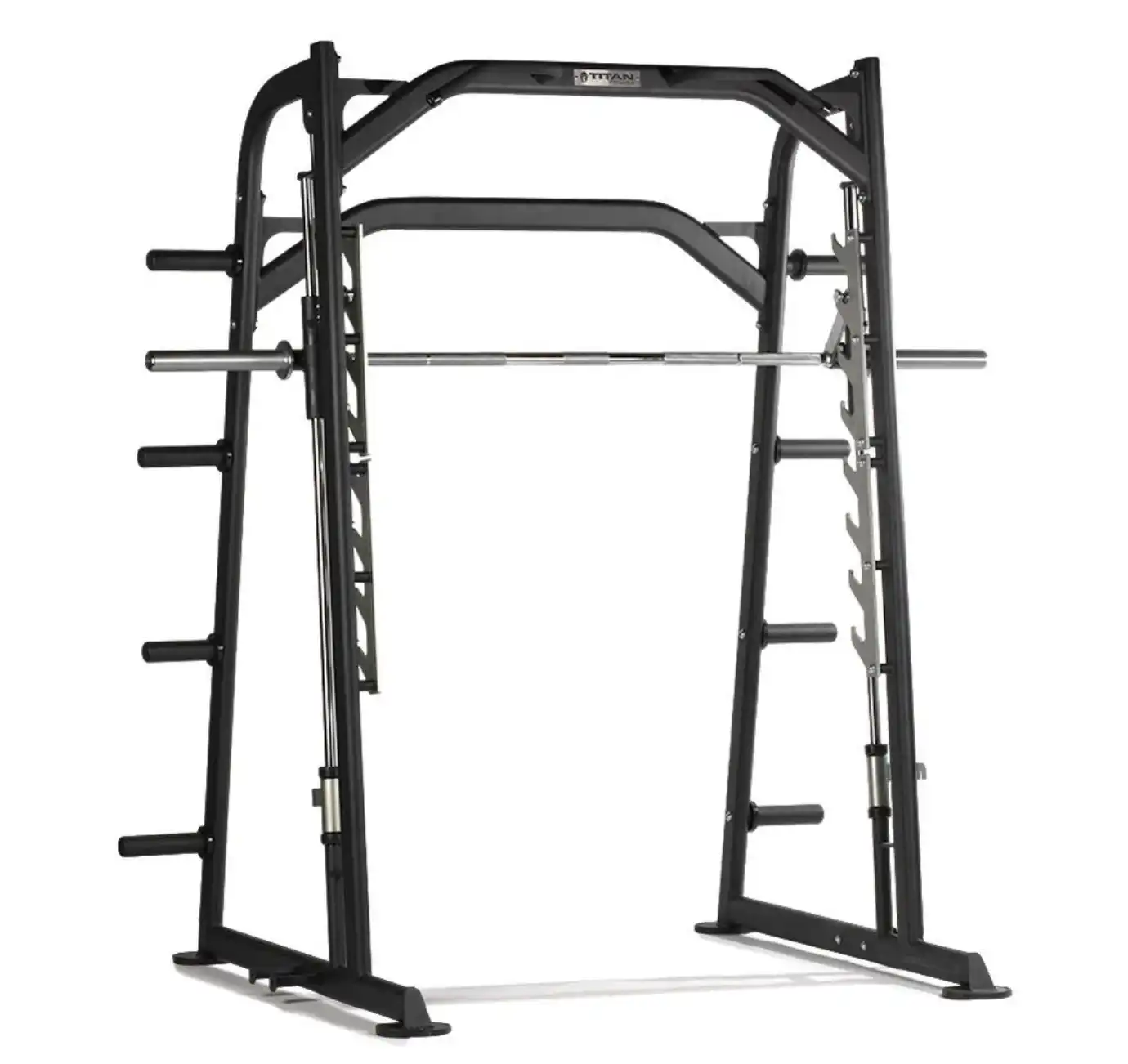
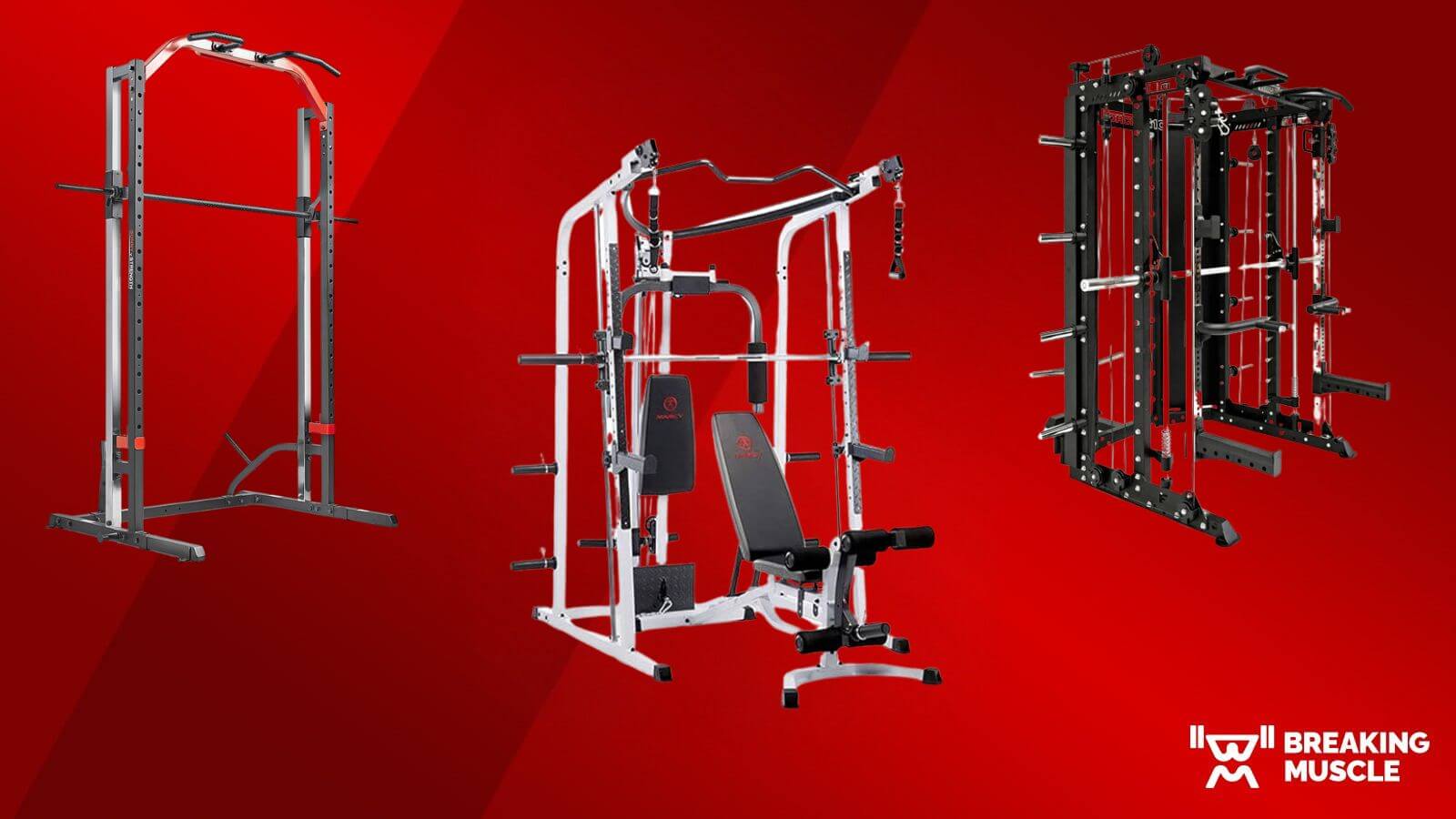
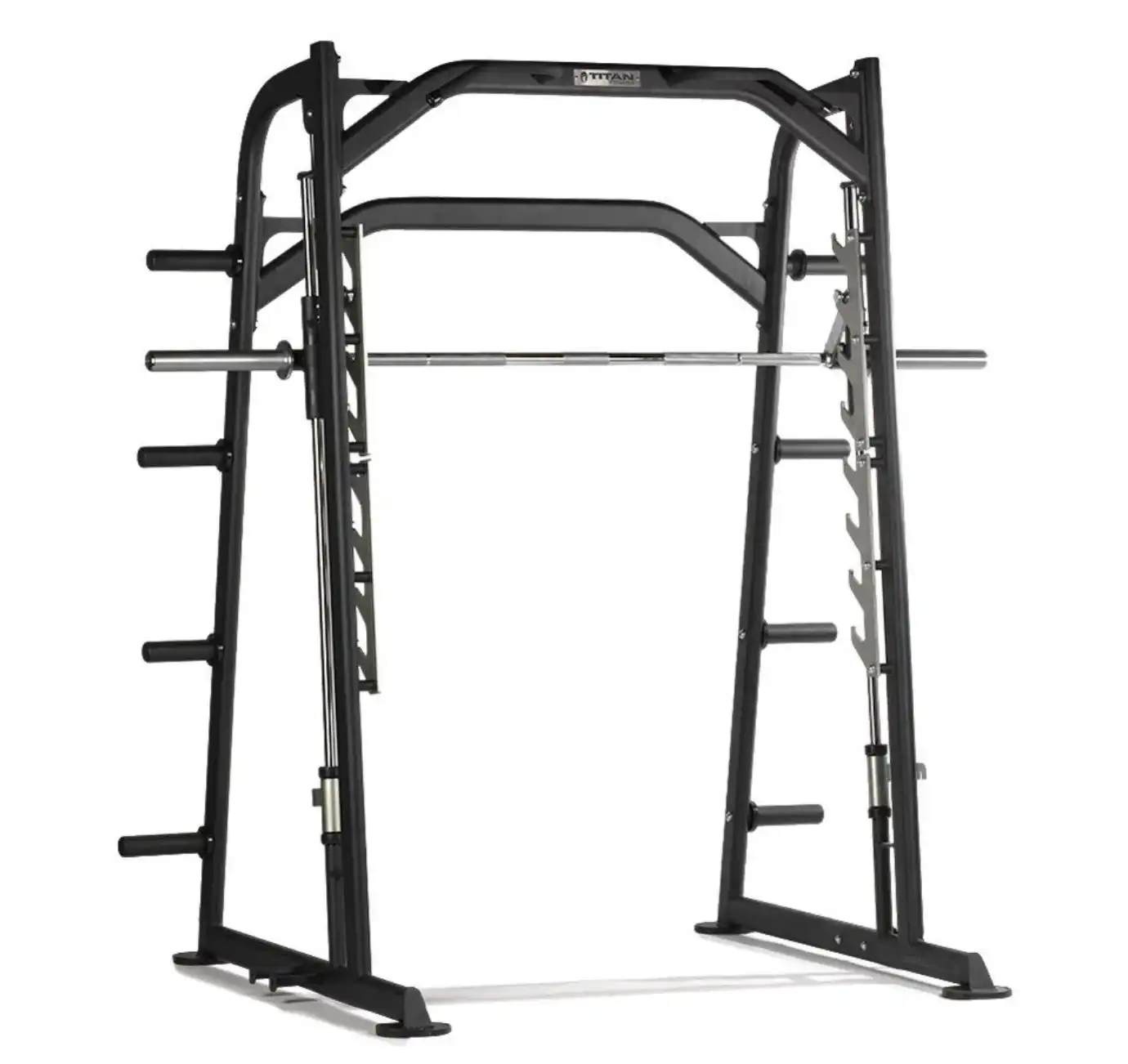
Before diving into exercises and techniques, let’s understand the fundamental mechanics that make the guided barbell system so distinctive. Unlike a traditional barbell, which moves freely in all directions, the guided barbell is affixed within steel rails, allowing it to move only vertically or, in some designs, along a slight angle. This fixed path is both its defining characteristic and its greatest advantage.
Integrated into the system are a series of hooks or pins along the vertical uprights. These allow you to "rack" the barbell at any point in your lift with a simple twist of the wrist, providing an immediate safety net. Adjustable safety stops can also be set, preventing the bar from descending below a predetermined point. This ingenious design essentially provides a built-in spotter for every repetition, fostering an environment of unparalleled safety and control.
Understanding these core elements is crucial. The fixed path dictates movement patterns, offering stability but also requiring thoughtful application to avoid neglecting crucial stabilizer muscles. The safety mechanisms empower you to push your limits with confidence, knowing you can always bail out safely.
Why Integrate the Guided Barbell into Your Training? Beyond the Basics
The guided barbell system offers a spectrum of benefits that cater specifically to the needs of beginners, intermediate lifters, and even those returning from injury. Dismissing it as merely a "cheat machine" is to overlook its profound utility in a well-rounded fitness program.
Enhanced Safety and Independent Training
Perhaps the most compelling advantage of the guided barbell is the inherent safety it provides. The ability to lock the bar at any point, coupled with adjustable safety stops, eliminates the fear of getting pinned under heavy weight.
- No Spotter Needed: This is invaluable for solo workouts, whether you train at home or in a commercial gym during off-peak hours. You can confidently attempt heavier lifts or push for extra reps without relying on a training partner.
- Reduced Risk of Injury: The fixed plane of motion minimizes erratic movements, making it easier to maintain control, especially during compound lifts like squats and presses. This reduces the likelihood of strains or sprains often associated with losing balance under a free-moving bar.
Precision in Form and Muscle Activation
For many, mastering proper lifting form is the biggest hurdle. The guided barbell system simplifies this by removing the need to stabilize the bar horizontally, allowing you to focus intensely on the primary movement pattern.
- Form Foundation: Beginners can use the guided barbell to learn the mechanics of movements like squats and bench presses without the added complexity of balancing a free weight. This allows for a deeper understanding of muscle engagement and body positioning.
- Targeted Isolation: Intermediate lifters can leverage the fixed path to isolate specific muscle groups. For instance, adjusting foot placement during squats can shift emphasis to quads or glutes more effectively than with a free barbell, where balance might limit these subtle shifts.
- Mind-Muscle Connection: With stability handled by the machine, you can concentrate on consciously contracting the working muscles throughout the entire range of motion, enhancing the crucial mind-muscle connection.
Versatility for Diverse Training Goals
Despite its fixed path, the guided barbell is surprisingly versatile, accommodating a wide array of exercises and training styles.
- Strength and Hypertrophy: It’s excellent for building raw strength and muscle mass, especially when applying progressive overload principles.
- Rehabilitation and Return-to-Training: For individuals recovering from injuries or those with mobility limitations, the controlled environment allows for safe, progressive loading to rebuild strength and confidence.
- Advanced Techniques: Lifters can safely experiment with techniques like negative reps, partial reps, or drop sets without immediate concern for bar stability.
In essence, the guided barbell isn’t just a machine; it’s a controlled environment designed to empower you, making your strength training journey safer, more effective, and more focused.
Mastering Movement: Key Guided Barbell Exercises and Technique
To truly harness the power of the guided barbell, it’s essential to understand how to execute key exercises effectively. The fixed path necessitates slight adjustments in body positioning compared to free weights, but the fundamental principles of form remain paramount.
Lower Body Powerhouses
The guided barbell shines for lower body training, allowing you to load up safely and focus on muscle engagement.
- Guided Squats (Back Squat Style):
- Setup: Position the bar slightly below shoulder height. Step under the bar, centering it on your upper back (traps). Place your feet slightly forward of where you would for a free squat – this allows for a more upright torso and can emphasize quadriceps.
- Execution: Unrack the bar with a twist. Initiate the movement by pushing your hips back and bending your knees, as if sitting into a chair. Keep your chest up, core braced, and descend until your thighs are parallel to the floor or lower, if comfortable. Drive back up through your heels, extending hips and knees.
- Tip: Experiment with foot placement. A narrower, slightly forward stance often targets the quads more, while a wider stance with feet directly under the bar can engage the glutes and hamstrings more.
- Guided Lunges (Reverse Lunges):
- Setup: Rack the bar as for squats. Step back with one leg, maintaining balance.
- Execution: Descend by bending both knees, keeping your front knee aligned over your ankle and your torso upright. Lower until your back knee hovers just above the floor. Push through your front heel to return to the starting position.
- Tip: The fixed path makes stability easier, allowing you to focus on the deep stretch and contraction in the glutes and quads of the working leg.
- Guided Hip Thrusts/Glute Bridges:
- Setup: Position a flat bench parallel to the machine. Sit on the floor with your upper back against the bench, knees bent, feet flat. Roll the guided barbell over your hips (use a pad for comfort).
- Execution: Drive through your heels, lifting your hips towards the ceiling until your body forms a straight line from shoulders to knees. Squeeze your glutes powerfully at the top. Slowly lower back down.
- Tip: This exercise allows for heavy loading with minimal spinal compression, excellent for glute development.
Upper Body Builders: Push and Pull
While the guided barbell is often associated with presses, it can also be used for some pulling movements.
- Guided Bench Press (Flat, Incline, Decline):
- Setup: Position a weight bench under the guided barbell. Lie down so your eyes are directly under the bar. Grip the bar slightly wider than shoulder-width, ensuring your wrists are straight.
- Execution: Unrack the bar. Lower it slowly and controllably towards your chest (mid-chest for flat, upper chest for incline). Press the bar back up, driving through your chest and triceps.
- Tip: The fixed path allows you to focus solely on chest contraction. Ensure your elbows tuck slightly to protect your shoulders. Set safety stops just above your chest for maximum confidence.
- Guided Overhead Press (Seated or Standing):
- Setup: For seated, use a bench with back support. For standing, position feet hip-width apart. Position the bar at shoulder height, grip slightly wider than shoulder-width.
- Execution: Unrack the bar. Press it directly overhead, extending your arms fully. Lower with control back to the starting position.
- Tip: Brace your core throughout the movement to protect your lower back. The fixed path makes it easier to maintain a strict press.
- Guided Bent-Over Rows (with caution):
- Setup: Set the bar at a height that allows you to hinge forward with a straight back and grasp the bar. Feet shoulder-width apart, knees slightly bent.
- Execution: Hinge at your hips, keeping your back straight and core tight. Pull the bar towards your lower chest/upper abdomen, squeezing your shoulder blades together. Control the descent.
- Caution: The fixed path can feel unnatural for rows, potentially putting stress on the lower back if not executed with perfect form. Focus on initiating the pull with your lats and squeezing your shoulder blades.
Core Strengthening
While not its primary function, the guided barbell can be adapted for core work.
- Guided Barbell Rollouts (Advanced):
- Setup: Kneel on the floor with the guided barbell racked at a low height. Grip the bar with an overhand grip, hands shoulder-width apart.
- Execution: Engage your core intensely. Slowly roll the bar forward, extending your body while keeping your back flat and hips stable. Roll out as far as you can control, then pull the bar back to the starting position using your core strength.
- Caution: This is an advanced movement. Start with a very short range of motion and only progress when you can maintain a perfectly rigid torso.
Remember, the key to success with the guided barbell is intentionality. Don’t just go through the motions. Focus on the muscle you’re trying to work, control the movement, and leverage the machine’s stability to perfect your form.
Integrating the Guided Barbell: Smart Programming for Progress
Knowing the exercises is one thing; effectively incorporating them into your training routine is another. The guided barbell is a tool that can complement, not necessarily replace, other forms of training.
For the Beginner: Building a Solid Foundation
If you’re new to strength training, the guided barbell is an excellent starting point.
- Learn Movement Patterns: Dedicate your initial weeks to mastering the fundamental squat, bench press, and overhead press. Focus on feeling the right muscles work, not on lifting heavy.
- Prioritize Form Over Weight: Since stability is provided, you can focus 100% on posture, depth, and muscle contraction. Record yourself to check your form from different angles.
- Structured Progression: Start with 3 sets of 10-12 repetitions for each exercise. Once you can comfortably complete all sets and reps with good form, gradually increase the weight by the smallest increment possible. This consistent, controlled progressive overload is crucial for muscle growth and strength.
- Actionable Advice: Start with a full-body routine 2-3 times a week. For example:
- Workout A: Guided Squats, Guided Bench Press, Guided Bent-Over Rows (light), Plank.
- Workout B: Guided Lunges, Guided Overhead Press, Guided Hip Thrusts, Cable Crunches (if available).
For the Intermediate Lifter: Strategic Integration
As an intermediate, you likely have experience with free weights. The guided barbell can serve specific purposes to enhance your existing routine.
- Pre-Exhaustion: Use a guided barbell exercise to "pre-exhaust" a muscle group before moving to a compound free-weight movement. For example, perform guided barbell leg extensions (if adaptable) or hack squats to fatigue your quads before heavy barbell squats. This ensures the target muscle works maximally.
- Isolation and Volume: Use it to add extra volume for specific muscle groups without needing a spotter. If you want to blast your chest, follow your free-weight bench press with guided incline presses.
- Pushing Past Plateaus: If you’re stuck on a particular lift, the guided barbell can help you work through sticking points. For instance, partial range-of-motion guided presses can strengthen the top portion of your bench press.
- Safe Failure: On your final set of an exercise, you can push to muscular failure with confidence, knowing the safety catches are there to protect you. This can be a powerful stimulus for growth.
- Real-Life Example: "Sarah, an intermediate lifter, struggled to feel her glutes during free-weight squats. By incorporating guided barbell hip thrusts and then guided squats with a forward foot placement, she learned to activate her glutes and quads more effectively, eventually translating to better free-weight performance."
Programming Considerations for All Levels
- Rep Ranges:
- Strength: 4-6 reps (heavier weight)
- Hypertrophy (Muscle Growth): 8-12 reps (moderate weight)
- Endurance: 15+ reps (lighter weight)
- Sets: Typically 3-4 working sets per exercise.
- Rest Periods: 60-90 seconds for hypertrophy/endurance, 2-3 minutes for strength.
- Progressive Overload: The cornerstone of progress. Consistently strive to:
- Increase the weight.
- Increase the reps with the same weight.
- Increase the sets.
- Improve your form and control.
- Decrease rest times (for endurance).
- Balance with Free Weights: While the guided barbell is excellent, don’t abandon free weights entirely. Free weights demand more stabilizer muscle activation, which is vital for overall functional strength and athleticism. Consider alternating guided barbell days with free-weight days, or using both within the same workout for different purposes.
Safety First: Essential Protocols for Guided Barbell Training
While inherently safer than free weights in many respects, mindful safety practices are still non-negotiable when using a guided barbell system.

- Always Set Safety Stops: Before you even load the bar, set the safety catches to a height that will prevent the bar from pinning you, but still allow for a full range of motion. For squats, this might be just below your deepest squat point. For bench press, just above your chest.
- Inspect Equipment: Before each use, quickly check the bar, rails, and safety mechanisms for any signs of wear, damage, or loose parts. Ensure the bar moves smoothly along its path.
- Proper Warm-Up: Never jump straight into heavy lifting. Perform 5-10 minutes of light cardio followed by dynamic stretches and a few light sets of the exercise you’re about to perform.
- Listen to Your Body: The fixed path can sometimes feel unnatural for certain body types or movements. If you experience sharp pain, stop immediately. Adjust your form, foot placement, or consider an alternative exercise.
- Master the Rack and Unrack: Practice twisting the bar to lock and unlock it smoothly. Ensure it’s fully locked before letting go and fully unlocked before beginning your set.
- Foot and Body Positioning: Due to the fixed path, your foot placement for squats, for example, will likely be different than with a free barbell. Experiment to find what feels most natural and allows for optimal muscle activation without discomfort. Often, a slightly forward foot placement can be beneficial.
- Maintain Control: Even though the machine stabilizes the bar, you must still control the weight throughout the entire movement, both on the concentric (lifting) and eccentric (lowering) phases. Don’t let gravity do all the work on the way down.
By adhering to these safety protocols, you transform the guided barbell into an incredibly secure and effective environment for building strength and confidence.
Common Pitfalls to Avoid for Optimal Results
While the guided barbell offers numerous advantages, it’s not without its potential drawbacks if used unwisely. Being aware of these common pitfalls can help you maximize your training.
- Over-Reliance on the Fixed Path: The machine’s stability is a double-edged sword. Relying too much on it can neglect the development of crucial stabilizer muscles that engage with free weights. These smaller muscles are vital for overall joint health, balance, and real-world strength.
- Actionable Advice: Incorporate free-weight exercises and unilateral (single-limb) movements into your routine alongside guided barbell work.
- Ignoring Form Due to Perceived Safety: Just because you can’t drop the bar doesn’t mean bad form is okay. Compromised posture or an incorrect movement pattern can still lead to injury over time, especially when lifting heavy.
- Actionable Advice: Treat every guided barbell lift with the same respect for form as you would a free-weight lift. Focus on controlled movements and muscle activation.
- Lack of Variety: Sticking to the same few exercises can lead to plateaus and boredom. The guided barbell offers more versatility than many realize.
- Actionable Advice: Explore different variations of squats (hack squat style, front squat style), presses (incline, decline, close grip), and even incorporate landmine attachments if your guided barbell system allows for it.
- Not Warming Up Adequately: The machine might feel safe, but your joints and muscles still need preparation for the stress of lifting.
- Actionable Advice: Always perform a dynamic warm-up and light introductory sets before your main working sets.
- Failing to Progress: The guided barbell is excellent for progressive overload, but you have to apply it. If you’re doing the same weight and reps week after week, your body has no reason to adapt and grow stronger.
- Actionable Advice: Keep a training log. Strive to slightly increase weight, reps, or decrease rest times each week or cycle.
By being mindful of these points, you can use the guided barbell as a powerful tool for progress, rather than a crutch that limits your overall development.
Your Journey to Guided Strength
The guided barbell, often relegated to the sidelines or misunderstood, is a powerhouse of potential for anyone committed to their fitness journey. It offers an unparalleled platform for safe, controlled, and effective strength training, making it an invaluable asset for beginners learning fundamental movements, intermediate lifters seeking to refine technique or break plateaus, and even those navigating the path of rehabilitation.
You now possess the knowledge to unlock its capabilities: understanding its mechanics, mastering key exercises, integrating it smartly into your programming, and prioritizing safety at every turn. Remember, fitness is a journey of continuous learning and adaptation. The guided barbell isn’t a shortcut, but a powerful ally that provides a stable environment for you to push your limits with confidence, build an ironclad foundation, and sculpt a stronger, more resilient physique.
Don’t let preconceived notions limit your progress. Step up to the guided barbell with purpose, focus on your form, feel the muscles work, and embrace the unique advantages it offers. Your strength, your confidence, and your body will thank you. The path to a stronger you is clear, stable, and ready for your next powerful lift. Let’s get to work!