The roar of a wildfire. The biting wind on a mountain slope. The disciplined cadence of marching boots. For Sgt. Robert Burns, these aren’t disparate experiences; they are threads woven into a singular tapestry of dedication, resilience, and the unwavering pursuit of excellence. A soldier in the U.S. Army and an elite giant slalom snowboarder, Burns embodies the extraordinary potential that lies at the intersection of service, sport, and sheer grit. His journey, from a 7th-grade aspiration to representing his country on the world stage, is a powerful testament to what can be achieved when passion meets purpose.
For many, the idea of excelling in two such demanding fields might seem like a distant dream, reserved for a select few. But Burns’ story offers a compelling blueprint for anyone looking to push their own physical and mental boundaries, regardless of their current fitness level. It’s a narrative that speaks to the power of setting audacious goals, embracing challenges, and understanding that true strength is forged not just in physical exertion, but in the unwavering resolve of the mind.
The Seed of Ambition: From Classroom Dreams to Snow-Covered Slopes
The spark that ignited Burns’ snowboarding dreams was surprisingly academic. In 7th grade, a school assignment prompted him to write about a current event and its personal significance. He chose the 2002 Winter Olympics, specifically American snowboarder Chris Klug’s bronze medal win. "I can remember as clear as day writing a couple paragraphs that were like: ‘When I get older, I want to represent the USA in giant slalom snowboarding,’" Burns recalls. This early declaration wasn’t a fleeting childhood fantasy; it was a vision that would guide him through his formative years and beyond.
Growing up in Northern California, Burns was no stranger to athletic pursuits. He strapped on skis at the tender age of two and sampled a wide array of sports, from the finesse of tennis to the teamwork of basketball and baseball. But it was the thrill of his first snowboard at age nine that truly captured his imagination. This newfound passion soon translated into competitive ambition. By 2013, he was competing internationally, and his dedication paid off with two national championships in giant slalom, a discipline of downhill alpine snowboarding renowned for its speed and technical demands. The pinnacle of this dream arrived in 2022, precisely two decades after that pivotal 7th-grade assignment, when he competed on the world stage.
A Legacy of Service: Answering the Call to Duty
Parallel to his athletic aspirations, a deeper calling resonated within Burns: the desire to serve his country. This wasn’t a sudden decision but a deeply ingrained value, nurtured by a strong military heritage. His father dedicated nearly 40 years to service, and both of his grandfathers had served during World War II. "I was very much a part of a military family," he explains, "and that was something inside me that I never really lost sight of." This profound sense of duty, coupled with his athletic drive, set the stage for a unique path where both dreams could converge.
Forging a Dual Identity: Soldier-Athlete Through the WCAP
In 2024, the U.S. Army provided Burns with a remarkable opportunity to bring both his lifelong passions to fruition: the World Class Athlete Program (WCAP). Established in 1997, WCAP is a groundbreaking initiative that allows elite soldier-athletes to continue their athletic pursuits at the highest international levels while serving in the Army. Since its inception, WCAP has been a launchpad for hundreds of athletes, resulting in over 120 medals on the global stage.

After enlisting and completing rigorous basic training, Burns applied for and was accepted into WCAP. This program offers more than just the chance to compete; it provides a comprehensive support system. Like all Army soldiers, Burns receives a salary and robust health benefits. Crucially, he gains access to world-class coaching, specialized physical therapy, expert nutritional guidance, and dedicated recovery resources—all tailored to the intense demands of elite-level sports. "You just have to go out and perform," Burns states, highlighting the inherent responsibility that comes with such support. "Through WCAP, there are people that are willing, ready, and able to support me, and that’s incredibly comforting."
The WCAP environment also fosters a unique sense of community and shared purpose. Burns’ fiancée, Staff Sgt. Deedra Irwin, is also a WCAP soldier-athlete, excelling in biathlon. "She wanted me to enlist and try the program," he shares. "And she didn’t really have to try very hard to convince me because I already had so many reasons leading up to that point." This shared journey underscores the program’s ability to support not only individual athletic goals but also the personal lives and ambitions of its members.
From the Fire Line to the Snow: The Unexpected Parallels
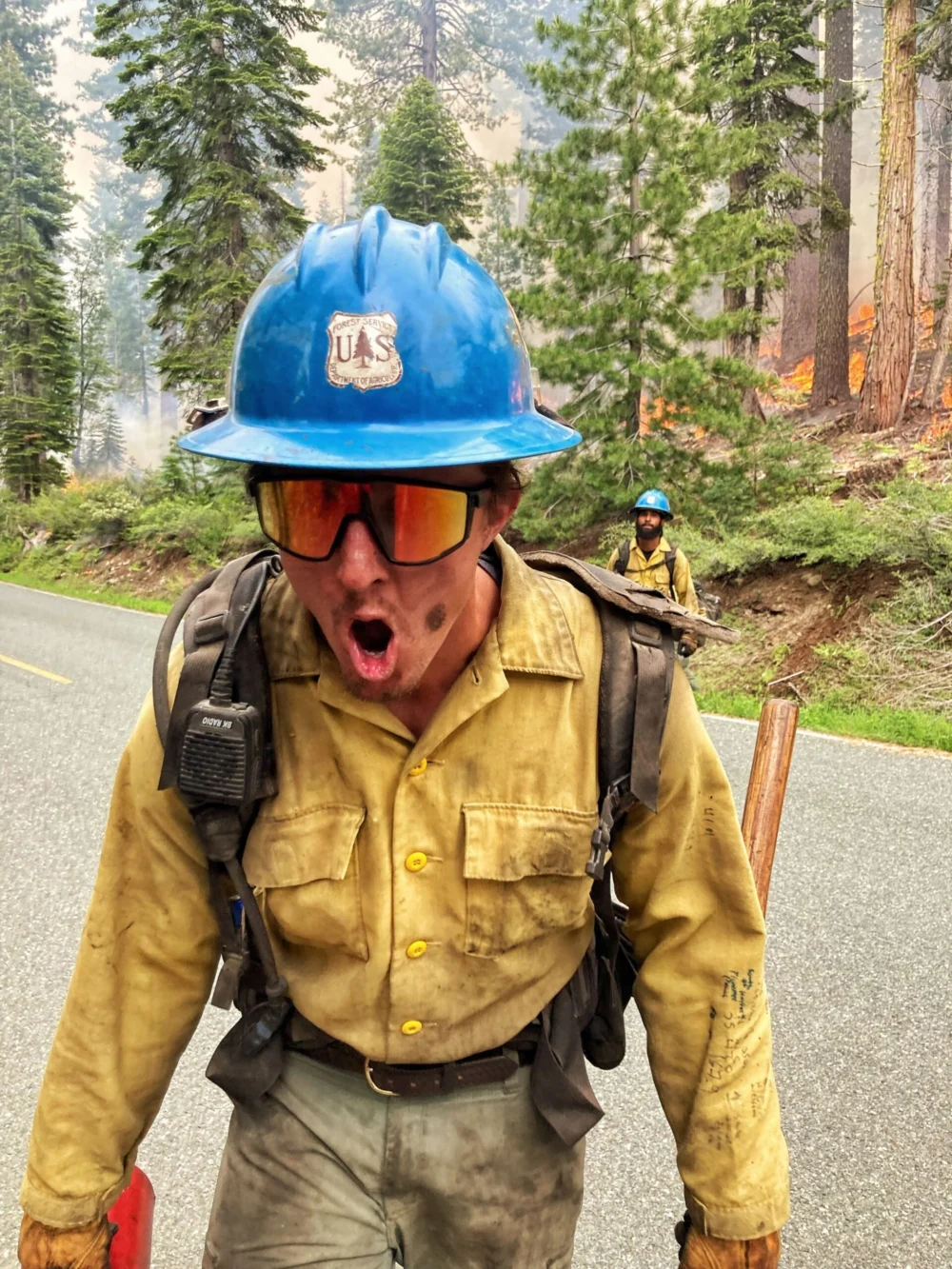
Before his transition to the icy slopes, Burns’ life was defined by the intense, often dangerous, work of a "hotshot firefighter." As part of an Interagency Hotshot Crew (IHC), he was part of an elite team tasked with confronting the most formidable wildland fires across the nation. IHCs operate in rugged, often inaccessible terrain, utilizing hand tools and chainsaws to create fire lines and control the spread of blazes.
This career path wasn’t random. Growing up in Northern California, an area frequently impacted by wildfires, Burns witnessed firsthand the critical role of wildland firefighters in protecting communities. This exposure, combined with his inherent desire to serve, shaped his early career. While the environments are starkly different – the heat of a wildfire versus the chill of a mountain – Burns sees profound parallels between firefighting, snowboarding, and his current role as an infantryman in the U.S. Army.
At the core of all these endeavors lies a single, unifying requirement: unwavering focus. Whether battling flames, carving down a mountain at breakneck speed, or executing a critical mission on the ground, success hinges on the ability to concentrate intensely and execute with precision.
As an infantryman, Burns is part of the Army’s frontline combat force. His duties involve deterring enemy threats, conducting reconnaissance, and facilitating the movement of troops and equipment. This demanding, hands-on work requires constant vigilance, meticulous attention to detail, and the readiness to respond at a moment’s notice. "A lot of times as an infantryman, you have a specific goal passed down to you through the ranks that’s going to require your focus," Burns explains. "When I look at it that way, I see this clear picture of how I transitioned from ‘I want to be an elite snowboarder,’ to ‘I’m going to be a hotshot wildland firefighter and an infantryman in the U.S. Army.’ They flow pretty well into each other."

Both these demanding professions also instill a vital lesson: the power of self-belief. "If you want something and you’re willing to work for it, you can make it a reality," he asserts. This internal conviction is the bedrock upon which extraordinary achievements are built.
The Soldier’s Edge: Applying Military Discipline to Athletic Performance
The rigorous training and disciplined mindset cultivated in the U.S. Army translate directly onto the snowboarding slopes. One of the most critical lessons Burns has internalized is the importance of trusting the process and maintaining a clear connection to his "why."
"When you’re in the thick of it and really just slogging along—maybe the performance isn’t there and the training doesn’t feel very good—you need to have some way to come back to your why," Burns emphasizes. This "why" isn’t just about winning medals; it’s about the entire journey. Reflecting on his path, from childhood ambitions to the profound responsibility of serving his country and tackling challenging roles, provides the perspective needed to endure relentless training schedules.
The demanding nature of elite sports often involves constant travel, with athletes sometimes spending only a few nights in one location while juggling training for major competitions. In these moments of fatigue and uncertainty, holding onto the larger vision becomes paramount.
Another invaluable principle Burns borrows from Army training is the wisdom of knowing when to pause, rather than quit. He draws a powerful analogy from combat readiness exercises: "When they bring us all the way to the level of pure exhaustion, they say, ‘take a knee, take a drink of water.’ And until you’ve been in that moment where you really need that knee and that drink of water, you can’t really understand how beneficial it can be."
This moment of respite, though brief, allows the mind and body to recover and reset. It’s a stark reminder that pushing through exhaustion doesn’t always mean relentless exertion. Sometimes, strategic recovery is the key to unlocking the next level of performance. "Your mind might be saying, ‘I’m done. I’m exhausted. I can’t go any farther,’ and a couple minutes later you move on to the next task and you’re ready to go," he explains. This ability to strategically recharge and then re-engage is a hallmark of true resilience.

Charting the Next Ascent: A Vision for the Future
Sgt. Robert Burns understands that progress, whether in military operations or athletic pursuits, is rarely a straight line. It’s a journey marked by both ascents and descents, challenges and triumphs. The Army has instilled in him the fundamental understanding that regardless of the obstacles, the destination must be reached. "What the Army taught me is that regardless of how far it is between point A and point B, you still have to get to point B," he states. "It doesn’t matter how you feel about where you’re at in the journey. You have a destination, and you need to get there."
As Burns looks ahead to 2026 and beyond, his ambition remains as sharp as ever. He is actively working towards his ambitious goals, a pursuit he attributes in large part to the comprehensive support of WCAP. "I’m in the best shape of my life physically, mentally, and spiritually," he declares. "What the program has offered me is the ability to work as hard as I can to become the best Alpine snowboarder possible to represent my country and to represent the U.S. Army. I still have to climb a couple more mountains to get where I want to go."
Sgt. Robert Burns’ story is an inspiration to anyone seeking to achieve greatness in multiple facets of their life. It demonstrates that with discipline, a clear vision, and the unwavering support of programs like WCAP, even the most ambitious dreams are attainable. His journey reminds us that the strength we build in one area of our lives can powerfully fuel our success in others. Whether you’re a budding athlete, aspiring to serve your country, or simply looking to elevate your personal fitness, Burns’ unwavering commitment to his goals serves as a potent reminder: the next summit is always within reach, provided you have the courage to begin the climb.
Practical Takeaways for Your Fitness Journey:
- Define Your "Why": Like Burns, identify the core motivation behind your fitness goals. Is it for health, personal achievement, or to overcome a specific challenge? Keep this "why" at the forefront, especially during difficult training periods.
- Embrace the Process: Understand that progress isn’t always linear. There will be days when training feels tough, and results aren’t immediately visible. Trust the systematic approach and continue to put in the work.
- Strategic Rest is Crucial: Don’t mistake constant exertion for progress. Incorporate planned rest days and active recovery into your routine. Learning to "take a knee" when needed can prevent burnout and enhance long-term performance.
- Cross-Train for Holistic Strength: Burns’ journey highlights the transferable skills between seemingly disparate disciplines. Consider incorporating varied training methods (e.g., strength training, cardio, flexibility) to build a well-rounded physique and improve overall athletic capacity.
- Set Audacious Goals: Don’t be afraid to dream big. Breaking down large goals into smaller, manageable steps can make them feel more achievable. Celebrate milestones along the way to maintain motivation.
- Seek Support Systems: Whether it’s a formal program like WCAP, a personal trainer, a workout buddy, or a supportive community, having people who believe in you and can offer guidance can make a significant difference.