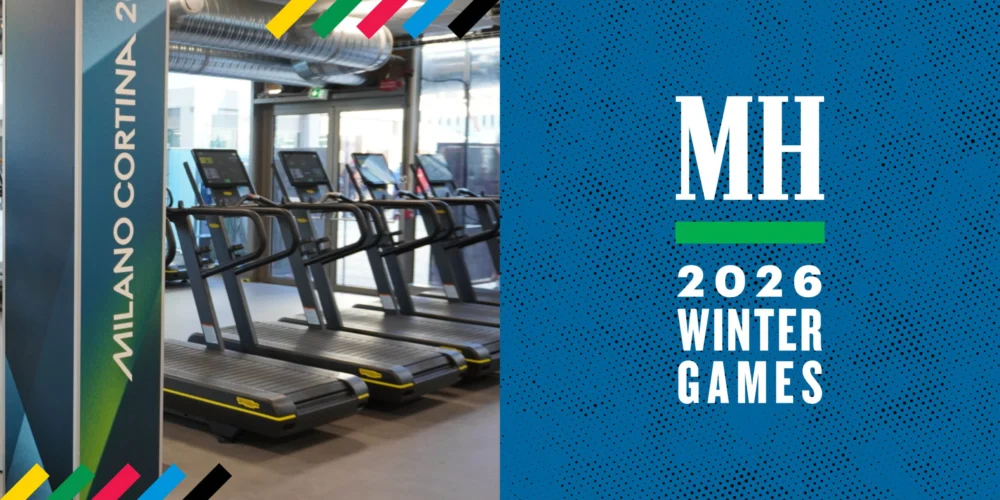
The roar of the crowd, the thrill of competition, the pursuit of gold – the Olympic Games embody the pinnacle of human athletic achievement. While the world watches athletes push their bodies to unimaginable limits on the global stage, the dedication and meticulous planning behind their success begin long before they step into the spotlight. We recently gained exclusive insight into one of the crucial hubs of this preparation: the state-of-the-art training center supporting the athletes competing in the Milano-Cortina Games.
Imagine a space designed not just for general fitness, but for the hyper-specific demands of elite winter sports. While your local gym might not boast the same cutting-edge technology, the fundamental principles and the smart utilization of equipment at these Olympic facilities offer invaluable lessons for fitness enthusiasts of all levels. Our team, on the ground in Italy, had the privilege of experiencing this behind-the-scenes look, and the takeaways are profound. As fitness director Ebenezer Samuel, C.S.C.S., observed, "Not everyone needs to train this way, but there’s a lot we can learn from athletes and should at least think about when it comes to training."
This article delves into four key insights gleaned from the Milano-Cortina training center, offering practical advice and actionable strategies to elevate your own fitness journey.
H2: The Strategic Embrace of Machine Training
When we envision Olympic athletes, our minds often jump to explosive movements: the grace of a figure skater, the power of a downhill skier, the precision of a bobsledder. This naturally leads us to associate their training with turf sprints, Olympic lifts, and dynamic, power-focused exercises. While these are undeniably crucial for developing rate of force development – the speed at which an athlete can generate force – what might surprise many is the significant role that traditional weight machines play in their regimen.
The training center was equipped with a comprehensive array of plate-loaded machines, designed to systematically build muscle and strength. These machines offer a controlled environment where athletes can push their muscles to near-failure without the same level of technical demand as free weights. This is particularly beneficial for:
- Safe Progressive Overload: Machines allow for precise adjustments in weight, enabling athletes to gradually increase the resistance as they get stronger. This consistent challenge is the cornerstone of muscle growth and strength gains.
- Targeted Muscle Engagement: Each machine is engineered to isolate specific muscle groups, ensuring that the intended muscles are being worked effectively. This is vital for addressing muscle imbalances and building a well-rounded physique.
- Fatigue Management: For athletes recovering from intense training or competition, machines can provide a less taxing yet still effective way to maintain muscle stimulus.
One particularly impressive piece of equipment noted was a belt squat machine. This innovative design allows for a heavy lower body workout with reduced spinal loading, making it an excellent tool for building powerful legs and glutes while minimizing stress on the back – a common concern for athletes across disciplines.

Furthermore, the center featured a series of AI-powered machines, such as the "Checkup" system. These advanced tools are not just for training but also for sophisticated athlete assessments. They can analyze movement patterns, identify weaknesses, and provide data-driven insights to tailor training programs even further.
Practical Takeaway for Your Gym Routine:
Don’t shy away from weight machines! While free weights are essential for functional strength, machines offer a valuable and safe way to build a solid foundation of muscle and strength.
- Incorporate Machine Exercises: Dedicate a portion of your workout to machines that target major muscle groups. For example, use a leg press for quadriceps and hamstrings, a chest press for pectoral muscles, and a lat pulldown for your back.
- Focus on Controlled Movements: Prioritize slow, controlled repetitions, feeling the target muscles work through the full range of motion.
- Aim for Progressive Overload: Consistently strive to increase the weight, repetitions, or sets over time.
- Listen to Your Body: Machines can be forgiving, but always maintain proper form to prevent injury.
H2: The Unwavering Importance of Pilates for Core Strength and Stability
The landscape of fitness is constantly evolving, and what was once considered a niche or even faddish practice is now firmly integrated into the training regimens of elite athletes. Pilates, once primarily associated with mat-based exercises in dimly lit studios, has made a significant and lasting impact. The presence of multiple high-quality Pilates reformers at the Olympic training center is a testament to its growing acceptance and proven efficacy.
Pilates is far from being a primary training modality for Olympians; it doesn’t replace the need for sport-specific conditioning or heavy lifting. Instead, its value lies in its ability to cultivate:
- Deep Core Strength: Pilates places immense emphasis on the core muscles – the deep abdominal muscles, back muscles, and pelvic floor. A strong and stable core is the foundation for almost every athletic movement, providing power transfer and preventing injuries.
- Proprioception and Body Awareness: The exercises demand a high degree of mind-body connection, enhancing an athlete’s awareness of their body’s position in space. This improved proprioception leads to better control, balance, and coordination.
- Stabilizer Muscle Development: Many everyday exercises tend to work the larger, primary muscles. Pilates excels at engaging and strengthening the smaller, often overlooked stabilizer muscles that are crucial for joint health and efficient movement.
- Injury Prevention: By building a robust core and improving muscle balance, Pilates significantly reduces the risk of common sports-related injuries, allowing athletes to train harder and more consistently.
The reformers, with their spring-loaded resistance system, provide a dynamic and challenging way to perform Pilates exercises. They allow for a wide range of movements that can be modified to suit different fitness levels and specific athletic needs.
Practical Takeaway for Your Fitness Routine:
Integrating Pilates principles into your training can dramatically enhance your overall athleticism and reduce your risk of injury.

- Explore Pilates Classes: If possible, enroll in beginner Pilates classes, either in person or online. Focus on understanding the core principles and proper form.
- Incorporate Mat Pilates Exercises: Even without a reformer, you can perform many effective Pilates exercises on a mat. Exercises like the "hundred," "roll-up," and "leg circles" are excellent starting points.
- Focus on Breath and Control: The hallmark of Pilates is the conscious connection between breath and movement. Emphasize slow, controlled repetitions.
- Prioritize Core Engagement: Actively think about engaging your deep abdominal muscles during all your exercises, not just those specifically designed for core work.
H2: The Enduring Power of Cardiovascular Conditioning for All Athletes
While the Winter Olympics might feature sports with intermittent bursts of high intensity rather than sustained endurance events like marathons, the importance of a well-developed cardiovascular system remains paramount for every athlete. The training center clearly reflected this, with a significant number of treadmills and a bustling stationary bike section.
Why is cardio so crucial, even for athletes who don’t appear to be endurance specialists?
- Enhanced Recovery: A strong cardiovascular system allows athletes to recover more quickly between high-intensity efforts. This means they can perform at a higher level for longer durations within their sport.
- Improved Aerobic Base: Even for short, explosive events, a foundational aerobic capacity supports the body’s ability to deliver oxygen to working muscles, improving overall efficiency.
- Mental Toughness: Pushing through challenging cardio workouts builds mental resilience and the ability to tolerate discomfort, qualities that are invaluable in high-pressure competition.
- Fat Metabolism: Cardiovascular training improves the body’s ability to utilize fat as an energy source, which can spare glycogen stores and improve endurance.
- General Health and Well-being: Beyond athletic performance, a healthy heart and lungs are fundamental to overall health, longevity, and disease prevention.
The fact that the Olympic training center prioritized a substantial number of cardio machines, and that these were frequently occupied, underscores that building an "engine" – a robust cardiovascular system – is a non-negotiable component of elite athletic preparation.
Practical Takeaway for Your Training Plan:
Don’t underestimate the power of cardio, regardless of your fitness goals. A well-rounded fitness plan includes dedicated cardiovascular training.
- Mix It Up: Incorporate a variety of cardio activities that you enjoy, such as running, cycling, swimming, rowing, or even brisk walking.
- Consider Interval Training: High-intensity interval training (HIIT) can be highly effective for improving cardiovascular fitness and burning calories in a shorter amount of time.
- Include Steady-State Cardio: Longer, moderate-intensity cardio sessions are excellent for building an aerobic base and improving endurance.
- Consistency is Key: Aim for at least 150 minutes of moderate-intensity or 75 minutes of vigorous-intensity aerobic activity per week, as recommended by health guidelines.
H2: Kettlebells: A Tool, Not a Sole Solution for Elite Strength
In the realm of fitness, certain pieces of equipment gain significant popularity and are often hailed as revolutionary. Kettlebells fall into this category, lauded for their ability to build power, improve conditioning, and enhance athleticism. However, the Olympic training center presented a more nuanced perspective on their role in elite preparation.
While the facility did house kettlebells, the selection was notably limited, with only a few small bays and weights not exceeding 53 pounds. This observation suggests that for the specific needs of Olympians, kettlebells are viewed more as a supplementary tool rather than a primary driver of strength and power development.

Kettlebells are indeed excellent for:
- Developing Athleticism and Bounciness: Kettlebell swings and cleans are fantastic for teaching the body to generate power through hip extension and developing a dynamic, athletic movement pattern.
- Functional Conditioning: Their unique design allows for a combination of strength and cardiovascular work in a single exercise.
- Grip Strength: Holding and swinging kettlebells effectively builds formidable grip strength.
However, for the purpose of building maximal strength and significant muscle hypertrophy – essential for many Olympic sports – other tools often take precedence. The limited weight selection indicates that Olympians likely rely on other modalities to achieve their heavy lifting and strength-building goals.
Practical Takeaway for Your Workout Strategy:
Kettlebells are a valuable addition to a balanced fitness program, but it’s important to understand their strengths and limitations.
- Embrace Kettlebell Swings: The kettlebell swing is a foundational exercise for developing explosive power and conditioning. Focus on mastering the hip hinge motion.
- Use Them for Conditioning Circuits: Kettlebells are perfect for creating challenging circuits that combine strength and cardio.
- Don’t Solely Rely on Kettlebells for Strength: If your primary goal is to build maximal strength or significant muscle mass, incorporate heavier free weights (barbells and dumbbells) and resistance machines into your routine.
- Progress Wisely: As you become more proficient, gradually increase the weight of your kettlebells to continue challenging yourself.
Conclusion: The Athlete’s Mindset for Your Fitness Journey
The insights gleaned from the Milano-Cortina Olympic training center offer a compelling blueprint for anyone looking to elevate their fitness. While the specialized equipment and the sheer dedication of the athletes are on a different scale, the underlying principles are universally applicable.
Olympians don’t just train; they train with purpose, intelligence, and an unwavering commitment to their craft. They understand that a holistic approach, incorporating a variety of training modalities, is key to unlocking their full potential. They embrace the tools that best serve their specific needs, whether it’s the controlled resistance of a machine, the nuanced core engagement of Pilates, the foundational power of cardiovascular training, or the dynamic explosiveness of kettlebells.
Your fitness journey, though perhaps not culminating in an Olympic medal, deserves the same level of thoughtful consideration. Don’t be afraid to experiment with different exercises and training styles. Learn from the best, adapt their strategies to your own circumstances, and remember that consistency, proper form, and a dedication to continuous improvement are the true keys to achieving your fitness goals. The pursuit of a healthier, stronger you is a marathon, not a sprint, and with the right mindset and approach, you too can unlock peak performance in your own life. Now, go forth and train with Olympic intent!