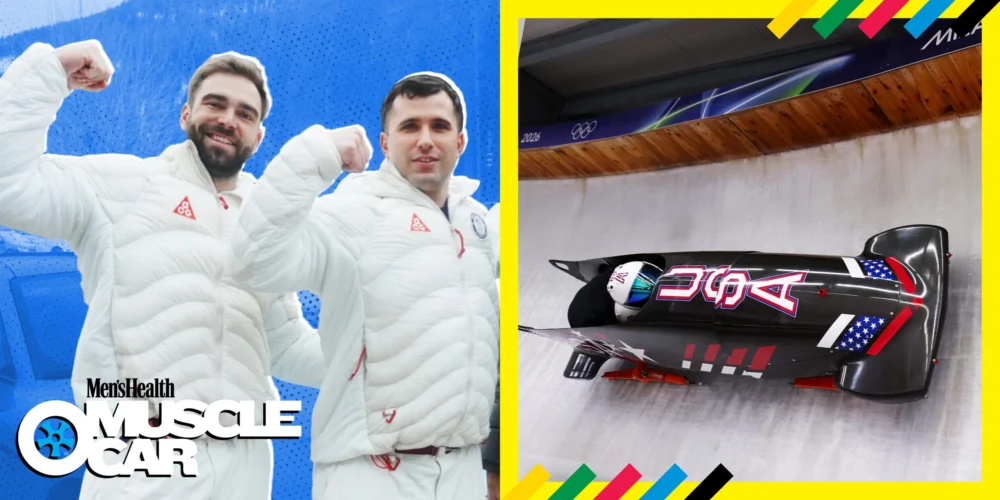
The roar of the crowd, the blinding speed, the sheer force of gravity – bobsledding is a sport that pushes the boundaries of human capability and engineering. It’s a symphony of power, precision, and cutting-edge technology. For aspiring athletes and fitness enthusiasts looking to understand what it takes to excel at the highest level, the insights from Olympic hopefuls are invaluable.
Team USA’s bobsledding duo, Frank Del Duca and Josh Williamson, recently offered a rare glimpse into their world, sharing their training philosophies, the crucial role of technology, and the unwavering bond of teamwork that propels them down the icy track. While their immediate focus is the 2026 Milano-Cortina Winter Games, their journey offers a wealth of knowledge applicable to anyone aiming to elevate their fitness game.
The Foundation of Fury: Powering the Push
The initial push in bobsledding is nothing short of explosive. It’s a critical phase where raw power and speed are paramount. This isn’t just about brute strength; it’s about generating maximum force in the shortest amount of time.
Explosive Strength for the Start Line
Del Duca, an Army Sergeant and member of the Army World Class Athlete Program (WCAP), emphasizes the importance of explosive power. "You have to be able to generate a massive amount of force very quickly," he explains. "Think about it like a sprinter, but with the added challenge of pushing a heavy sled."
Williamson, who joined the team through a competitive scouting program, echoes this sentiment. "Our training is a blend of sprinting mechanics and heavy lifting," he states. "We’re not just building muscle; we’re building powerful muscle."
For fitness enthusiasts, this translates to incorporating exercises that mimic this explosive nature:
- Plyometrics: Box jumps, jump squats, and broad jumps are excellent for developing explosive leg power. Start with a manageable height and intensity, focusing on proper landing mechanics.
- Olympic Lifts: While complex, variations of the clean and jerk or snatch can significantly enhance power output. If you’re new to these, seeking guidance from a certified coach is crucial.
- Medicine Ball Throws: Rotational throws, overhead throws, and chest passes engage the core and upper body, developing powerful, coordinated movements.
The Role of the Core: Stability Under Pressure
The forces experienced in a bobsled are immense. During turns, athletes can endure G-forces comparable to fighter pilots. Maintaining stability and control in this chaotic environment is where a strong core becomes indispensable.
Del Duca, who pilots the sled, highlights the importance of core stability. "As the pilot, I’m dealing with constant lateral forces," he says. "A strong, stable core allows me to make those minute adjustments and keep the sled on the optimal line. Exercises like the Pallof press are key for developing that anti-rotation strength."
Williamson, as the brakeman, also relies on a robust core. "Even when I’m not actively pushing, I’m braced, absorbing impact and helping to maintain balance," he notes. "A solid foundation from the core translates to better overall body control."
Actionable Core Training Tips:
- Planks (and variations): Standard planks, side planks, and planks with hip dips challenge your core’s endurance and stability.
- Russian Twists: Engage your obliques with controlled twists, adding weight for increased difficulty.
- Dead Bugs: A fantastic exercise for developing deep core control and coordinating opposing limbs.
- Hanging Leg Raises: Build lower abdominal strength and hip flexor control.
The Science of Speed: Technology and Aerodynamics
Bobsledding isn’t just about human power; it’s a highly technical sport where every millimeter and every gram counts. The sled itself is a marvel of engineering, designed for maximum speed and stability.
The Sled: A Precision Machine
"The equipment is incredibly important," Del Duca asserts. "It’s a lot like auto racing. You can have the best driver, but if the car isn’t optimized, you’re not going to win."
The sled’s design focuses on minimizing drag and maximizing the transfer of the push-start energy into forward momentum. Aerodynamics play a huge role, with teams constantly refining the shape and materials of their sleds.
Equipment Secrets and the German Factor
When asked about secretive teams, Williamson quickly points to Germany. "They’re very good at having really, really good tech in their equipment without you really seeing it," he explains. This highlights the often-unseen innovation that separates elite teams.
For the everyday athlete, understanding the principles of aerodynamics and efficient movement can still be beneficial. While you may not be designing a sled, focusing on form and minimizing wasted motion in your own training can lead to greater efficiency and performance.
The G-Force Gauntlet: Battling the Squeeze
The immense forces exerted during a bobsled run are a significant physical challenge. Athletes must be conditioned to withstand these pressures without compromising their performance.
Strength as the Ultimate G-Force Defense
Williamson believes that overall strength is the best defense against the G-forces. "The back squat, for example, checks about every box," he says. "If you can be a strong human, you can handle Gs better."
This principle extends beyond bobsledding. Building a strong, resilient body through compound movements like squats, deadlifts, and overhead presses improves your ability to handle physical stress in any demanding activity.
The Low Back: An Unsung Hero
When asked about the most important muscle for bobsledding, Williamson points to the low back. "With the Gs, between the sliding and then carrying the bobsled around, your low back is something that you start to notice a lot more," he explains.
Maintaining a healthy and strong lower back is crucial for everyone, not just athletes. Exercises like:
- Good Mornings: Focus on controlled hip hinge movement, strengthening the hamstrings and lower back.
- Supermans: Engage the erector spinae muscles along the spine.
- Bird-Dog: Improves core stability and coordination while engaging the back muscles.
The Human Element: Teamwork and Trust
While technology and individual strength are vital, the success of a bobsled team hinges on the seamless integration of two individuals working as one.

A Partnership Forged in Competition
Del Duca and Williamson represent a classic partnership dynamic. Del Duca, the pilot, is more meticulous and forward-thinking, always planning ahead. Williamson, the brakeman, is perhaps more relaxed but also admits to sometimes being too hasty, a trait his wife apparently dislikes.
"Frank is a lot more thorough than I am," Williamson admits. "I think I can get in a rush, and sometimes I get annoyed if we’re doing the extra little thing… Frank does a much better job to make sure we keep the stuff, because when we ultimately need it and I’ve thrown it away, then it turns into a problem."
Del Duca adds, "I can’t really relax if we have stuff to do with bobsled, and it doesn’t have to be done until tomorrow, but we’re gonna do it today—I can’t really relax till we get it done."
This difference in approach, while occasionally a source of gentle friction, is ultimately what makes them a formidable team. They complement each other’s strengths and weaknesses, fostering a dynamic built on trust and mutual respect.
The Art of Communication and Trust
In bobsledding, split-second decisions and precise movements are critical. This requires an unspoken understanding and complete trust between the pilot and brakeman. They must anticipate each other’s actions and react in unison.
For any team endeavor, whether it’s a sports team, a work project, or a fitness partnership, clear communication and unwavering trust are the bedrock of success. Learning to lean on your teammates, communicate your needs, and offer support are essential skills.
The Unseen Challenges: What the Cameras Don’t Always Show
The glamour of the Olympics often masks the grueling realities of the sport. Del Duca and Williamson shed light on some of the less glamorous but equally important aspects of bobsledding.
The Toll of the Track Walk
When asked about exercises they hate, Del Duca’s answer is simple: "Track walks from the bottom up." This involves walking the entire length of the bobsled track to study the ice conditions, the optimal lines, and potential hazards. It’s a physically demanding task that requires significant time and energy.
The Question of Motion Sickness
The intense vibrations and rapid changes in direction can be disorienting, even for seasoned athletes. Williamson mentions that some teammates have used motion sickness medication. "There’s no shame in that, because this sport is very rough," he states. "The whole way down, instead of just thinking of twisting and turning, it’s very rattly. People don’t realize that when you’re in the sled, you’re shaking the whole way down."
For those prone to motion sickness, incorporating balance exercises and gradually exposing yourself to more dynamic movements can help build resilience.
Fueling the Machine: Nutrition for Peak Performance
Elite athletes understand that nutrition is not just about sustenance; it’s a critical component of performance and recovery.
Protein Powerhouse
When asked about fiber versus protein, both Del Duca and Williamson unequivocally choose protein. "Protein is essential for muscle repair and growth, which is paramount for us," Del Duca explains.
Williamson even highlights a surprising but effective protein source: Parmesan cheese. "It’s basically perfect," he says, citing its high protein content per gram.
For fitness enthusiasts, prioritizing lean protein sources like chicken, fish, lean beef, eggs, and plant-based options is key to supporting muscle development and recovery.
Strategic Weight Management
The rules of bobsledding involve strict weight limits for the sled and crew. This adds a layer of complexity to training, as athletes must balance building strength and power with maintaining a specific weight.
"We want to be as fast as I can, but I’m also trying to be as heavy as I can be," Williamson explains. "You’re kind of training like a sprinter while also training like an Olympic weightlifter." This dual focus requires a finely tuned nutritional strategy.
Beyond the Track: Life as an Olympian
The journey to the Olympics is more than just training and competition. It’s about dedication, sacrifice, and embracing the unique experiences that come with being an elite athlete.
Embracing the Journey
Del Duca’s personal anecdote about meeting Snoop Dogg, connecting his childhood gaming experiences with his current Olympic journey, perfectly encapsulates the surreal and rewarding nature of pursuing one’s dreams. It’s a reminder that even the most intense pursuits can be punctuated by moments of pure joy and connection.
The Drive to Excel
Ultimately, the dedication of athletes like Frank Del Duca and Josh Williamson is what inspires us all. Their pursuit of excellence, their commitment to honing their craft, and their unwavering belief in themselves and their teammates are a testament to the power of the human spirit.
Your Own Olympic Journey: Applying the Principles
While not everyone is aiming for the Olympic bobsled track, the principles championed by Del Duca and Williamson are universally applicable to anyone seeking to improve their fitness and performance.
- Prioritize Explosive Power: Incorporate plyometrics and power-focused exercises into your routine.
- Build a Rock-Solid Core: A strong core is the foundation for all movement and stability.
- Embrace Strength Training: Compound lifts are your allies in building overall strength and resilience.
- Understand the "Tech" in Your Training: Focus on proper form and efficient movement to maximize your efforts.
- Nourish Your Body Wisely: Prioritize protein for muscle repair and growth.
- Cultivate Teamwork and Trust: Whether with a training partner or a supportive community, collaboration enhances your journey.
- Be Prepared for the "Grit": Understand that pushing your limits involves challenges, both physical and mental.
The path to peak performance is rarely linear. It’s a continuous process of learning, adapting, and pushing boundaries. By drawing inspiration from athletes like Frank Del Duca and Josh Williamson, you can engineer your own success, one powerful stride, one controlled movement, and one shared victory at a time. Embrace the challenge, trust the process, and discover the incredible potential within you.