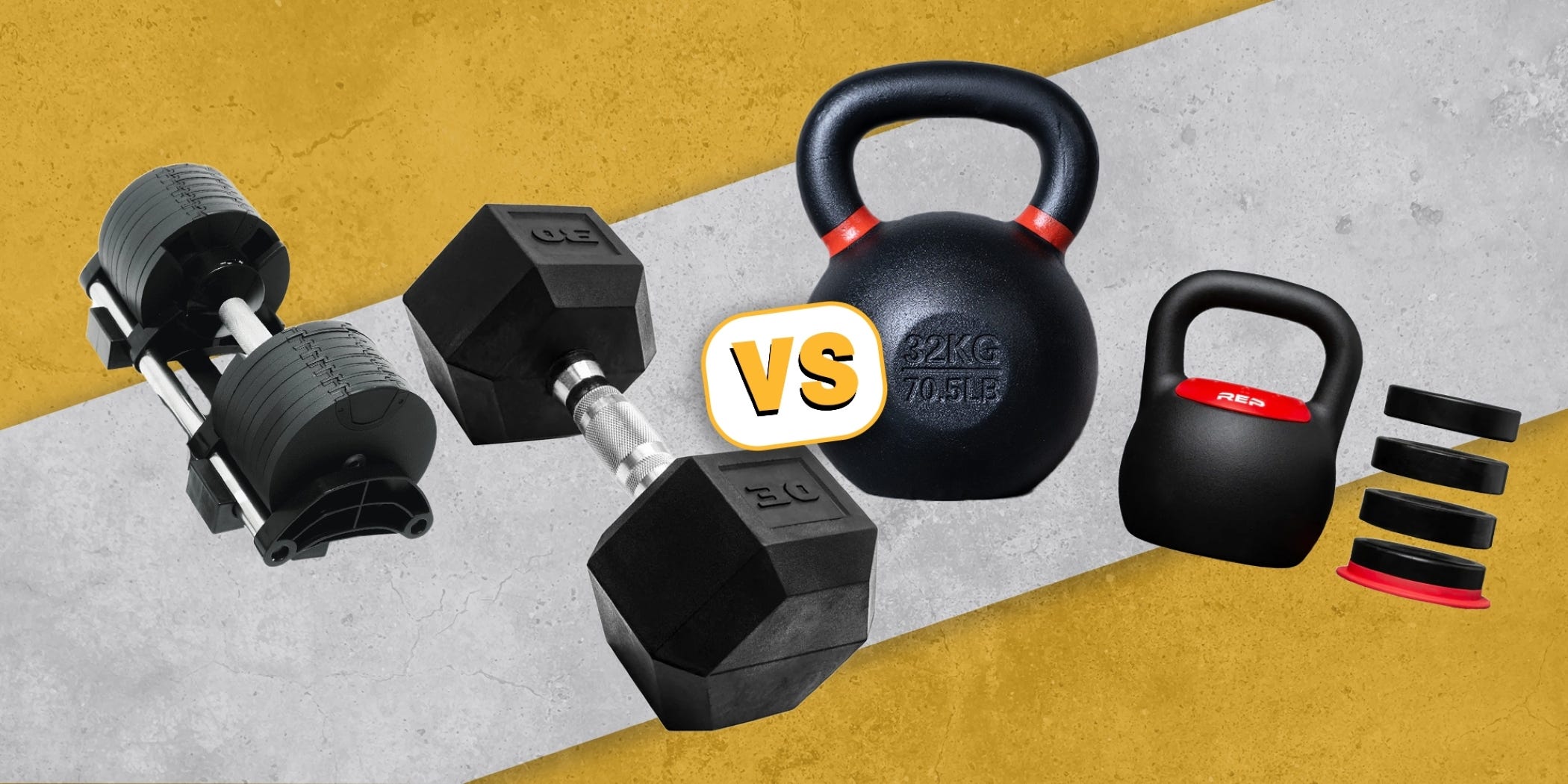
Building a home gym is an investment in your health and well-being. As you curate your personal fitness sanctuary, the question of what equipment to acquire inevitably arises. Among the most fundamental and versatile tools are kettlebells and dumbbells. Both have earned their place as staples in gyms worldwide, offering compact, accessible, and highly effective ways to build strength, improve conditioning, and sculpt your physique. However, they are not interchangeable. Each possesses unique characteristics that lend themselves to different training styles and goals.
Choosing between a kettlebell and a dumbbell, or deciding if you need both, can feel like a crucial first step. Understanding their distinct advantages, how they feel in your hands, and the types of movements they best facilitate is key to making an informed decision that aligns with your fitness aspirations. Let’s dive into the nuances of these classic free weights to help you equip your home gym for optimal results.
The Fundamental Differences: Form and Function
While both kettlebells and dumbbells are free weights, meaning they allow for dynamic movement through space, their design dictates how they influence your training.

Kettlebells: The Dynamic Powerhouse
A kettlebell is essentially a cast-iron ball with a U-shaped handle. This unique design places the center of mass in a position that is either below your grip or behind your wrist. This offset weight distribution is what gives kettlebells their distinctive feel and unlocks specific training modalities.
- Offset Load: The weight hanging below your grip or behind your wrist makes kettlebells feel inherently less stable during overhead movements like presses. Conversely, this offset load can make exercises like rows or carries feel more challenging, as the mass is further from your center of power.
- Dynamic Movement: The handle allows for greater wrist rotation, making ballistic exercises like kettlebell swings, cleans, and snatches feel more fluid and natural. This rotational capacity is a key differentiator for kettlebells.
- Ballistic Emphasis: Kettlebells are renowned for their effectiveness in explosive, full-body movements that engage multiple muscle groups simultaneously.
Dumbbells: The Stable Strength Builder
Dumbbells, characterized by their straight handles with balanced weights on either end, offer a different training experience. Their symmetrical design promotes stability and control.
- Symmetrical Load: The balanced weight distribution on either side of the handle creates a stable and predictable implement. This is ideal for exercises requiring precise control and a consistent range of motion.
- Controlled Motion: Dumbbells excel in single-plane movements. This makes them perfectly suited for exercises where the focus is on isolating muscles, achieving a deep stretch, or performing slow, controlled repetitions for muscle hypertrophy.
- Hypertrophy Focus: Their stability and predictable load path make dumbbells the go-to choice for traditional strength training and muscle-building routines.
Key Considerations for Your Home Gym Decision
Before you commit to a purchase, let’s break down the factors that will guide you toward the right choice for your fitness journey.

Exercise Selection: What Moves You?
While many exercises can be performed with both implements, certain movements are inherently better suited to one over the other.
-
Kettlebell Strengths:
- Ballistic Lifts: Kettlebell swings are the quintessential kettlebell exercise. The shape and handle allow for a powerful hip hinge and explosive drive. Trying to replicate this with a dumbbell often feels awkward due to the need to grip the heads and the less ergonomic shape.
- Dynamic Flows: Exercises like cleans, snatches, and clean-and-jerks benefit greatly from the kettlebell’s ability to rotate naturally around the hand, allowing for smooth transitions between movements.
- Turkish Get-Ups: This complex, full-body movement is often considered a benchmark kettlebell exercise due to the constant re-balancing required and the unique loading patterns.
-
Dumbbell Strengths:

- Controlled Strength Work: Dumbbells are unparalleled for exercises that demand stability and focus on muscle tension. This includes:
- Presses: Bench presses, overhead presses, incline presses.
- Rows: Bent-over rows, single-arm rows.
- Isolation Movements: Bicep curls, tricep extensions, lateral raises, front raises.
- Symmetrical Loading: For exercises where you need to maintain a consistent, stable grip and controlled movement path, dumbbells are superior. This allows for a greater focus on mind-muscle connection and maximizing mechanical tension for muscle growth.
- Controlled Strength Work: Dumbbells are unparalleled for exercises that demand stability and focus on muscle tension. This includes:
Real-Life Example: Imagine performing a set of dumbbell bench presses. You can focus on the controlled descent and explosive push, feeling the chest muscles work through a full range of motion. Now, try to replicate that with a kettlebell. While possible, the offset weight and handle shape can make achieving the same level of stability and comfort challenging, potentially limiting your ability to push to failure safely.
Training Style: Aligning Your Goals with Your Tools
Your primary fitness goals should heavily influence your choice.
-
For Muscle Building and Strength Gains:

- Dumbbells are generally the superior choice. Their stability and predictable weight increments make them ideal for progressive overload – the cornerstone of strength and hypertrophy training. You can systematically increase the weight or reps over time, ensuring consistent progress.
- Adjustable dumbbells are a fantastic option for home gyms, offering a wide range of weights in a compact footprint, allowing you to meticulously dial in your strength progression.
-
For Athleticism, Conditioning, and Explosiveness:
- Kettlebells often take the lead. Their design is perfectly suited for dynamic, full-body movements that mimic athletic actions. They are excellent for:
- High-Intensity Interval Training (HIIT): Kettlebell swings, cleans, and snatches can be performed in circuits to elevate heart rate and improve cardiovascular fitness.
- Metabolic Conditioning: Linking multiple kettlebell exercises into "flows" or circuits can create challenging and effective conditioning workouts.
- Developing Power: The explosive nature of kettlebell exercises directly translates to improved athletic power.
- Kettlebells often take the lead. Their design is perfectly suited for dynamic, full-body movements that mimic athletic actions. They are excellent for:
Practical Workout Tip: If your goal is to build significant muscle mass, focus on dumbbell exercises like bench presses, squats (with dumbbells), rows, and deadlifts. Aim for 3-4 sets of 8-12 repetitions with a weight that challenges you by the last few reps. If your focus is on improving your cardiovascular health and athletic performance, incorporate kettlebell swings, goblet squats, and lunges into your routine, performing them for higher repetitions or within timed circuits.
Weight Increments: The Path to Progression
The way weights are incremented can significantly impact your ability to progress.

- Dumbbells: Typically come in smaller, more manageable increments (e.g., 2.5 or 5 pounds). This allows for precise adjustments in weight, which is crucial for consistent progressive overload in strength and hypertrophy training.
- Kettlebells: Are usually measured in kilograms, and the jumps between weights can be more substantial (e.g., 4kg, 8kg, 12kg). While this might seem like a hindrance for traditional strength training, it’s less impactful for the dynamic, compound movements kettlebells excel at. Instead of simply increasing the weight, you might progress by increasing repetitions, reducing rest times, or improving the speed and control of your movements.
Real-Life Example: A bodybuilder trying to increase their bicep curl weight might struggle with a 7-pound jump between dumbbells. However, for a kettlebell athlete performing swings, that same 7-pound difference might be a manageable step up, especially if they focus on improving their swing mechanics and power output.
Space and Storage: Maximizing Your Home Gym Footprint
The physical dimensions of your equipment are a vital consideration, especially in smaller living spaces.
-
Dumbbells:

- Traditional Sets: Require significant space. A full rack of fixed dumbbells from 5 lbs to 100 lbs can take up a considerable amount of floor space.
- Adjustable Dumbbells: Offer a revolutionary solution for space-saving. A single pair can replace an entire rack of dumbbells, typically occupying only the footprint of a shoebox. This is a game-changer for home gyms with limited space.
-
Kettlebells:
- Fixed Kettlebells: While individual kettlebells are relatively compact, accumulating a range of weights can still require dedicated storage. However, since many kettlebell exercises are performed with a single bell, you might not need as many pairs as you would with dumbbells.
- Adjustable Kettlebells: Exist, but they are often less common and can sometimes feel bulkier or less balanced than their fixed counterparts, potentially compromising their dynamic movement benefits.
Actionable Advice: If you have a small apartment or limited dedicated workout space, investing in a high-quality pair of adjustable dumbbells is likely your most efficient option. If you have more space and are drawn to dynamic movements, a set of fixed kettlebells might be more practical and enjoyable.
Cost: The Investment in Your Fitness
The financial outlay for each type of equipment can vary.

-
Dumbbells:
- Fixed Dumbbells: Buying a full set of fixed dumbbells can be a significant upfront investment, especially as you progress to heavier weights.
- Adjustable Dumbbells: While the initial cost can be higher than a single pair of fixed dumbbells, they often offer better long-term value by replacing multiple sets and providing a broad weight range for years of training.
-
Kettlebells:
- Fixed Kettlebells: Generally, a few well-chosen kettlebells (e.g., one lighter for conditioning and one heavier for strength) can provide a comprehensive workout. Pound for pound, they can sometimes be more cost-effective than acquiring a full set of dumbbells.
- Training with Single Bells: Since many kettlebell exercises are performed with one bell at a time, you may find you need fewer individual pieces of equipment compared to dumbbells, where pairs are standard.
Cost-Saving Tip: Start with a single, versatile weight for either kettlebells or dumbbells that allows you to perform a variety of exercises. For kettlebells, a 16kg (35lb) or 20kg (44lb) is often a good starting point. For dumbbells, a pair of 20-30lb weights or an entry-level adjustable set can cover many foundational movements.

So, Kettlebell or Dumbbell for Your Home Gym?
The answer isn’t a simple "one or the other." It depends entirely on your individual goals, training preferences, and available space.
Choose Kettlebells If:
- Your primary goal is to improve athleticism, cardiovascular conditioning, and explosive power.
- You enjoy dynamic, full-body movements like swings, cleans, and snatches.
- You’re interested in circuit training and metabolic conditioning.
- You have limited space and want a versatile tool that can be used for a wide array of exercises.
- You’re on a tighter budget and want to get a lot of bang for your buck with just a few pieces.
Choose Dumbbells If:
- Your primary goal is to build muscle mass and increase overall strength.
- You prefer slow, controlled movements and focusing on isolating specific muscle groups.
- You plan on following traditional strength training or bodybuilding-style programs.
- You need the precise weight increments for progressive overload.
- You have ample space or are investing in adjustable dumbbells to maximize your training potential.
The Case for Both: The Ultimate Home Gym Arsenal
For the fitness enthusiast who wants to cover all their bases, the ideal solution is often to incorporate both kettlebells and dumbbells into their home gym. This combination offers unparalleled versatility, allowing you to:
- Perform every type of exercise: From explosive kettlebell swings to controlled dumbbell presses.
- Target all fitness goals: Build strength and muscle with dumbbells, and enhance conditioning and power with kettlebells.
- Create diverse and engaging workouts: Mix and match exercises to keep your training fresh and challenging.
A Balanced Approach: If you’re starting out and can only afford one, consider your primary goal. If strength and muscle are paramount, lean towards dumbbells. If athleticism and conditioning are your focus, kettlebells might be the better initial investment. However, as your fitness journey progresses, consider adding the other tool to your arsenal.

Your Path Forward: Progress and Power
Regardless of which tool you choose, remember that consistency and progressive overload are the keys to success. Don’t be afraid to start light, focus on mastering proper form, and gradually challenge yourself.
- For Kettlebells: Focus on the hip hinge for swings, a powerful drive for cleans, and a stable rack position for presses.
- For Dumbbells: Emphasize controlled eccentric (lowering) phases and a strong concentric (lifting) phase for all your exercises.
Your home gym is your personal domain for transformation. By understanding the unique strengths of kettlebells and dumbbells, you can make an informed decision that will empower you to train effectively, reach your goals, and unlock your full physical potential. Embrace the journey, enjoy the process, and build the strong, capable body you deserve!