In today’s fast-paced world, carving out time and space for a robust fitness routine can feel like an Olympic challenge. Urban living often means smaller homes, and even suburban dwellers might struggle to dedicate a whole room to a home gym. Yet, the desire for a powerful, full-body workout remains undiminished. This is where the compact rowing machine emerges as a true game-changer – a marvel of engineering designed to deliver peak performance without demanding prime real estate.
Forget the notion that serious fitness requires sprawling equipment. Modern compact rowing machines are proof that you can achieve incredible results, boost your cardiovascular health, and sculpt your physique right from the comfort of your living room, balcony, or even a cozy corner. This definitive guide will navigate the world of compact rowers, empowering you to make an informed choice, master proper technique, and integrate this versatile machine into a fitness regimen that transforms your body and mind, regardless of your space limitations.
The Unrivaled Power of Rowing: Why It’s Your Go-To Workout
Before diving into the specifics of compact machines, let’s understand why rowing consistently ranks among the most effective workouts available. It’s not just a cardio session; it’s a symphony of strength, endurance, and coordination.
Full-Body Engagement: A Muscle-Building Masterclass
Unlike many cardio machines that isolate muscle groups, rowing engages an astounding 86% of your body’s muscles across both upper and lower body, and your core. With each powerful stroke, you activate:
- Legs: Quadriceps, hamstrings, glutes (driving the initial push-off).
- Core: Abdominals, obliques, lower back (stabilizing the movement and transferring power).
- Upper Body: Lats, rhomboids, biceps, triceps, shoulders (pulling the handle towards the body).
This comprehensive muscle activation means you’re not just burning calories; you’re building functional strength and lean muscle mass across your entire physique, leading to a more balanced and athletic build.
Cardiovascular Health: A Heart-Pumping, Lung-Strengthening Experience
Rowing is an exceptional cardiovascular workout, elevating your heart rate and improving your lung capacity. Regular rowing sessions can lead to:
- Stronger Heart: Increased efficiency in pumping blood.
- Improved Stamina: Ability to sustain physical activity for longer periods.
- Lower Blood Pressure: A key factor in reducing the risk of heart disease.
- Enhanced Oxygen Uptake: More efficient use of oxygen by your muscles.
Whether you’re aiming for steady-state endurance or high-intensity interval training (HIIT), rowing provides a scalable challenge that consistently pushes your cardiovascular system to new heights.
Low-Impact Nature: Gentle on Your Joints
One of rowing’s most significant advantages, especially for beginners or those with joint concerns, is its low-impact nature. Unlike running or jumping, which can stress knees, ankles, and hips, rowing involves smooth, controlled movements. The seated position and fluid motion minimize jarring forces, making it an excellent option for:
- Injury Rehabilitation: A safe way to rebuild strength and endurance.
- Long-Term Fitness: Sustainable exercise that protects your joints over years of training.
- Active Recovery: A gentle yet effective way to move your body on rest days.
Strength and Endurance: A Dual-Purpose Dynamo
Rowing uniquely combines strength training with endurance building. The resistance you work against builds muscle, while the repetitive motion over time builds stamina. You can adjust the intensity to prioritize one over the other:
- Strength-Focused: Increase resistance, shorten strokes, focus on explosive power.
- Endurance-Focused: Maintain moderate resistance, lengthen strokes, sustain effort over time.
This versatility makes the rowing machine a powerful tool for achieving a wide range of fitness goals.
Mental Well-being: The Rhythm of Focus and Release
Beyond the physical, rowing offers profound mental benefits. The rhythmic, repetitive motion can be meditative, helping to:
- Reduce Stress: Physical exertion releases endorphins, natural mood boosters.
- Improve Focus: Concentrating on form and rhythm can be a form of active meditation.
- Boost Mood: Achieving fitness goals fosters a sense of accomplishment and self-efficacy.
It’s a chance to disconnect from daily pressures and reconnect with your body, finding a powerful sense of accomplishment with every stroke.
The Compact Advantage: Fitness Without Compromise
The concept of a "compact" rowing machine isn’t about sacrificing performance; it’s about intelligent design that maximizes utility in limited spaces. For many, a traditional, full-sized rower simply isn’t feasible. Compact options bridge this gap, ensuring that space is no longer a barrier to a world-class workout.
Why Compact? Addressing Your Space Constraints
Living in an apartment, a small house, or needing to share a multi-purpose room means every inch counts. Compact rowing machines are specifically engineered with a smaller footprint, allowing them to fit where larger equipment cannot. They are designed for:
- Apartment Living: Easy to tuck away when not in use.
- Home Office Integration: Can be set up and stored quickly.
- Shared Spaces: Minimizes disruption to communal areas.
Folding vs. Upright Storage: Practical Considerations
The primary distinction among compact rowers often lies in their storage mechanism:
- Folding Designs: Many compact rowers feature a hinge mechanism, allowing the rail to fold vertically, significantly reducing the machine’s length when stored. This is ideal for sliding into a closet or against a wall.
- Upright Storage (Non-Folding): Some compact models, while not folding, are designed to be tilted and stored vertically against a wall. This still saves considerable floor space, but requires sufficient ceiling height and potentially a wall anchor for stability.
Understanding your available storage dimensions (length, width, and height) is crucial when selecting a compact model.
Portability: Wheels and Ease of Movement
Most compact rowing machines come equipped with front-mounted transport wheels. This seemingly small feature is a game-changer, allowing you to easily roll the machine out for a workout and then tuck it away afterwards, even if it’s not a folding model. The lighter weight of many compact designs also contributes to their superior portability.
Maintaining Performance: Compact Doesn’t Mean Less Effective
It’s a common misconception that smaller machines compromise on performance. In the world of compact rowers, this is rarely the case. Manufacturers use advanced materials and clever engineering to ensure these machines deliver the same smooth, challenging, and effective workout as their larger counterparts. The focus is on intelligent space utilization, not feature reduction.
Decoding Your Ideal Machine: A Comprehensive Buying Guide for Compact Rowers
Choosing the right compact rowing machine involves more than just picking the smallest option. It’s about finding the perfect synergy between your space, budget, fitness goals, and desired features.
Space & Storage Solutions: Measure Twice, Buy Once
This is paramount for compact machines.
- Workout Footprint: Measure the actual length and width the machine occupies during use. Add a little extra space around it for comfortable movement.
- Stored Dimensions: If a machine folds or stores upright, note its dimensions in the stored position.
- Folding: How short does it become? Will it fit in your closet or designated storage nook?
- Upright: What is the vertical height required? Do you have enough ceiling clearance? Do you need a wall anchor for safety (like the optional Hydrow Wave Vertical Anchor)?
- Accessibility: Consider how easy it is to move the machine. Look for robust transport wheels and a manageable weight.
Budget & Long-Term Value: Investing in Your Health
Rowing machines range widely in price.
- Entry-Level (Under $500): Often hydraulic piston or basic magnetic resistance. Good for casual use, but may lack durability or advanced features.
- Mid-Range ($500 – $1,500): This is where most excellent compact options reside, often featuring magnetic or air resistance, better build quality, and some smart features. Brands like ProForm and NordicTrack often fall into this range.
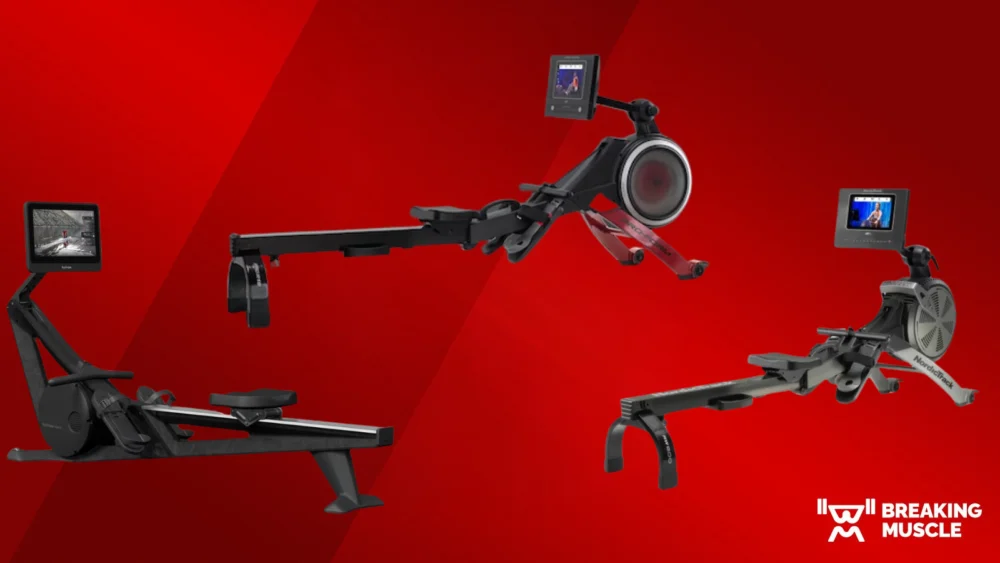
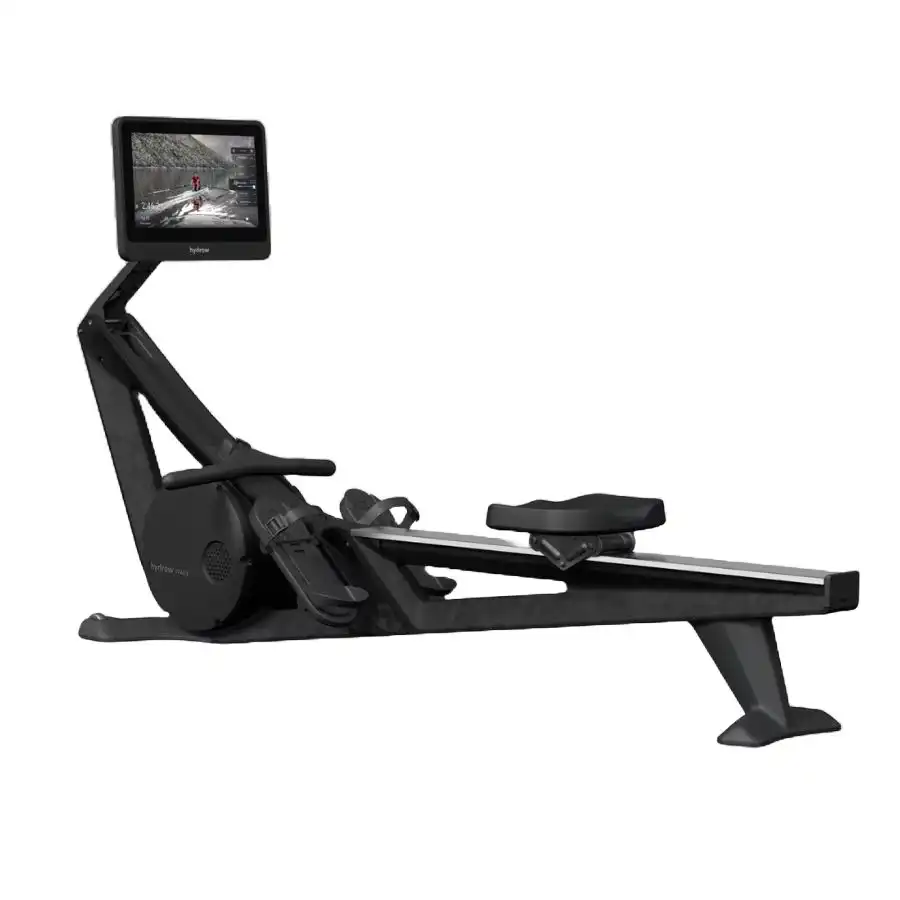
- Premium ($1,500+): High-end models with advanced interactive screens, immersive experiences, and superior build quality, such as the Hydrow Wave.
Consider not just the upfront cost, but also:
- Subscription Fees: Many smart rowers offer optional (or sometimes initially bundled) subscriptions (e.g., iFIT, Echelon Fit) for trainer-led classes. Factor these monthly costs into your long-term budget.
- Durability & Warranty: A sturdy frame (aluminum, steel) and a good warranty indicate a longer lifespan and better value.
- Add-ons: Lumbar support, seat upgrades, or vertical storage kits can add to the total cost.
Resistance Types Explained: Finding Your Perfect Feel
The type of resistance determines the feel, sound, and often the price of your rowing experience. Compact machines typically feature:
- Magnetic Resistance:
- How it works: Magnets interact with a flywheel to create tension.
- Pros: Extremely quiet, smooth, consistent resistance, often maintenance-free. Great for shared living spaces.
- Cons: Can sometimes feel less "natural" than air or water.
- Examples: NordicTrack RW700, ProForm Pro R10.
- Air Resistance:
- How it works: A fan flywheel creates resistance by pushing against air. The harder you pull, the more resistance you feel (dynamic resistance).
- Pros: Mimics on-water rowing most closely, provides an excellent full-body workout.
- Cons: Can be noisy, though many modern designs minimize this.
- Examples: Some compact models combine air and magnetic for a hybrid feel.
- Water Resistance:
- How it works: Paddles spin in a tank of water.
- Pros: Most authentic on-water feel, soothing whooshing sound, smooth and consistent.
- Cons: Can be heavier, larger, and require more maintenance (water treatment). Fewer truly "compact" water rowers.
- Hydraulic Piston Resistance:
- How it works: Pistons use fluid compression to create resistance.
- Pros: Very compact and affordable.
- Cons: Less smooth, often independent arm action (not true full-body stroke), less durable, limited resistance range. Generally not recommended for serious training.
For compact machines, magnetic resistance is often favored for its quiet operation and consistent performance in smaller environments.
Smart Features & Connectivity: Your Digital Fitness Companion
Modern compact rowers often come packed with technology to enhance your workouts.
- HD Touchscreens: Offer immersive experiences, displaying metrics, virtual courses, and interactive classes. The 10-inch screen on the NordicTrack RW700 or the 22-inch screen on the Echelon Row-s are prime examples.
- Trainer-Led Workouts: Platforms like iFIT (NordicTrack, ProForm) and Echelon Fit offer vast libraries of live and on-demand classes, often with auto-adjusting resistance for a truly hands-free experience.
- Swiveling Screens: Essential for cross-training, allowing you to follow off-rower workouts. The Echelon Row-s’s 180-degree swivel screen is excellent for this.
- Bluetooth Connectivity: For heart rate monitors, headphones, or syncing with other fitness apps.
- Metrics Tracking: Beyond basic time and distance, look for watts, stroke rate, calories burned, and split times to track progress effectively.
Decide if you prefer a simplistic display for manual workouts or a fully interactive, subscription-based experience.
Comfort & Ergonomics: A Smooth Ride
A comfortable machine means you’re more likely to use it consistently.
- Seat Design: Look for a molded, padded seat that supports your glutes and hips through the full range of motion.
- Handlebar: An ergonomic, soft-grip handle reduces hand fatigue and calluses.
- Footrests: Pivoting, adjustable foot pedals with secure straps are crucial for maintaining proper form and accommodating different foot sizes. Oversized pedals can offer extra stability.
- User Capacity: Check the maximum user weight and height capacity to ensure the machine is suitable for you and any other users in your household.
Durability & Build Quality: Built to Last
Invest in a machine that can withstand repeated use.
- Frame Materials: Aluminum and steel frames offer superior stability and longevity.
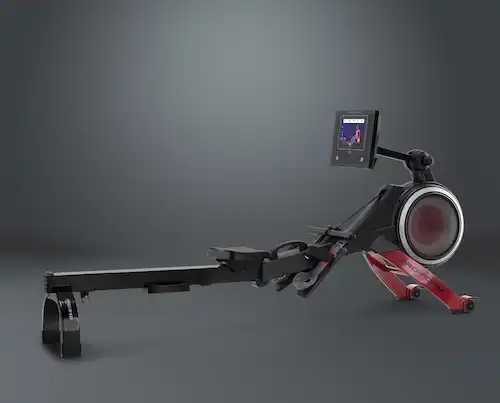
- Rail System: A smooth, sturdy rail ensures a consistent glide for the seat. Oversized rails, like on the ProForm Pro R10, enhance stability.
- Review Insights: Pay attention to user reviews regarding product longevity, customer service, and common issues.
Spotlight on Excellence: Top Compact Rowing Machine Categories
While the market offers a diverse range of compact rowing machines, certain models stand out in specific categories, illustrating the best features for various needs.
The Smart & Immersive Experience: Bringing the Water to Your Home
For those who crave engaging, interactive workouts and are willing to invest in a premium experience, smart compact rowers are ideal. These machines prioritize large HD screens and extensive content libraries.
-
Example: Hydrow Wave
- Key Features: Renowned for its patented electromagnetic drag system that precisely mimics the sensation of rowing on open water. It features a vibrant HD screen that immerses you in live and on-demand classes led by world-class athletes on real waterways. Its compact 80-inch length is notable, and while it doesn’t fold, it offers an optional vertical anchor for upright storage, minimizing its footprint when not in use. The quiet operation makes it perfect for shared living spaces. User reviews frequently highlight its smooth, quiet performance and the captivating workout experience.
- Ideal For: Users seeking an authentic, immersive rowing experience with high-quality, trainer-led content, and who prioritize a sleek, quiet machine.
-
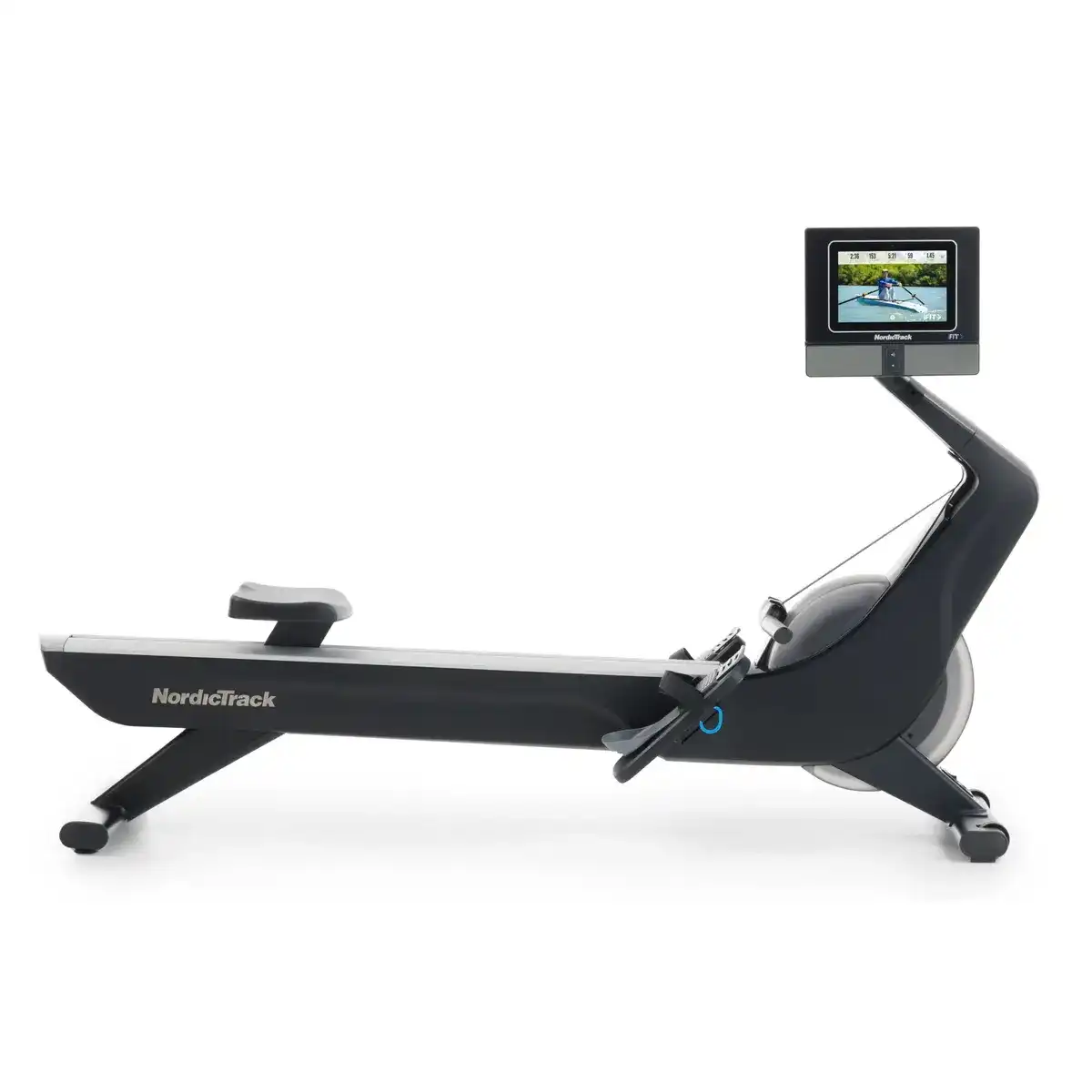
Example: NordicTrack RW700
- Key Features: This model boasts a 10-inch HD touchscreen that tilts and pivots, allowing for seamless transitions between on-rower and off-rower iFIT workouts. Its magnetic resistance system provides 26 adjustable levels, which can be automatically controlled by iFIT trainers during classes. The durable steel rail and inertia-enhanced flywheel ensure a smooth, consistent stroke. While not folding, its front wheels make it portable for storage.
- Ideal For: Those who want a highly interactive experience with trainer-led, automatically adjusting resistance workouts, and appreciate the flexibility of off-rower training options.
-
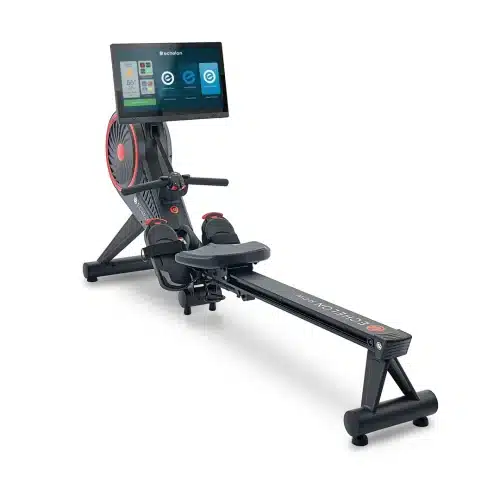
Example: Echelon Row-s
- Key Features: A standout for cross-training, the Echelon Row-s features a massive 22-inch HD touchscreen that flips 180 degrees. This allows users to easily follow a vast library of live and on-demand classes (with an Echelon Fit subscription) covering not just rowing but also functional training, yoga, and more, both on and off the machine. It folds significantly, reducing its 84-inch length to just 41 inches, making it incredibly space-efficient. The ergonomic design of the seat and adjustable foot platforms enhance comfort and proper form.
- Ideal For: Fitness enthusiasts who want a versatile machine for cross-training, an expansive workout library, and excellent folding capabilities for maximum space saving.
Foldable & Space-Saving Champions: Maximum Fitness, Minimal Footprint
For those whose absolute priority is reclaiming floor space after a workout, these machines excel at compact storage.
- Example: ProForm Pro R10
- Key Features: The ProForm Pro R10 is designed with convenience in mind, featuring an easy-to-use SpaceSaver® design that allows the rail to fold vertically with a simple lift of the handle. Front-mounted transport wheels further enhance its portability. It includes a 10-inch HD touchscreen for iFIT workouts or manual tracking, and its Silent Magnetic Resistance system offers 24 levels, making it adaptable for both cardio and strength-focused sessions.
- Ideal For: Users who need a highly foldable machine that’s easy to move and store, without sacrificing access to interactive training options.
Best Value Performers: Balancing Features with Accessibility
These machines offer a compelling blend of essential features, smart technology, and a more accessible price point, proving that quality fitness doesn’t have to break the bank.
- Example: NordicTrack RW600
- Key Features: The RW600 strikes an excellent balance between features and cost. It includes a 10-inch smart HD touchscreen, similar to its higher-end counterparts, providing access to iFIT’s expansive workout library with 26 levels of NordicTrack’s patented Silent Magnetic Resistance. This resistance can adjust automatically during iFIT classes or be controlled manually. Crucially, it folds in half for vertical storage, making it a highly practical choice for smaller homes.
- Ideal For: Budget-conscious buyers who still desire smart features, interactive training, and the convenience of a folding design for compact storage.
Mastering the Stroke: Essential Rowing Technique for Beginners & Beyond
Effective rowing isn’t just about pulling hard; it’s about technique. Proper form maximizes muscle engagement, prevents injury, and makes your workouts more efficient.
The Four Phases of a Perfect Stroke
Think of the rowing stroke as a fluid, four-phase movement. The key is smooth transitions and coordinated effort.
- The Catch:
- Position: Shins vertical, knees bent, arms extended straight forward, shoulders relaxed, back straight, core engaged. You should be reaching forward with the handle, not hunching your back.
- Action: Prepare for the drive.
- The Drive:
- Position: This is the powerful phase.
- Action: Push hard with your legs first, extending them fully. As your legs extend, hinge back slightly at the hips (from 11 o’clock to 1 o’clock), then finally pull the handle towards your sternum with your arms. The sequence is LEGS, CORE, ARMS.
- The Finish:
- Position: Legs fully extended, torso slightly leaned back (1 o’clock position), handle at your sternum, elbows pointing back.
- Action: Hold briefly, feeling the full contraction of your back and core.
- The Recovery:
- Position: The reverse of the drive, but in sequence.
- Action: Extend your arms first, then hinge forward from your hips, and finally allow your knees to bend as the seat slides forward. The sequence is ARMS, CORE, LEGS.
- Important: Control the speed of the recovery; don’t just "slingshot" forward. It should be about twice as long as the drive phase (e.g., 1 count for drive, 2 counts for recovery).
Common Mistakes to Avoid
- "Arms Only" Rowing: Pulling with your arms before your legs drive. This fatigues your arms quickly and neglects your powerful leg muscles.
- Hunching Your Back: Rounding your spine, especially at the catch. This puts undue stress on your lower back. Keep your back straight and core engaged.
- Rushing the Recovery: A fast recovery compromises control and doesn’t allow your body to reset for the next powerful drive.
- Over-Leaning: Leaning too far back at the finish puts strain on your lower back. Maintain a slight lean from the hips.
- Gripping Too Tightly: This can lead to hand fatigue and reduce overall efficiency. Maintain a firm but relaxed grip.
Posture & Form Cues
- Core Engagement: Think of bracing your core throughout the entire stroke, like preparing for a punch. This stabilizes your spine and transfers power.
- **