
In a world that constantly pulls us in a million directions, finding time for self-care, especially physical fitness, can feel like an Olympic challenge. Yet, the desire for a stronger, healthier body often remains a persistent whisper in the back of our minds. What if you could build remarkable strength, enhance your physique, and boost your overall well-being without ever stepping foot outside your front door? Welcome to the transformative power of home strength training – a practical, potent, and profoundly personal path to lasting fitness.
For beginners taking their first deliberate steps towards a fitter lifestyle, or intermediate enthusiasts looking to deepen their commitment and elevate their results, the home gym offers an unparalleled sanctuary for growth. This comprehensive guide is designed to empower you, providing the foundational knowledge, actionable strategies, and motivational insights needed to not just start, but truly thrive in your home strength journey. We’ll demystify the process, from setting up your space and choosing the right equipment to crafting effective workout routines and cultivating the mindset for long-term success. Prepare to unlock your potential, build resilient strength, and forge a healthier future, one rep at a time, all from the comfort and convenience of your own home.
The Unseen Advantages of Home Strength Training
The allure of a bustling commercial gym is undeniable for some, with its vast array of machines and vibrant atmosphere. However, for a growing number of individuals, the home environment has emerged as the ultimate training ground. Beyond mere convenience, home strength training offers a suite of distinct advantages that can significantly impact your consistency, progress, and overall enjoyment of fitness.
Convenience and Consistency: Your Schedule, Your Rules
Perhaps the most apparent benefit of home workouts is the unparalleled convenience. No commute, no waiting for equipment, no rigid class schedules. This accessibility dramatically reduces the barriers to exercise, making it easier to stick to a routine even on your busiest days. Imagine this: you wake up, roll out of bed, and within minutes, you’re warming up for your workout. Or, perhaps you squeeze in a quick session during a lunch break or after putting the kids to bed. This flexibility translates directly into greater consistency – the bedrock of all sustainable fitness progress. When exercise becomes an integrated, seamless part of your daily life rather than a separate chore, you’re far more likely to maintain momentum and achieve your goals.
Personalization and Privacy: A Space for Focused Growth
Your home gym is your sanctuary. It’s a place where you can experiment, make mistakes, and push your limits without the self-consciousness that can sometimes accompany a public gym setting. This privacy fosters a deeper connection with your body and your training. You can blast your favorite music, wear whatever you feel comfortable in, and fully immerse yourself in each movement. This environment allows for highly personalized training sessions. You dictate the pace, the exercises, and the intensity, tailoring every workout precisely to your energy levels, current capabilities, and specific fitness aspirations. This freedom to truly individualize your approach is a powerful catalyst for progress, especially for those who might feel intimidated or overwhelmed in a crowded gym.
Cost-Effectiveness Over Time: An Investment in Yourself
While the initial investment in home gym equipment might seem substantial, it often proves to be significantly more cost-effective in the long run compared to recurring gym memberships, personal training fees, and even the hidden costs of commuting (fuel, parking, time). Once you acquire your core equipment, the ongoing expenses are minimal. This financial freedom can be incredibly motivating, allowing you to allocate resources towards other health-promoting endeavors or simply enjoy the savings. Think of your home gym not as an expense, but as a wise, long-term investment in your health, vitality, and independence.
Laying the Groundwork: Essential Principles for Home Workouts
Embarking on a strength training journey, especially at home, requires more than just picking up weights. A solid understanding of fundamental principles will serve as your compass, guiding you towards effective, safe, and sustainable progress. These principles are universal, applying whether you’re in a state-of-the-art gym or your living room.
Setting Realistic Goals: Your North Star
Before you even consider your first rep, take time to define what success looks like for you. Are you aiming to build muscle, increase overall strength, improve body composition, or enhance functional movement for daily life? Be specific, measurable, achievable, relevant, and time-bound (SMART). Instead of "I want to get stronger," aim for "I want to be able to do 10 push-ups on my toes within 8 weeks," or "I want to increase my dumbbell squat weight by 10 pounds in 3 months." Realistic goals provide direction, motivation, and a clear benchmark against which to measure your progress, preventing discouragement and fostering a sense of accomplishment as you hit each milestone.
Understanding Progressive Overload: The Engine of Growth
This is arguably the most critical principle in strength training. Progressive overload means continually challenging your muscles by gradually increasing the demands placed upon them. Without it, your body adapts, and progress stalls. At home, this can be achieved in multiple ways:
- Increasing Resistance: Using heavier dumbbells, adding more resistance bands, or finding more challenging bodyweight variations (e.g., knee push-ups to full push-ups).
- Increasing Repetitions: Performing more reps with the same weight or bodyweight exercise.
- Increasing Sets: Doing more sets of an exercise.
- Decreasing Rest Time: Reducing the time between sets to increase intensity.
- Improving Tempo: Slowing down the eccentric (lowering) phase of an exercise to increase time under tension.
- Increasing Frequency: Working out more often (e.g., three times a week instead of two).
For example, if you can comfortably perform 3 sets of 10 squats with your current bodyweight, the next step might be to try 3 sets of 12, or introduce a light dumbbell, or slow down the lowering phase of each squat. Always seek to slightly outperform your last session in some measurable way.
The Importance of Proper Form: Foundation of Safety and Efficacy
Executing exercises with correct form is paramount. It not only prevents injury but also ensures that you’re effectively targeting the intended muscles. In a home setting, where you might not have a trainer constantly monitoring you, mastering form becomes even more crucial.
- Utilize Resources: Leverage online tutorials, fitness apps, and reputable YouTube channels. Watch demonstrations carefully and pay attention to cues.
- Record Yourself: Use your phone to record your sets from different angles. This provides invaluable feedback, allowing you to spot imbalances or incorrect movements.
- Start Light: Always prioritize form over weight or speed. Begin with bodyweight or very light resistance until your movement pattern is fluid and correct.
- Focus on the Mind-Muscle Connection: Consciously contract the muscle you’re trying to work. This helps you feel the movement and ensures the right muscles are engaged.
- Listen to Your Body: Pay attention to any pain. Sharp pain is a red flag – stop immediately. Soreness is normal, but pain is not.
Think of proper form as the blueprint for your strength house. A faulty blueprint leads to a weak structure, no matter how much material you throw at it.
Nutrition and Recovery: The Unsung Heroes of Progress
Your efforts in your home gym are only half the equation. What you do outside of your workouts is equally, if not more, important for results.
- Fuel Your Body: Consume a balanced diet rich in lean protein (for muscle repair and growth), complex carbohydrates (for energy), and healthy fats (for hormone production and overall health). Hydration is also key; drink plenty of water throughout the day.
- Prioritize Sleep: Muscle repair and growth primarily occur during sleep. Aim for 7-9 hours of quality sleep per night.
- Active Recovery: Incorporate light activity like walking, stretching, or foam rolling on rest days to promote blood flow and reduce muscle soreness.
Ignoring nutrition and recovery is like trying to drive a high-performance car on an empty tank with flat tires. You simply won’t get where you want to go efficiently, if at all.

Equipping Your Home Gym: Smart Choices for Every Budget
One of the beauties of home strength training is its adaptability. You don’t need a lavish, dedicated space filled with expensive machines to get a phenomenal workout. You can start with virtually nothing and gradually build your arsenal as your strength and budget grow.
Minimalist Start: The Power of Bodyweight and Bands
For those just beginning or operating on a tight budget, the human body itself is an incredible piece of equipment.
- Bodyweight Training: Exercises like squats, lunges, push-ups (on knees, elevated, or full), planks, glute bridges, and burpees require zero equipment but build foundational strength, stability, and endurance. They are excellent for learning proper movement patterns.
- Resistance Bands: Inexpensive and versatile, resistance bands come in various strengths and can be used to add resistance to bodyweight exercises (e.g., banded squats, glute kickbacks), assist with challenging moves (e.g., pull-up assistance), or provide dynamic warm-ups and cool-downs. A set with different resistance levels can cost less than a single gym membership month.
These tools are perfect for establishing a consistent routine and building a solid base before investing further.
Stepping Up: Foundational Free Weights
Once you’ve mastered bodyweight movements and are ready for more resistance, a few key pieces of equipment can dramatically expand your exercise library.
- Dumbbells: The cornerstone of many home gyms. A set of adjustable dumbbells or a few pairs of fixed-weight dumbbells (light, medium, heavy) will allow you to perform a vast range of exercises for every muscle group, including presses, rows, curls, extensions, and weighted squats/lunges. Look for hex dumbbells that won’t roll away or adjustable sets that save space.
- Kettlebells: Offer a unique training experience, excellent for dynamic movements like swings, snatches, and cleans, which build power, endurance, and full-body strength. Even one or two kettlebells can add immense value.
- Pull-up Bar: Easily mounted in a doorway or freestanding, a pull-up bar is essential for upper body pulling strength. If full pull-ups are too challenging, use resistance bands for assistance or practice inverted rows.
These items provide tangible resistance and allow for more significant progressive overload.
Advanced Additions: Elevating Your Training
For intermediate lifters looking to further diversify and intensify their home workouts, consider these additions:
- Adjustable Bench: A flat or adjustable bench opens up exercises like dumbbell bench presses, flyes, step-ups, and seated shoulder presses, providing support and new angles for muscle targeting.
- Suspension Trainer: Devices that use your body weight and gravity to create resistance. They are highly portable and allow for hundreds of exercises, challenging stability and core strength. They attach to a door frame or sturdy anchor point.
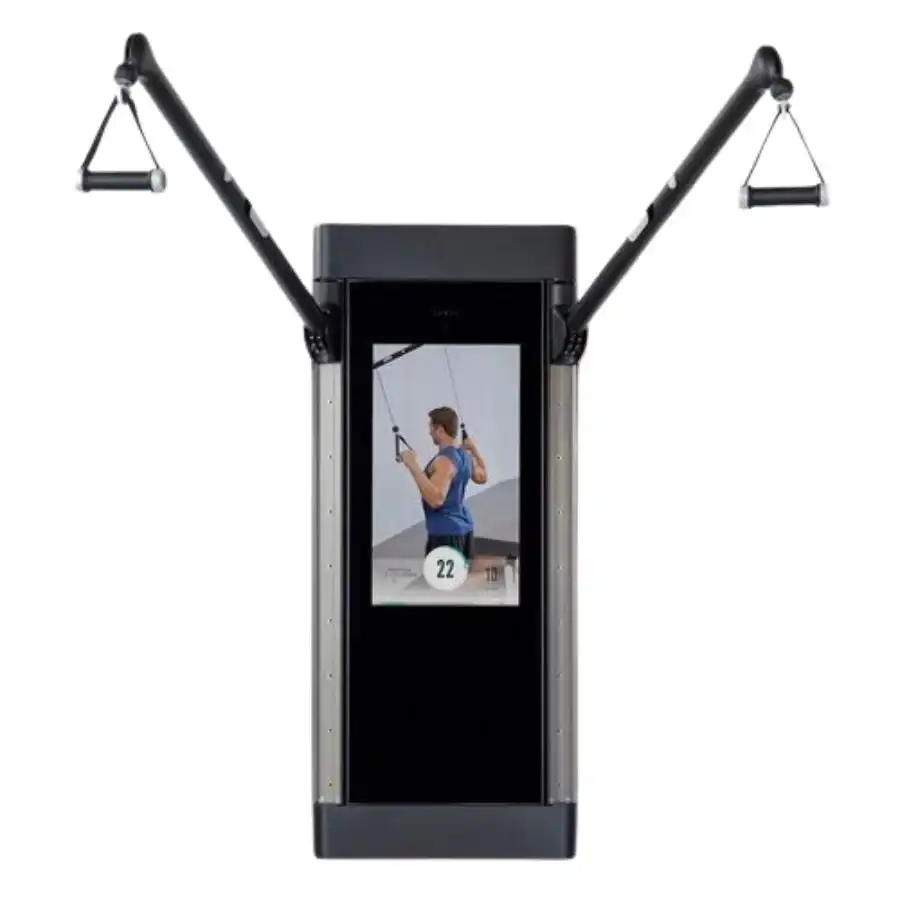
- Compact Cable System (or Smart Home Gym): While often a larger investment, a compact cable system or a smart home gym unit (like those reviewed in other contexts) can offer a vast array of exercises with variable resistance, often including guided programming and progress tracking. This caters to those seeking a comprehensive, tech-integrated solution. This is where I can subtly acknowledge the type of product from the example without actually reviewing it.
Leveraging Technology: Your Digital Training Partner
Modern technology can be an invaluable asset in your home strength journey.
- Fitness Apps: Many apps offer guided workouts, exercise libraries with video demonstrations, progress tracking, and even personalized programming. Some are free, while others require a subscription.
- Smartwatches/Fitness Trackers: These devices can monitor heart rate, calories burned, and activity levels, providing data that helps you understand your body’s response to training and track overall progress.
- Online Communities: Engaging with online fitness communities can provide motivation, support, and a platform to share experiences and ask questions.
Remember, the best equipment is the equipment you’ll actually use. Start small, stay consistent, and gradually build your home gym to match your evolving needs and aspirations.
Crafting Your Home Strength Training Program
A well-structured workout program is your roadmap to results. It ensures balanced muscle development, facilitates progressive overload, and keeps you motivated. Whether you’re a beginner or ready for more advanced challenges, thoughtful program design is key.
Full-Body Routines for Beginners: Building a Solid Foundation
For beginners, full-body workouts performed 2-3 times per week on non-consecutive days are highly effective. This approach allows you to hit all major muscle groups, maximize recovery, and build foundational strength and movement patterns.
Example Beginner Full-Body Workout (3 sets of 8-12 repetitions, 60-90 seconds rest between sets):
- Warm-up (5-10 minutes): Light cardio (jumping jacks, high knees) followed by dynamic stretches (arm circles, leg swings, torso twists).
- Squats (Bodyweight or Goblet Squat with a light dumbbell/kettlebell): Focus on keeping your chest up, pushing your hips back as if sitting in a chair, and maintaining a stable core.
- Push-ups (on knees, elevated, or full): Hands slightly wider than shoulder-width, lower your chest towards the floor, keeping your body in a straight line from head to heels.
- Dumbbell Rows (or Bent-Over Rows with a resistance band): Hinge at your hips, keeping your back straight, pull the weight towards your hip, squeezing your shoulder blades together.
- Lunges (Bodyweight or Dumbbell Lunges): Step forward, lowering your back knee towards the floor. Ensure your front knee stays behind your toes. Alternate legs.
- Plank: Hold a straight line from head to heels, engaging your core, for 30-60 seconds.
- Glute Bridges: Lie on your back, knees bent, feet flat. Lift your hips off the floor, squeezing your glutes at the top.
- Cool-down (5-10 minutes): Static stretches, holding each for 20-30 seconds (hamstring stretch, quad stretch, chest stretch).
This routine targets major muscle groups, promotes compound movements, and is highly adaptable for progressive overload.
Progressing to Intermediate Levels: Elevating Intensity and Complexity
Once you can comfortably complete the beginner routine with good form and have introduced some resistance, it’s time to elevate your challenge.
- Increasing Intensity:
- Heavier Weights/Resistance: As discussed with progressive overload, gradually increase the load.
- More Reps/Sets: Aim for the upper end of your rep range (e.g., 12-15 reps) or add an extra set.
- Advanced Variations: Transition from knee push-ups to full push-ups, then to decline push-ups. Progress from bodyweight squats to goblet squats, then front squats.
- Tempo Training: Emphasize the eccentric (lowering) phase (e.g., 3-second lower for squats) to increase time under tension.
- Incorporating Variety:
- Supersets: Perform two exercises back-to-back with minimal rest, targeting opposing muscle groups (e.g., dumbbell chest press immediately followed by dumbbell rows) or the same muscle group for added intensity.
- Circuits: Perform a series of exercises one after another with short rest periods, ideal for improving conditioning and muscular endurance.
- Time Under Tension (TUT): Focus on how long the muscle is under strain during a set. Slower, more controlled movements increase TUT.
- Workout Splits: While full-body workouts remain effective, intermediate lifters might consider a split routine to allow for more volume per muscle group.
- Upper/Lower Split: Train upper body one day, lower body the next. (e.g., Monday: Upper, Tuesday: Lower, Wednesday: Rest, Thursday: Upper, Friday: Lower).
- Push/Pull/Legs (PPL): A common split grouping exercises by movement pattern. (e.g., Push (chest, shoulders, triceps), Pull (back, biceps), Legs (quads, hamstrings, glutes, calves)).
The key is to consistently challenge your body in new ways, ensuring continuous adaptation and growth. Keep a workout journal to track your progress – it’s incredibly motivating to see how far you’ve come!
Overcoming Common Home Workout Hurdles
Even with the best intentions and equipment, challenges can arise. Recognizing and strategizing around these common hurdles will help you maintain consistency and enjoy your fitness journey.
Staying Motivated and Accountable: Fueling Your Inner Drive
Motivation can wax and wane. Building habits and accountability systems helps bridge the gap during dips in enthusiasm.
- Schedule Your Workouts: Treat them like non-negotiable appointments in your calendar.
- Create a Dedicated Space: Even if it’s just a corner of a room, having a "gym zone" mentally primes you for exercise.
- Find an Accountability Partner: A friend or family member (even if they don’t work out with you) can check in on your progress.
- Track Your Progress: Seeing tangible improvements (more reps, heavier weights, better form) is a huge motivator.
- Reward Yourself: Set small, non-food rewards for hitting milestones (e.g., new workout gear, an hour of guilt-free relaxation).
- Vary Your Routine: Don’t let boredom set in. Introduce new exercises, different rep schemes, or try a new online class.
Maximizing Limited Space: Ingenuity Over Square Footage
Not everyone has a dedicated home gym room. Many successful home lifters operate in compact spaces.
- Multi-functional Equipment: Adjustable dumbbells, resistance bands, and suspension trainers are excellent for small spaces.
- Vertical Storage: Wall-mounted shelves, racks, or hooks for bands and lighter weights keep floors clear.
- Clear the Area: Before each workout, ensure your space is free of clutter to prevent tripping hazards and allow for full range of motion.
- Utilize Doorways: For pull-up bars or suspension trainers.
- Embrace Bodyweight: Many effective exercises require no more space than your own body footprint.
Sarah, a busy mom in a small apartment, started her home fitness journey with just a yoga mat and resistance bands. She cleared a small area in her living room before each workout, knowing that her consistency was more important than having a large, permanent setup. Over time, she added adjustable dumbbells that could be stored under her bed, proving that ingenuity often triumphs over sheer square footage.
Preventing Injury: Listening to Your Body and Honing Awareness
Working out at home means you’re largely responsible for your own safety.
- Prioritize Warm-up and Cool-down: Never skip these vital phases. They prepare your body for exertion and aid in recovery.
- Master Form First: As emphasized earlier, this is your primary defense against injury.
- Don’t Rush Progress: Resist the urge to add too much weight or reps too quickly. Slow and steady wins the race.
- Listen to Pain Signals: Differentiate between muscle fatigue (good) and joint pain or sharp discomfort (bad). If something hurts, stop, assess, and modify the exercise or rest.
- Incorporate Mobility Work: Regular stretching and mobility exercises improve range of motion and can prevent stiffness and injury.
The Mind-Muscle Connection: More Than Just Lifting Weights
Strength training is as much a mental game as it is a physical one. Cultivating the mind-muscle connection is about intentionally focusing on the muscle you are trying to work, ensuring that it is the primary driver of the movement.
Focus and Intent: Quality Over Quantity
Instead of just "lifting the weight," concentrate on "squeezing the muscle." For example, during a bicep curl, don’t just move the dumbbell up and down. Feel your bicep contract as you lift, and control its lengthening as you lower. This heightened awareness:
- Increases Muscle Activation: Leading to more effective workouts and better gains.
- Improves Form: By focusing on the target muscle, you naturally minimize the involvement of compensatory muscles.
- Deepens Engagement: Makes your workouts more purposeful and satisfying.
Take a moment before each set to visualize the muscle working. This simple practice can dramatically enhance the quality of your training.
Celebrating Small Victories: Fueling Long-Term Success
The journey to sustainable strength is paved with countless small achievements. Don’t wait for a dramatic transformation to celebrate your progress. Did you complete an extra rep? Use a slightly heavier weight? Maintain perfect form for an entire set? Show up even when you didn’t feel like it? These are all victories worth acknowledging.
Celebrating these small wins reinforces positive habits and builds momentum. It shifts your focus from an often distant "end goal" to the consistent effort you’re putting in each day, making the process itself more rewarding. This positive feedback loop is essential for maintaining motivation and fostering a deep, intrinsic enjoyment of your fitness journey.
Conclusion: Your Strength, Your Story, Forged at Home
The path to a stronger, healthier you doesn’t require a specific location or an elite membership. It begins with a decision, a commitment, and the understanding that your greatest asset is your own body and mind. Home strength training offers an empowering, flexible, and deeply personal avenue to unlock incredible physical and mental resilience.
Remember, every expert was once a beginner. Embrace the process, celebrate every small victory, and be patient with yourself. Consistency is your most powerful tool, progressive overload your engine for growth, and proper form your shield against setbacks. Your home is not just a place of residence; it’s a launchpad for your fitness aspirations, a sanctuary where you can forge not just stronger muscles, but a stronger, more confident, and more capable version of yourself.
So, take a deep breath, clear your space, and commit to the journey. The weights may be digital, the resistance bands simple, or the dumbbells humble, but the strength you build will be real, the habits you form will be lasting, and the positive impact on your life will be immeasurable. Your future self will thank you for starting today. Go forth and forge your future – one powerful rep at a time, right where you belong.