The pursuit of strength, health, and a sculpted physique often begins with a fundamental decision: how and where will you train? For many, the answer lies in the convenience and privacy of a home gym. While treadmills and dumbbells are common starting points, there’s one piece of equipment often overlooked or misunderstood that can dramatically elevate your home training experience: the Smith machine.
Often associated with commercial gyms, the Smith machine has evolved into a versatile and safe cornerstone for any serious home fitness setup. It offers a unique blend of guided motion and robust safety features, making it an invaluable tool for everyone from absolute beginners taking their first steps into strength training to intermediate lifters pushing their limits without a spotter.
This article will delve deep into the world of the Smith machine, reimagining its role from a niche gym apparatus to a central component of a dynamic home gym. We’ll explore its mechanics, uncover its profound benefits, guide you through essential exercises, help you craft effective routines, and provide actionable advice to maximize your results safely and efficiently. Prepare to unlock a new level of strength and confidence in your own space.
The Smith Machine: A Home Gym Powerhouse Reimagined
For decades, the Smith machine has been a fixture in fitness centers, often sparking debate among lifters. Is it as effective as free weights? Is it only for beginners? The truth is, the Smith machine is far more than just a piece of equipment; it’s a strategic training tool that, when understood and utilized correctly, can become the bedrock of a highly effective home gym.
In the realm of personal fitness, convenience and safety are paramount. The ability to train effectively without the need for a gym membership, travel time, or a dedicated spotter is a game-changer. This is where the Smith machine shines. It brings a level of stability and security that free weights alone cannot always provide, particularly for those training solo or focusing on precise muscle engagement. It’s no longer just an alternative; it’s a legitimate choice for building strength and muscle in the comfort of your own home.
More Than Just a Bar: Understanding the Smith Machine’s Core Mechanics
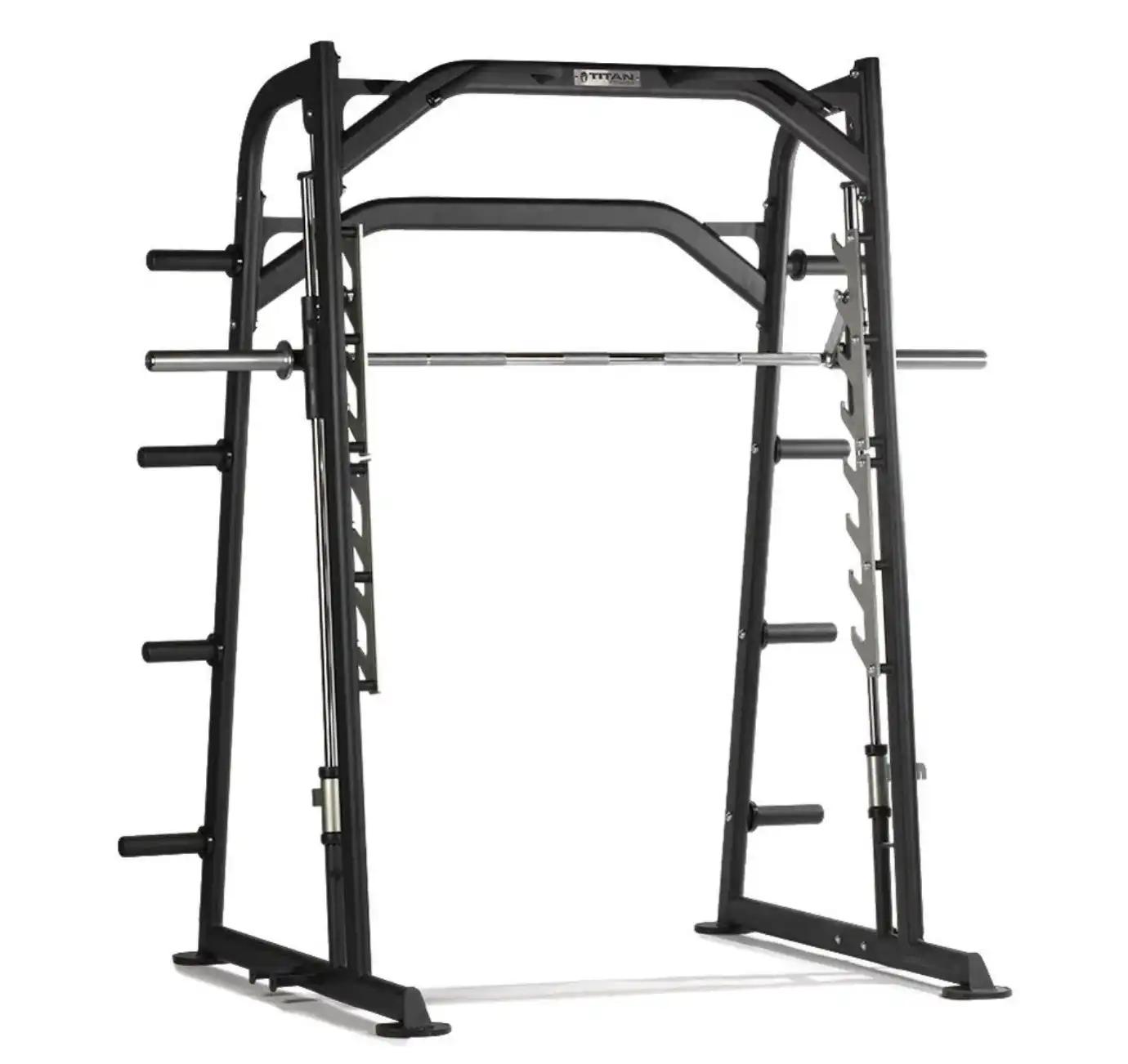
At its heart, a Smith machine consists of a barbell fixed within steel rails, allowing it to move only vertically or, in some designs, along a slight angle. This guided path is its defining characteristic, offering both unique advantages and specific considerations for training.
Crucially, the bar features multiple lockout points (hooks) along its path, allowing you to instantly re-rack the weight at any stage of a lift with a simple twist of the wrist. Additionally, adjustable safety stoppers can be set at any height, preventing the bar from descending below a predetermined point. These two features are the cornerstones of its safety appeal, providing an unparalleled sense of security during heavy lifts.
Some Smith machines feature a counterbalanced bar, meaning internal weights or springs offset the bar’s natural weight, making it feel lighter (e.g., a 45-pound bar might feel like 15 pounds). Other machines offer a true bar weight. Understanding this distinction is important for accurately tracking your progress and ensuring you’re lifting the intended resistance. Regardless of the type, the core mechanics empower you to focus intensely on muscle contraction and form without the constant struggle for balance and stabilization inherent with free weights.
Why Integrate a Smith Machine into Your Fitness Journey?
The benefits of incorporating a Smith machine into your home gym extend far beyond simple convenience. For many, it represents a safer, more focused, and highly effective pathway to achieving their fitness goals.
Enhanced Safety for Solo Training
One of the most compelling reasons to choose a Smith machine for your home gym is the unparalleled safety it offers, especially when training alone. The ability to instantly rack the bar at any point during a lift, combined with adjustable safety stoppers, eliminates the need for a spotter during many challenging exercises.
Imagine this scenario: You’re attempting a new personal best on your bench press. With a traditional barbell, if you fail a rep, you’re in a potentially dangerous situation. With a Smith machine, you simply rotate your wrists to lock the bar onto the nearest hook, or the safety stoppers catch the weight if you can’t complete the movement. This built-in safety net provides the confidence to push your limits, experiment with heavier weights, and truly challenge your muscles without fear of being pinned or injured. This peace of mind is invaluable, allowing you to focus purely on the effort and execution of your lift.
Precision and Form Mastery
The fixed bar path of a Smith machine can be a tremendous asset for developing and refining proper exercise form. When you remove the need to stabilize the weight across multiple planes, you can concentrate solely on the primary muscles being worked.
For beginners, this means a faster learning curve for complex movements like squats or bench presses. You can focus on achieving the correct depth, maintaining a neutral spine, and feeling the target muscles engage, rather than wrestling with balance. For intermediate lifters, it allows for targeted muscle isolation and peak contraction. For example, during a Smith machine squat, you can adjust your foot placement to specifically emphasize quadriceps, glutes, or hamstrings, perfecting the mind-muscle connection crucial for growth. This precision helps ingrain correct movement patterns and can be particularly useful for overcoming plateaus.
Versatility for a Full-Body Workout
Don’t let the fixed bar path fool you; a Smith machine is a remarkably versatile piece of equipment capable of facilitating a comprehensive full-body workout. It serves as a stable platform for a wide array of exercises targeting every major muscle group. From powerful lower body movements to intricate upper body lifts and even core-strengthening exercises, its adaptability is a major asset.
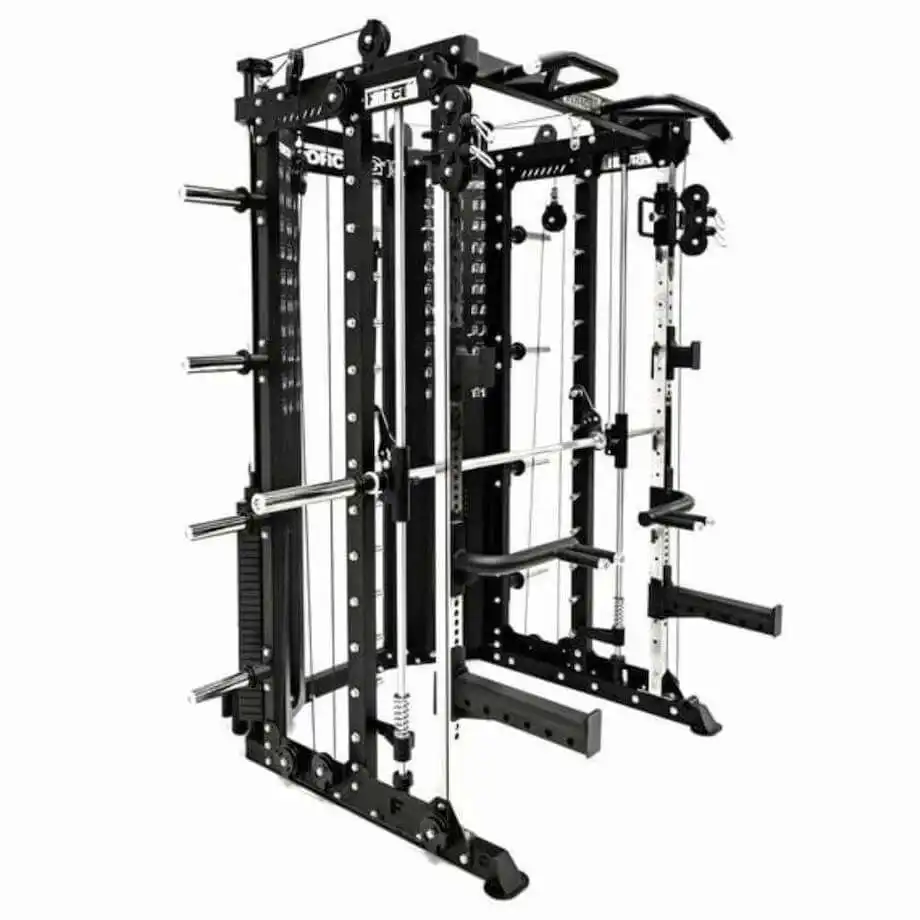
Consider it a multi-station gym in one compact unit. By simply adjusting a bench or your body position, you can transition seamlessly between push exercises (bench press, overhead press), pull exercises (bent-over rows, inverted rows), and leg movements (squats, lunges, calf raises). Some advanced Smith machines even integrate cable systems, further expanding their functional versatility to include exercises like cable crossovers, lat pulldowns, and triceps extensions, truly making it a central hub for your fitness routine.
Ideal for Progressive Overload
Progressive overload – the gradual increase in stress placed on the body during training – is the fundamental principle of muscle growth and strength development. The Smith machine’s guided motion and precise weight increments make it an excellent tool for systematically applying this principle.
Because the stabilization demands are reduced, you can often handle slightly heavier loads than with free weights, or perform more reps with a given weight, providing a clear pathway for progression. The safety features also encourage pushing to muscle failure, a key stimulus for growth, knowing you can safely re-rack the weight. Tracking your progress becomes straightforward: simply aim to increase the weight, reps, or sets over time, confident in the consistent movement pattern the machine provides. This consistent challenge is what drives your muscles to adapt, grow stronger, and become more resilient.
Rehabilitation and Pre-Rehabilitation
For individuals recovering from certain injuries (always consult a medical professional or physical therapist first) or those with mobility limitations, the controlled movement of a Smith machine can be incredibly beneficial. It allows for strength training within a safe, predetermined range of motion, reducing stress on compromised joints and muscles.
This controlled environment helps rebuild strength and stability gradually, making it an excellent bridge between injury and a full return to free-weight training. Similarly, for "pre-habilitation," it can be used to strengthen specific muscle groups and movement patterns to prevent future injuries. Mauro M. Maietta, district fitness and education manager for Crunch Fitness, emphasizes that the Smith machine "helps the athlete feel supported and gives them greater control and stability when performing an exercise." This support is critical for those needing a more structured approach to their strength building.
Essential Exercises to Master on Your Smith Machine
The Smith machine opens up a vast world of effective exercises. Here are some foundational movements to build your strength and sculpt your physique, categorized by muscle group. Remember to always prioritize proper form over heavy weight.
Lower Body Power
The Smith machine is fantastic for targeting your legs and glutes with precision.
- Smith Machine Squats (Back Squat, Front Squat, Hack Squat variations):
- Back Squat: Position the bar across your upper back, slightly lower than a traditional barbell squat. Experiment with foot placement – feet slightly forward can emphasize glutes, while feet directly under hips target quads.
- Front Squat: Position the bar across your front deltoids. This variation heavily recruits the quads and challenges core stability.
- Hack Squat: Position yourself facing away from the machine, with your feet slightly in front of the bar. This isolates the quads effectively.
- Actionable Tip: For all squats, focus on pushing through your heels and driving your hips down and back as if sitting in a chair. Maintain a neutral spine.
- Smith Machine Lunges (Forward, Reverse, Split Squats):
- Forward/Reverse Lunges: Step forward or backward, keeping the bar stable on your shoulders. The fixed path helps maintain balance.
- Bulgarian Split Squats: Place one foot on a bench behind you and perform a lunge. The Smith machine adds stability to this challenging unilateral movement.
- Actionable Tip: Ensure your front knee doesn’t extend past your toes. Keep your torso upright and focus on a deep stretch in the glute/hip flexor of the trailing leg.
- Smith Machine Glute Bridges/Hip Thrusts:
- Position yourself on the floor or with your upper back on a bench. Roll the bar over your hips (use a pad for comfort). Drive your hips towards the ceiling, squeezing your glutes at the top.
- Actionable Tip: Concentrate on a strong glute contraction at the peak of the movement. Avoid hyperextending your lower back.
- Smith Machine Calf Raises:
- Place the bar on your shoulders, position the balls of your feet on a raised platform (like a weight plate) with heels hanging off. Lower your heels for a stretch, then push up onto your toes for a powerful contraction.
- Actionable Tip: Perform slowly and with control, feeling the stretch and squeeze. Hold at the top for a second to maximize engagement.
Upper Body Strength
Build a strong upper body with these effective Smith machine exercises.
- Smith Machine Bench Press (Flat, Incline, Decline):
- Flat Bench: Lie on a flat bench with the bar directly over your chest. Lower the bar to your mid-chest, then press up.
- Incline Bench: Use an incline bench to target the upper chest.
- Decline Bench: Use a decline bench to emphasize the lower chest.
- Actionable Tip: Maintain a slight arch in your lower back, keep your feet firmly on the ground, and control the eccentric (lowering) phase.
- Smith Machine Overhead Press (Seated, Standing):
- Seated: Sit on a bench with back support. Position the bar in front of your head, press straight overhead.
- Standing: Stand with the bar in front of your head. This engages more core stability.
- Actionable Tip: Keep your core tight and avoid leaning back excessively. Lower the bar with control to just below your chin.
- Smith Machine Bent-Over Rows:
- Position the bar at a height that allows you to hinge at your hips, keeping a flat back. Grab the bar with an overhand or underhand grip, and pull it towards your lower chest/upper abdomen, squeezing your shoulder blades.
- Actionable Tip: Focus on pulling with your back muscles, not just your arms. Maintain a stable core and avoid swinging.
Core and Isolation Work
The Smith machine can also be adapted for specific muscle isolation and core engagement.
- Smith Machine Shrugs:
- Stand tall with the bar in front of you, hands slightly wider than shoulder-width. Shrug your shoulders straight up towards your ears, squeezing your traps at the top.
- Actionable Tip: Keep your shoulders down and back throughout the movement. Avoid rolling your shoulders.
- Smith Machine Upright Rows:
- Stand with the bar in front of you, hands closer than shoulder-width. Pull the bar up towards your chin, leading with your elbows.
- Actionable Tip: Keep the movement controlled and don’t raise your elbows higher than your shoulders to protect your rotator cuffs.
- Smith Machine Ab Rollouts:
- Place a mat on the floor. Kneel and grab the bar with an overhand grip. Slowly roll the bar forward, extending your body, maintaining a tight core. Control the movement back to the starting position.
- Actionable Tip: Engage your core throughout the entire movement. Only go as far as you can control without arching your back.
Crafting Your Smith Machine Workout Routine
A well-structured routine is crucial for consistent progress. Here are blueprints for beginners and intermediate lifters using your Smith machine.
The Beginner’s Blueprint (3-Day Full Body)
For those new to strength training, a full-body routine performed 2-3 times a week is ideal. This allows for frequent practice of fundamental movements and sufficient recovery.
Workout Structure (Example):
- Warm-up (5-10 minutes): Light cardio (jumping jacks, high knees) and dynamic stretches (arm circles, leg swings).
- Main Workout:
- Smith Machine Back Squats: 3 sets of 10-12 reps
- Smith Machine Bench Press (Flat): 3 sets of 10-12 reps
- Smith Machine Bent-Over Rows: 3 sets of 10-12 reps
- Smith Machine Overhead Press (Seated): 2 sets of 10-12 reps
- Smith Machine Calf Raises: 2 sets of 15-20 reps
- Plank: 3 sets, hold for 30-60 seconds
- Cool-down (5-10 minutes): Static stretches, holding each for 20-30 seconds (quad stretch, hamstring stretch, chest stretch).
Actionable Advice: Focus on mastering the movement pattern before increasing weight. Rest 60-90 seconds between sets. Listen to your body and don’t be afraid to take an extra rest day if needed. Track your weights and reps in a journal or app to ensure progressive overload.
Intermediate Progression (Split Routine Example)
Once you’ve built a solid foundation and are comfortable with the exercises, you can progress to a split routine to allow for more volume and specific muscle group focus. A common and effective split is an Upper/Lower routine, performed 4 days a week.
Day 1: Upper Body Focus
- Warm-up: As above.
- Main Workout:
- Smith Machine Incline Bench Press: 3-4 sets of 8-10 reps
- Smith Machine Overhead Press (Standing): 3 sets of 8-10 reps
- Smith Machine Bent-Over Rows (Underhand Grip): 3-4 sets of 8-10 reps
- Smith Machine Upright Rows: 2-3 sets of 10-12 reps
- Dumbbell Bicep Curls (if you have dumbbells): 3 sets of 10-12 reps
- Triceps Pushdowns (if your SM has cables) or Dumbbell Overhead Extensions: 3 sets of 10-12 reps
- Cool-down: As above.
Day 2: Lower Body & Core Focus
- Warm-up: As above.
- Main Workout:
- Smith Machine Front Squats: 3-4 sets of 8-10 reps
- Smith Machine Lunges (Alternating Legs): 3 sets of 10-12 reps per leg
- Smith Machine Glute Bridges/Hip Thrusts: 3 sets of 10-15 reps
- Smith Machine Hack Squats: 2-3 sets of 10-12 reps
- Smith Machine Calf Raises: 3 sets of 15-20 reps
- Hanging Leg Raises (if you have a pull-up bar) or Smith Machine Ab Rollouts: 3 sets of 10-15 reps
- Cool-down: As above.
Actionable Advice: Increase sets, reps, or weight gradually. Consider incorporating advanced techniques like dropsets (reducing weight immediately after a set to continue reps) or supersets (performing two exercises back-to-back with no rest) on isolation movements, if appropriate for your Smith machine’s setup. Rest 60-120 seconds between sets. Periodically change exercise variations to keep your muscles adapting.
Maximizing Your Smith Machine Experience: Tips for Success
To truly leverage the power of your Smith machine, it’s essential to understand how to use it effectively and safely.

Proper Setup and Safety Checks
Before every workout, a quick safety check is non-negotiable.
- Bar Movement: Ensure the bar glides smoothly along its rails without catching or sticking.
- Safety Stoppers: Always set your safety stoppers. For squats, set them slightly below your lowest comfortable squat depth. For bench press, set them just above your chest. This ensures the bar won’t trap you.
- Lockout Points: Familiarize yourself with how to quickly engage the lockout points. Practice twisting the bar to re-rack it at various heights.
- Bench/Foot Position: Adjust your bench or foot placement for each exercise to optimize your form and target specific muscles. Small adjustments can make a big difference.
Understanding Bar Path vs. Free Weights
While the fixed bar path offers unique benefits, it’s important to acknowledge its differences from free weights. Free weights recruit more stabilizer muscles because you have to control the bar’s movement in all directions. The Smith machine minimizes this.
- Focus on Mind-Muscle Connection: Because stabilization is reduced, you can truly isolate and focus on squeezing the target muscle. This can lead to a stronger mind-muscle connection, which is crucial for hypertrophy (muscle growth).
- Complement with Free Weights: If your home gym allows, consider complementing your Smith machine workouts with some free weight exercises (dumbbells, kettlebells) to ensure comprehensive development of stabilizer muscles. This balanced approach will yield the best overall strength and functional fitness.
The Importance of Mind-Muscle Connection
With the Smith machine, you have a unique opportunity to perfect your mind-muscle connection. This means actively thinking about the muscle you’re trying to work and contracting it throughout the entire range of motion.
- Slow, Controlled Movements: Avoid momentum. Perform each rep slowly and deliberately, focusing on the eccentric (lowering) phase as much as the concentric (lifting) phase.
- Feel the Squeeze: At the peak of each contraction, consciously squeeze the target muscle. This enhanced focus can lead to greater muscle activation and better results.
Integrating Attachments and Accessories
Many Smith machines, especially all-in-one trainers, come with or are compatible with various attachments that significantly expand your exercise repertoire.
- Adjustable Benches: A sturdy adjustable bench is essential for flat, incline, and decline presses, as well as seated overhead presses.
- Resistance Bands: Bands can be hooked onto the bar or frame to add accommodating resistance (resistance increases as you get stronger through the range of motion) or to assist with pull-ups (if your machine has a pull-up bar).
- Ankle Straps/Handles: If your machine has a cable system, ankle straps and various handles allow for a huge range of cable exercises, from triceps pushdowns to cable rows and ab crunches.
Choosing the Right Smith Machine for Your Home Gym (General Guidance)
Selecting the ideal Smith machine involves balancing your fitness aspirations with practical considerations like space and budget. Focus on features that align with your individual needs, rather than chasing the most expensive option.
Space Considerations
This is often the primary factor for home gym owners.
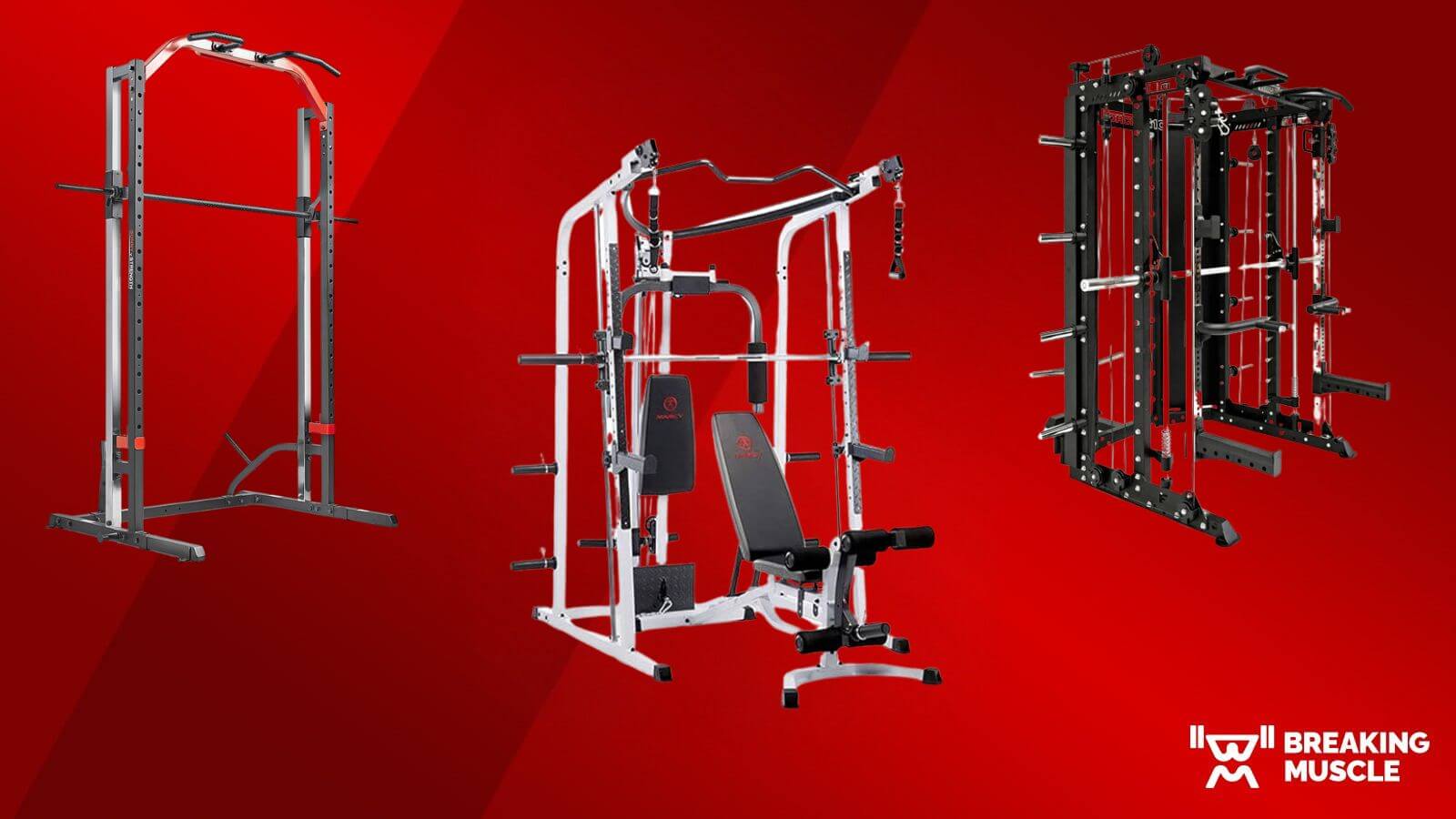
- Standalone Smith Machines: These are dedicated units, generally requiring a significant footprint. They excel at Smith machine exercises but offer less versatility unless combined with other equipment.
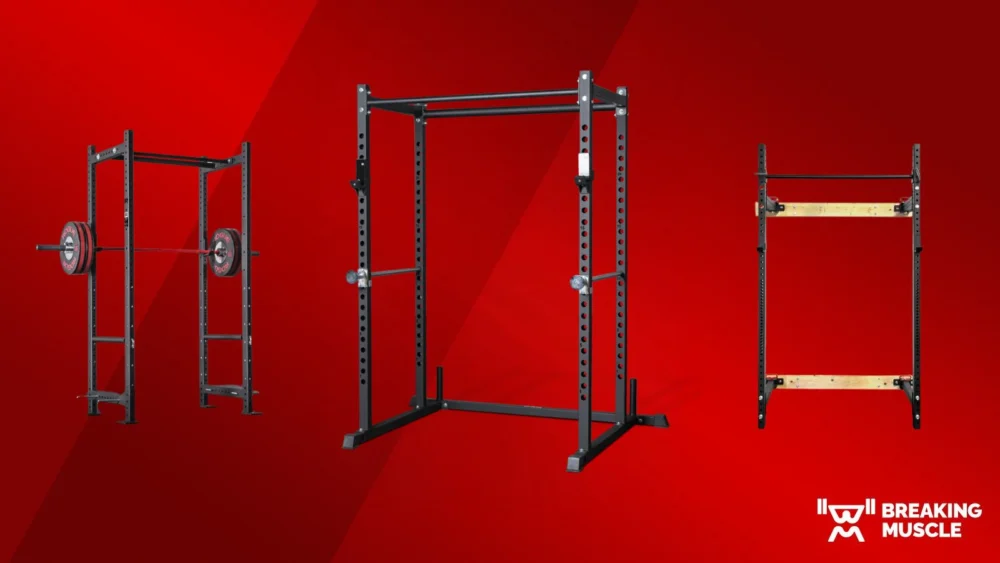
- All-in-One Trainers (Smith Machine + Power Rack + Functional Trainer): These are multi-functional behemoths that consolidate several pieces of equipment into one. While they save overall space by combining functions, they still require a large dedicated area for the unit itself and sufficient clearance around it.
- Smith Machine Rack Attachments: If you already own a squat or power rack, a Smith machine attachment can be a brilliant space-saving solution. These integrate directly with your existing rack, offering the guided bar path without needing a separate large machine. This is ideal for maximizing space in smaller areas.
- Measure Your Area: Before buying, meticulously measure your available space, including ceiling height and clearance around the machine for movement.
Budget and Features
Smith machines range widely in price, reflecting their build quality, features, and versatility.
- Durability and Build Quality: Look for machines constructed from heavy-gauge steel (e.g., 11-gauge). Pay attention to the smoothness of the bar’s glide path – this is often indicative of the quality of the bearings or bushings. A robust build ensures stability and longevity, especially if you plan to lift heavy.
- Weight Capacity: Check the maximum weight capacity of the bar and the overall machine. Ensure it can safely accommodate your current and projected lifting strength.
- Bar Weight (Counterbalanced vs. True): Decide if you prefer a counterbalanced bar (feels lighter, good for beginners or those doing high-rep isolation work) or a true-weight bar (offers a consistent, heavier starting weight).
- Included Attachments: Consider what attachments are included (J-hooks, safety spotter arms, dip handles, pull-up bar, cable pulleys) and which ones you’ll actually use. More features often mean a higher price.
Future-Proofing Your Investment
Think about where you want your fitness journey to go.
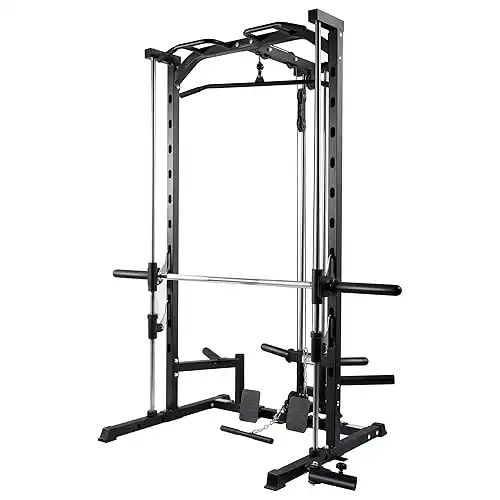
- Long-Term Goals: If you anticipate progressing to very heavy lifting, invest in a more robust machine with a higher weight capacity. If you foresee incorporating more functional training, an all-in-one trainer with cable capabilities might be a better choice.
- Scalability: Can the machine grow with you? Can you add more weight plates? Is it compatible with other accessories you might want in the future? Choosing a versatile machine that can adapt to your evolving fitness needs will ensure your investment continues to pay dividends for years to come.
Common Pitfalls to Avoid
While the Smith machine is a fantastic tool, misusing it can hinder your progress or even lead to injury. Be mindful of these common mistakes.
Over-reliance on the Fixed Path
The fixed bar path, while a major safety and form advantage, can also be a double-edged sword. It minimizes the engagement of smaller stabilizer muscles that are crucial for overall strength, balance, and real-world functional movement.
- Suggestion: Don’t let the Smith machine be your only form of strength training. If possible, incorporate free-weight exercises (even with dumbbells or kettlebells) into your routine or engage in bodyweight training to ensure comprehensive muscle development and improved functional strength.
Improper Form Due to Perceived Safety
The safety features of the Smith machine can sometimes create a false sense of security, leading users to neglect proper form. Just because the bar can’t fall off the rails doesn’t mean you can lift with poor posture.
- Don’t Load Too Much Weight Too Soon: Always prioritize form over ego. Start with lighter weights and ensure you can perform each exercise with perfect technique before attempting to increase the load.
- Video Yourself: Occasionally record your lifts to review your form. Even experienced lifters can benefit from seeing themselves from a different perspective.
Ignoring Warm-up and Cool-down
Regardless of the equipment you use, a proper warm-up and cool-down are fundamental for injury prevention, performance enhancement, and recovery.
- Warm-up: Prepares your muscles and joints for the work ahead, increases blood flow, and improves flexibility.
- Cool-down: Helps reduce muscle soreness, promotes recovery, and improves overall flexibility. Never skip these vital phases of your workout.
Unlocking Your Potential: Final Thoughts
The Smith machine, once a polarizing piece of equipment, has rightfully earned its place as a cornerstone in the modern home gym. Its unique blend of safety, stability, and versatility makes it an invaluable asset for anyone