
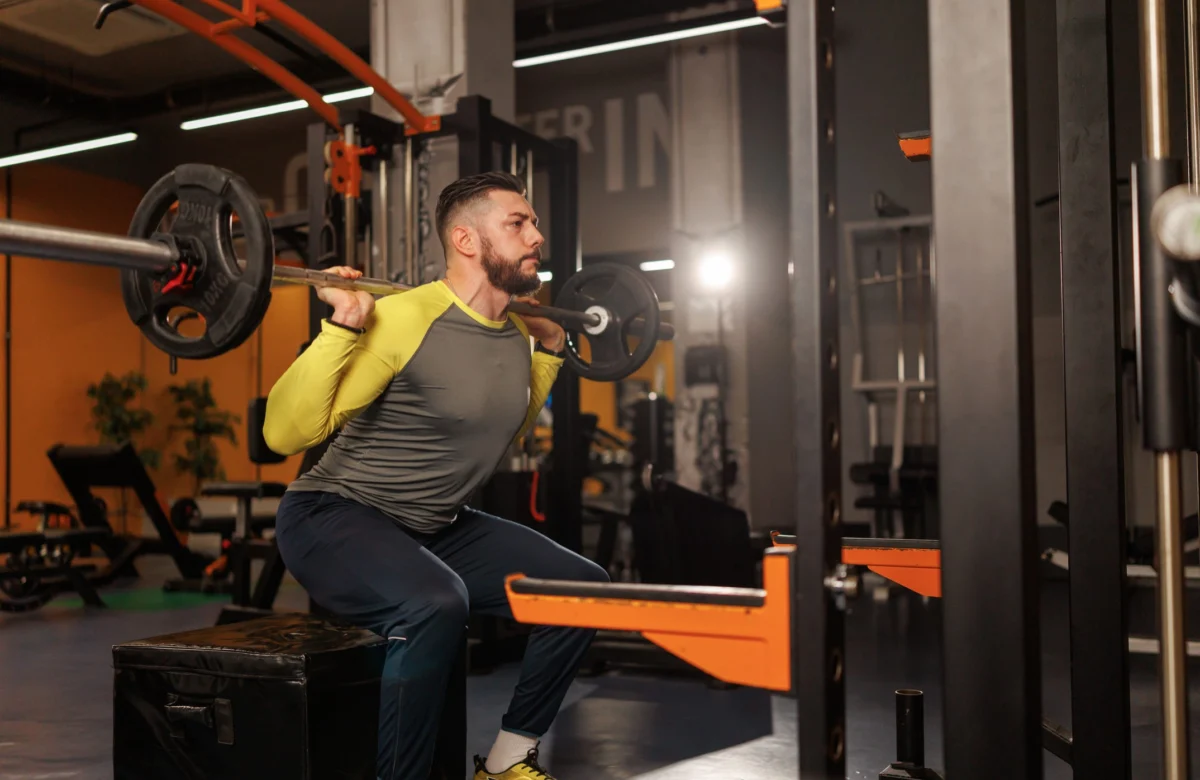
The squat. It’s the king of lower-body exercises, a movement so fundamental it forms the bedrock of countless training programs. Yet, for many, especially those new to the iron game or grappling with physical limitations, achieving optimal squat depth and mastering the intricate mechanics can be a significant hurdle. Knee discomfort, mobility restrictions, or simply the desire to refine technique often lead individuals to seek complementary movements that can enhance their overall squatting prowess. Enter the box squat – a deceptively simple yet remarkably effective variation that could be the smartest addition to your lower-body arsenal for building true power.
At first glance, the box squat appears straightforward: position a sturdy box or platform behind you, set up for a standard squat, sit down onto the box, and then drive back to the starting position. It sounds easy enough, but unlocking the full potential of this exercise requires a deeper understanding than simply lowering and standing. To truly benefit from the box squat, particularly if your aim is to improve your conventional squat form or address specific physical challenges, there are nuanced techniques and considerations that elevate it from a mere modification to a strategic training tool. The height of your chosen box and the precise execution of each phase of the movement are critical factors for success.
This guide will delve into the intricacies of the box squat, illuminating its advantages, the muscles it targets, and the precise methods to integrate it into your training for maximum impact.
The Undeniable Benefits of the Box Squat
The box squat stands out as a valuable secondary squat variation, offering a powerful way to supplement your existing routine. For individuals experiencing knee pain or discomfort during traditional squats, the box squat can serve as an excellent alternative. The controlled descent to a fixed stopping point significantly reduces the impact and stress on your knee joints.
The secret lies in the biomechanics. In most squat variations, your shin angle naturally shifts as you lower yourself. Your knees will typically travel forward over your toes. However, during a box squat, the presence of the box allows you to maintain a more vertical shin angle throughout the eccentric (lowering) phase. This change in mechanics is crucial for alleviating pressure on the knee joint, making it a forgiving yet effective option for those with knee issues or those looking for a less taxing way to build lower-body strength.
Targeting the Powerhouse: Muscles Engaged by the Box Squat
Like its conventional counterparts, the box squat effectively engages the major muscle groups of the lower body: the quadriceps, hamstrings, and glutes. However, this variation places a particularly strong emphasis on the posterior chain – your glutes and hamstrings.
The controlled eccentric phase, where you meticulously lower yourself to the box, actively challenges your glutes, hamstrings, and even the hip abductors. As you make contact with the box, you’re forced to control the descent, building eccentric strength and muscular endurance. Then, when it’s time to stand back up, you must powerfully engage your glutes to initiate hip extension, driving you back to the standing position. This controlled pause and explosive re-engagement fosters a potent connection between your mind and muscles, leading to significant strength gains.
Mastering the Movement: How to Execute the Perfect Box Squat
To truly harness the power of the box squat, pay close attention to these expert-backed techniques:
1. Embrace the Vertical Shin
As renowned fitness expert Ebenezer Samuel, C.S.C.S., emphasizes, the beauty of the box squat lies in its ability to cultivate a vertical shin. "The box allows you to focus more intently on sitting back," Samuel explains. "Your main goal is to take advantage of that and keep your shin vertical and perpendicular to the ground on every rep. Your shin angle never changes during a box squat."
This unwavering vertical shin position offers several advantages:
- Reduced Knee Stress: As mentioned, this significantly lessens the load on your knee joints, making it an ideal choice for those with knee sensitivities.
- Improved Achilles Mobility: If you haven’t incorporated squatting into your routine regularly, the box squat can be more forgiving on your Achilles tendons.
- Enhanced Glute and Hamstring Activation: By shifting the focus backward, you encourage greater recruitment of your glutes and hamstrings.
Contrast this with traditional back squats, front squats, or even goblet squats, where your knees will inevitably track forward slightly, altering your shin angle and increasing the demands on your knee joints.
2. Widen Your Stance for Optimal Engagement
Maintaining that coveted vertical shin often doesn’t come naturally, especially if you default to your standard squat stance. "If you’re only slightly wider than shoulder-width, unless your mobility is standout, you’ll find that your knees track forward," Samuel notes.

To counter this and truly benefit from the box squat’s mechanics, you need to adjust your foot placement:
- Wider Than Usual: Adopt a stance that is noticeably wider than your conventional squat width.
- Toe Angle: Point your toes outward more significantly. This subtle adjustment will help to externally rotate your hips, creating the necessary space for your knees to remain behind your toes and your shins to stay vertical.
- Glute and Hip Abductor Activation: This wider, outward-toed stance naturally encourages greater activation of your glutes and the smaller, often underutilized, hip abductor muscles. These muscles play a crucial role in hip stability and power generation.
3. Land with Precision, Not Plopping
The box is a tool for control, not a comfortable resting place. "The box is an aid to help you find positions, but it’s not a crutch," Samuel stresses. "So don’t plop or thud onto the box. Instead, control your torso downwards on each rep; the slower the better. Don’t be afraid to take 3 to 5 seconds to lower down to the box, that way when your butt hits the box, it’s lightly tapping it."
This deliberate descent offers profound benefits:
- Core Control Development: As you lower yourself, your torso will naturally lean forward slightly, mirroring the posture in a traditional back squat. This controlled forward lean challenges your core to stabilize your spine.
- Eccentric Strength Building: The slow, controlled descent actively builds eccentric strength in your hamstrings and glutes, preparing them for the explosive power needed to stand.
- Improved Proprioception: You develop a better sense of your body’s position in space and learn to control your movements through a greater range of motion.
4. Eliminate the Rock and Roll
A common mistake in box squats is using momentum to your advantage. "When you land on the box, you’ll be landing with your torso leaned slightly forward," Samuel explains. "You may see guys at your gym do this, then rock backwards, bringing their torso perpendicular to the ground, then rock forwards to power up from the squat. Don’t do this; all you’re doing is generating momentum to come out of the squat and remove the need to be explosive with your legs when you power up."
Resist the urge to rock:
- Maintain Torso Angle: Upon landing on the box, lock in your core and maintain that controlled forward torso angle.
- Drive from the Legs: The power for the upward movement must come directly from your legs. Focus on driving through your heels and engaging your glutes and hamstrings to initiate the ascent.
- Explosive Power Development: This technique forces your glutes and hamstrings to generate power from a near dead stop, building significant strength and explosive power.
5. The Art of the Reset
Patience and intention are key to maximizing the benefits of every box squat repetition. "Don’t rush through your box squats," advises Samuel. "Think of each rep as its own battle: A slow and very controlled lower, followed by a controlled stop, then an explosive drive off the box. After you complete a rep, reset your body, your mind, and your breath. You’ll need to do this to keep your next rep clean."
This deliberate approach ensures quality over quantity:
- Mind-Muscle Connection: Taking a moment to reset allows you to mentally prepare for the next repetition, fostering a stronger mind-muscle connection.
- Breath Control: Proper breathing is crucial for core stability and power generation. Resetting allows you to regain control of your breath.
- Focus on Form: By ensuring each rep is executed with proper technique, you maximize the stimulus and minimize the risk of injury.
Integrating Box Squats into Your Training Program
The box squat is a versatile exercise that can be seamlessly incorporated into your existing lower-body training.
- As a Primary Squat Replacement: If you experience knee pain or discomfort with traditional squats, consider substituting them with box squats for 3 sets of 8 to 10 repetitions. Focus on controlled movements and a challenging but manageable weight.
- As a Secondary Squat Variation: For those looking to refine their squat form and build explosive power, the box squat can serve as an excellent accessory exercise. Perform 3 sets of 8 to 10 repetitions after your primary squat movement.
- For Power Development: To specifically target power, use a slightly heavier weight and focus on explosive concentric (upward) movement, while maintaining control on the eccentric phase. Aim for lower rep ranges (e.g., 3-5 sets of 5-6 reps) with adequate rest between sets.
Real-Life Example:
Imagine Sarah, a runner who experiences occasional knee twinges during deep squats. She decides to incorporate box squats into her strength training twice a week. She uses a box set at parallel depth, focusing on a slow 3-second descent, a brief pause, and an explosive drive upwards. After a few weeks, she notices a significant reduction in knee discomfort during her runs and a noticeable improvement in her ability to generate power off the starting blocks in her sprint training.
Or consider Mark, a recreational lifter aiming to improve his deadlift. He recognizes that a strong posterior chain is crucial for his deadlift. He adds box squats to his routine, focusing on a wider stance and driving his hips back. He finds that the box squat strengthens his glutes and hamstrings in a way that directly translates to a more powerful lockout in his deadlifts.
The Bottom Line: Elevate Your Lower Body with Strategic Squatting
The box squat is far more than just a modified squat; it’s a strategic tool for building a more resilient, powerful, and functional lower body. By understanding and implementing the precise techniques, you can unlock new levels of strength, improve your overall squat mechanics, and mitigate the risk of injury. Whether you’re a seasoned lifter looking to break through plateaus or a beginner seeking a safer and more effective way to strengthen your legs, the box squat offers a compelling path to a more powerful you. Embrace the control, master the mechanics, and let the box squat become your secret weapon for explosive lower-body development. Your legs will thank you for it.