Embarking on a fitness journey, whether you’re taking your first steps or pushing past plateaus, requires dedication, knowledge, and the right tools. For many, the gym floor can feel like a labyrinth of intimidating equipment, especially when it comes to free weights. Yet, tucked amidst the barbells and dumbbells, often stands a powerhouse of potential: the Smith machine. Often misunderstood, and sometimes unfairly dismissed, this guided strength training apparatus offers a unique blend of safety, stability, and versatility that can be a game-changer for beginners and a strategic asset for intermediate lifters.
The dream of a home gym, a sanctuary for self-improvement, has become a reality for countless fitness enthusiasts. In this personal training haven, equipment choice is paramount. The Smith machine, particularly as part of an all-in-one system, presents an compelling solution, condensing the functionality of multiple stations into a single footprint. It empowers you to perform a wide array of exercises, from fundamental compound movements to targeted isolation work, all with an added layer of security.
This article isn’t about which Smith machine to buy, but how to harness its power. We’ll strip away the misconceptions and dive deep into its core benefits, offering practical, actionable advice to integrate it effectively into your strength training regimen. Prepare to unlock a new dimension of controlled strength, consistent progress, and unwavering confidence in your workouts.
The Smith Machine Unveiled: More Than Just a Bar
At first glance, the Smith machine might appear similar to a traditional power rack, but its fundamental mechanics set it apart. Understanding these differences is key to maximizing its benefits and integrating it intelligently into your fitness routine.
What Exactly is a Smith Machine?
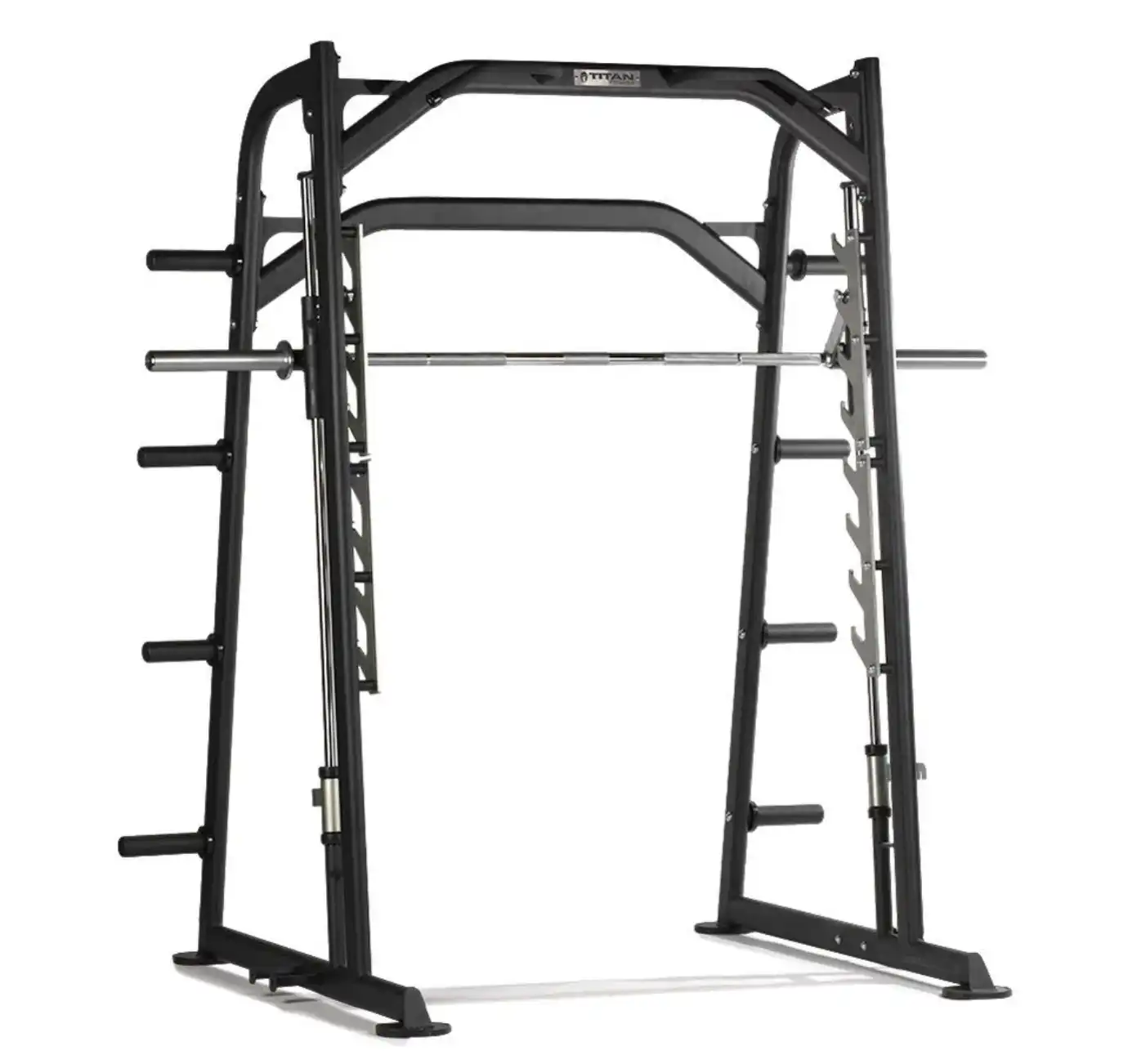
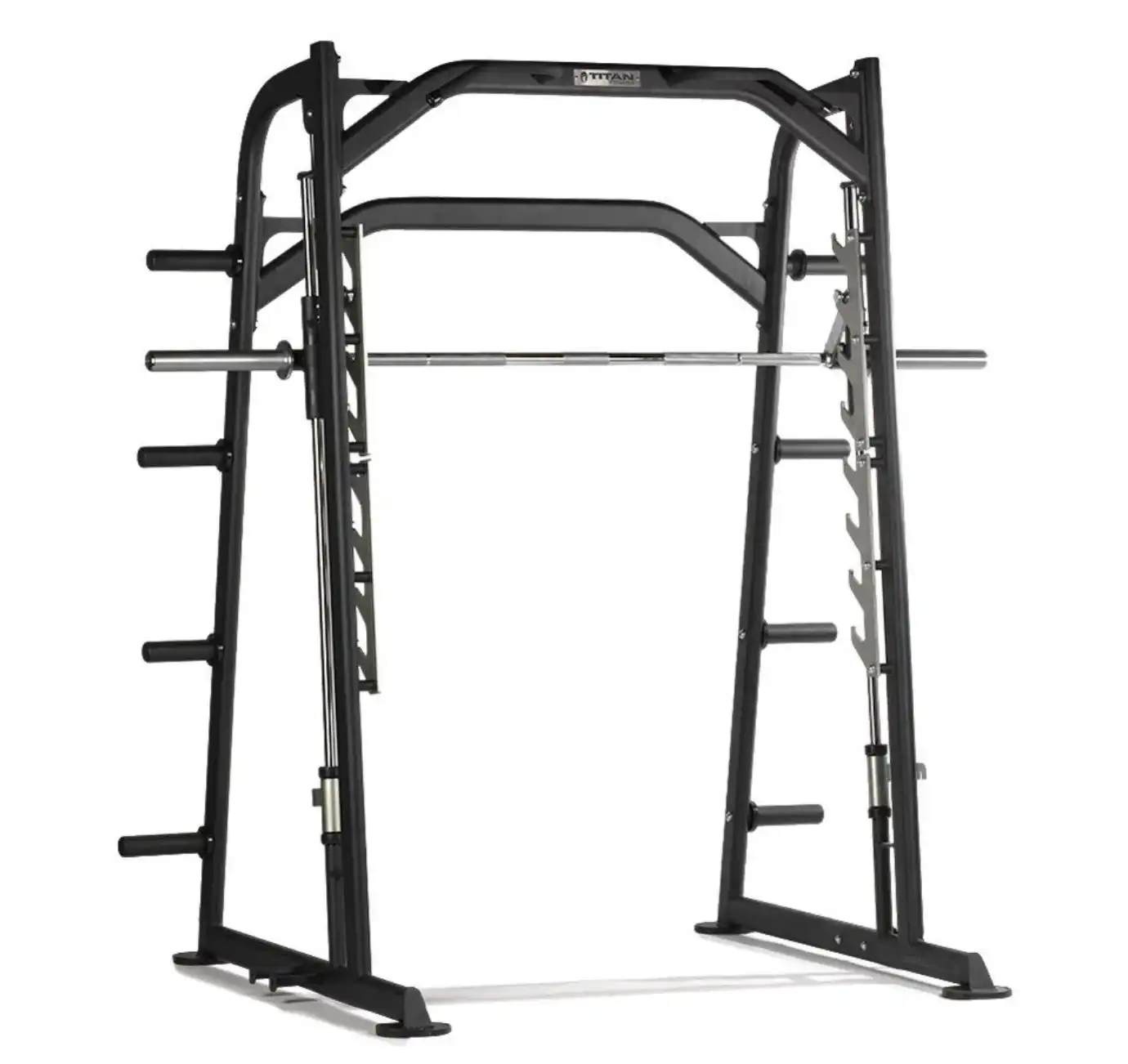
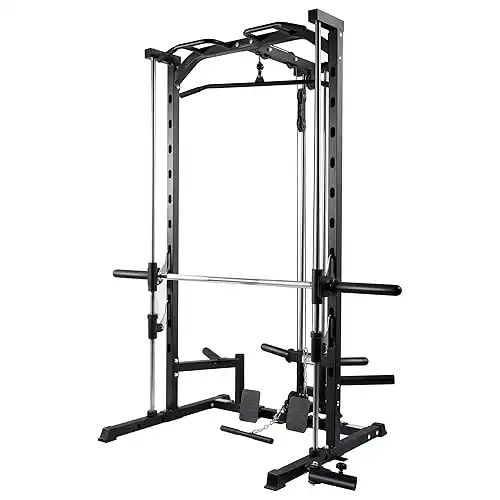
A Smith machine consists of a barbell that is permanently fixed within vertical or slightly angled steel rails. This design allows the bar to move only up and down along a predetermined path. Crucially, the bar features a series of hooks or catches along its length, which can be engaged with a simple twist of the wrist at any point during a lift. This mechanism, coupled with adjustable safety stoppers on the rails, provides an unparalleled level of security.
Unlike free weights, where you must stabilize the bar in all three dimensions, the Smith machine eliminates the need for horizontal stabilization. This fixed path allows you to focus intensely on the primary muscles being worked, making it an exceptional tool for isolating muscle groups and mastering movement patterns without the added complexity of balancing a free-moving barbell.
Why Consider the Smith Machine for Your Home Gym?
For those building or enhancing a home gym, the Smith machine offers several compelling advantages:
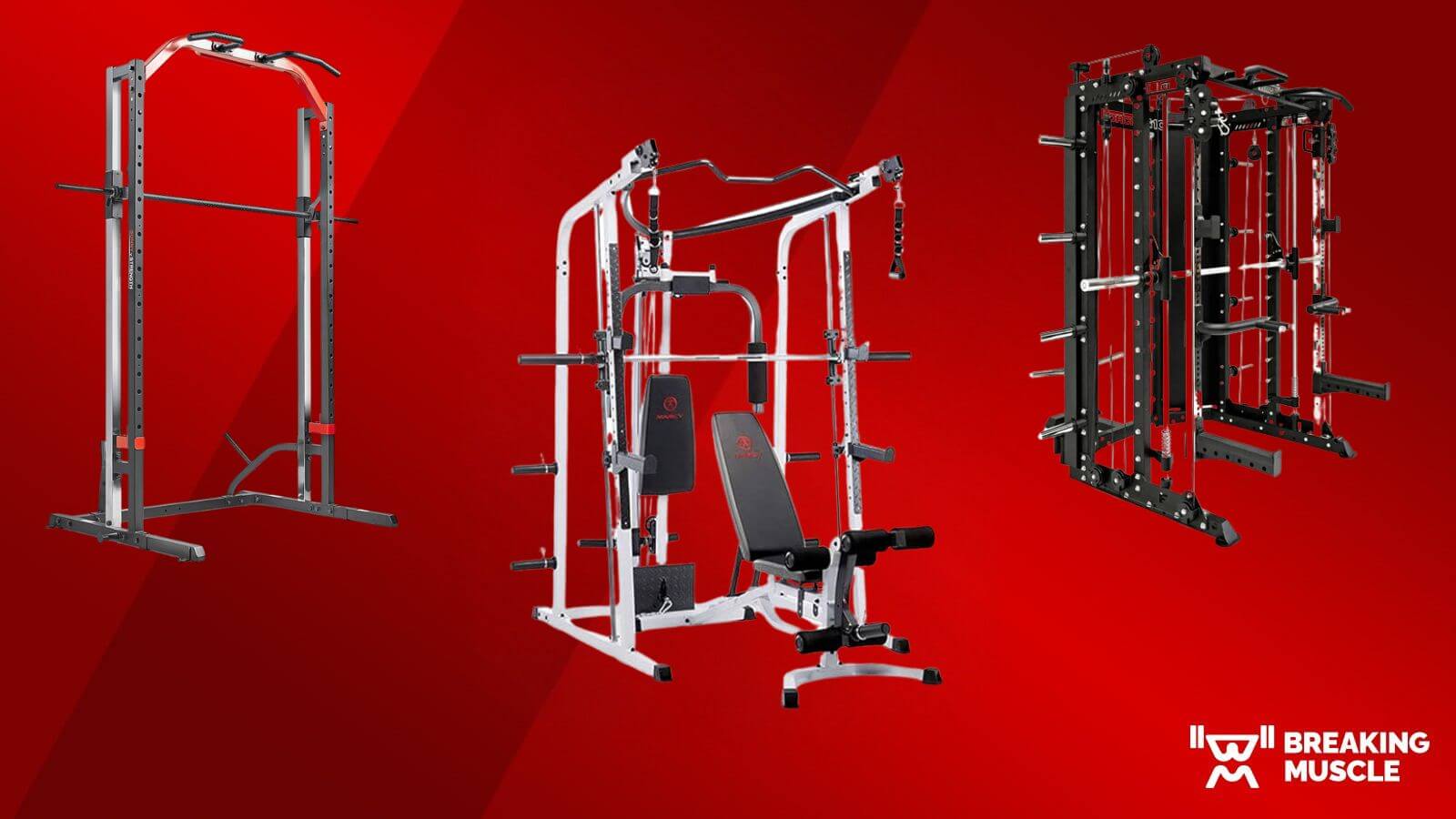
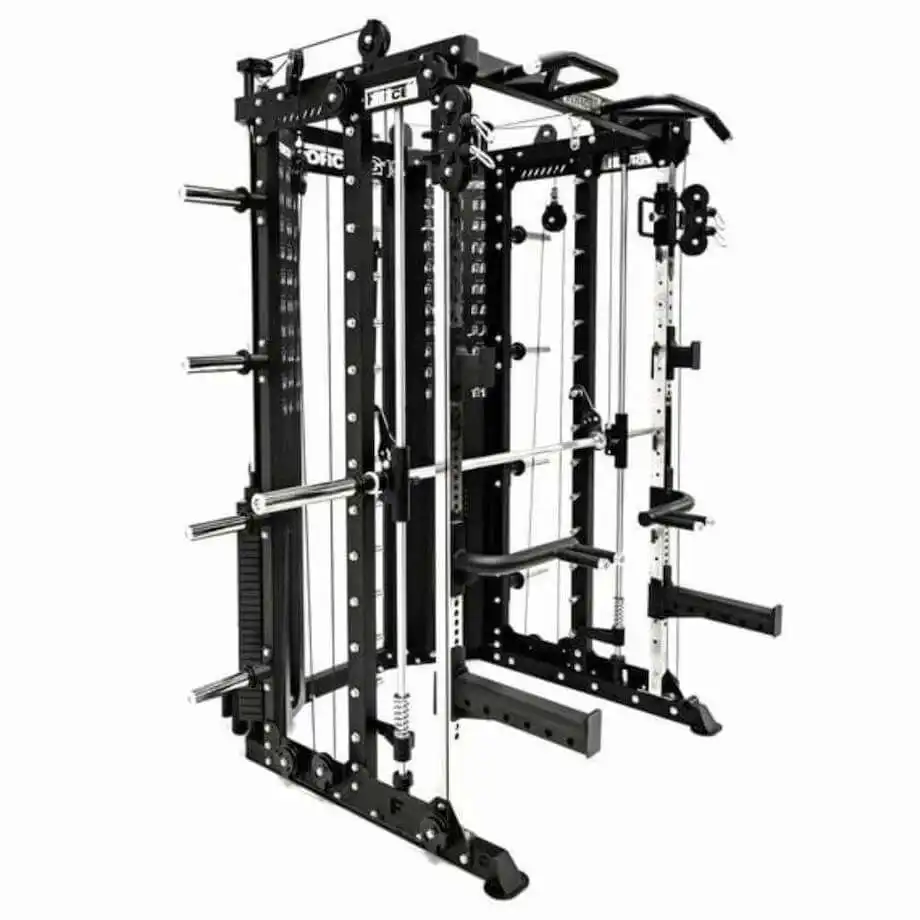
- Space Efficiency: Many modern Smith machines are integrated into multi-functional units that combine a power rack, cable system, and various attachments. This all-in-one design significantly reduces the footprint required for a comprehensive strength training setup, making it ideal for garages, spare rooms, or smaller workout spaces.
- Safety Without a Spotter: This is perhaps the most significant advantage for home gym users. The integrated safety catches mean you can push your limits on exercises like squats and bench presses without the anxiety of getting pinned under the weight. A simple twist of the wrist, or setting the adjustable safety stoppers, provides an instant "out" if a lift becomes too challenging.
- Versatility: Don’t let the fixed bar path fool you into thinking it’s limited. The Smith machine can facilitate a full-body workout, supporting a vast range of exercises for every major muscle group. From compound movements to targeted isolation, its adaptability is a major asset.
- Cost-Effectiveness: While a quality Smith machine is an investment, an all-in-one unit can often be more cost-effective than purchasing a separate power rack, cable machine, and an extensive collection of free weights and benches.
Core Benefits for Your Fitness Journey
The unique design of the Smith machine translates into several profound benefits that can accelerate your progress, especially as you navigate the beginner and intermediate stages of your fitness journey.
Enhanced Safety and Stability
The fixed bar path is the cornerstone of the Smith machine’s safety features. This stability means:
- Reduced Risk of Injury: With the bar moving predictably, there’s less chance of uncontrolled movement, wobbling, or dropping the weight. This is invaluable for beginners who are still developing proprioception and muscle coordination.
- Confidence in Pushing Limits: Knowing you can re-rack the weight instantly or rely on the safety stoppers empowers you to attempt heavier lifts or push for an extra rep with greater confidence, crucial for progressive overload. Imagine hitting a new personal best on your bench press without a spotter nervously hovering over you—the Smith machine makes this a reality.
- Form Mastery: The machine’s stability allows you to concentrate solely on the mechanics of the movement and the contraction of the target muscle. This makes it an excellent environment for learning proper form for complex exercises like squats and presses before transitioning to free weights.
Independent Training
For those who prefer to train alone, particularly in a home gym setting, the Smith machine acts as your ever-present, vigilant spotter. There’s no need to wait for a training partner or feel hesitant about attempting a challenging lift. This independence fosters consistency, as your workout schedule isn’t dictated by anyone else’s availability. It also encourages a deeper sense of self-reliance and achievement as you safely manage your own progression.
Focus on Muscle Activation
Because the Smith machine removes the need for stabilizing muscles to control the bar’s horizontal movement, you can achieve a more intense and isolated contraction in your primary target muscles. For example, during a Smith machine squat, you can concentrate purely on driving through your heels and engaging your glutes and quads, rather than simultaneously fighting to keep the bar from swaying. This focused activation can be particularly beneficial for:
- Beginners: Who might struggle to "feel" the target muscle working due to a lack of mind-muscle connection.
- Intermediate Lifters: Looking to bring up a lagging muscle group or intensify a specific part of an exercise.
Versatility for Every Muscle Group
The Smith machine is far from a one-trick pony. With a slight adjustment of a bench or your body position, it can transform into a tool for a full-body workout.
- Lower Body: Squats (back, front, hack), lunges, split squats, calf raises, glute bridges.
- Upper Body (Push): Bench press (flat, incline, decline), overhead press, close-grip bench press.
- Upper Body (Pull): Bent-over rows (though some prefer free weights for these), inverted rows (using the fixed bar).
- Core: Landmine presses (if an attachment is available), controlled leg raises.
Its adaptability makes it a central piece of equipment, capable of replacing several individual machines in a compact space.
Progressive Overload Made Accessible
Progressive overload – the gradual increase of stress on your muscles over time – is the fundamental principle of muscle growth and strength gain. The Smith machine facilitates this beautifully:
- Consistent Increments: The ability to add small, precise amounts of weight (often with plate options as low as 1.25 lbs) allows for steady, manageable increases in resistance without making jumps that are too large or unsafe.
- Controlled Repetition Maxes: With the safety catches, you can safely test your rep maxes without fear of failure, providing accurate data for tracking progress and planning future workouts. This methodical approach ensures you’re continually challenging your muscles, leading to consistent gains in strength and size.
Mastering Smith Machine Exercises: Form and Function
While the Smith machine offers stability, it’s crucial to understand that its fixed bar path necessitates specific adjustments to your form compared to free-weight exercises. Mastering these nuances will ensure safety and maximize effectiveness.
Squats (Front & Back)
Smith machine squats are excellent for isolating the quads and glutes, but foot placement is key.
- Back Squats:
- Foot Placement: Unlike free-weight squats where the bar path adapts to your natural movement, the Smith machine dictates a vertical path. Experiment with placing your feet slightly further forward than you would for a free-weight squat (about 6-12 inches) to allow your body to naturally hinge at the hips and descend without feeling "locked in" or putting undue stress on your knees.
- Bar Position: Place the bar comfortably across your upper traps, similar to a high-bar free-weight squat.
- Movement: Descend slowly and in a controlled manner, keeping your chest up and core tight. Drive through your heels as you ascend.
- Tip: Focus on a deep, controlled eccentric (lowering) phase to maximize muscle engagement.
- Front Squats:
- Foot Placement: Similar to back squats, a slightly forward stance often works best.
- Bar Position: Rest the bar across the front of your shoulders, with your elbows high. You can use a cross-arm grip or a clean grip.
- Movement: Maintain an upright torso, descend into the squat, and drive up. This variation emphasizes the quads more.
Bench Press (Incline, Decline, Flat)
The Smith machine bench press allows for maximal chest stimulation with reduced shoulder strain for some.
- Bar Path: The fixed path means you don’t need to stabilize the bar, allowing you to focus purely on pressing the weight.
- Hand Placement: Experiment with grip widths. A slightly wider than shoulder-width grip is standard.
- Movement: Lower the bar slowly to your mid-chest (flat), upper chest (incline), or lower chest (decline). Drive the bar up powerfully, but maintain control.
- Safety: Always set the safety stoppers just below your chest’s lowest point to prevent the bar from pinning you.
- Tip: Try a "feet-up" bench press to further isolate the chest by removing leg drive and forcing more core stability.
Shoulder Press
Whether seated or standing, the Smith machine overhead press is fantastic for building shoulder strength.
- Seated Press: Use an adjustable bench with a backrest for support. This eliminates lower back involvement and isolates the shoulders.
- Standing Press: Position yourself with your feet slightly forward or directly under the bar. Maintain a tight core to protect your spine.
- Grip: Overhand, slightly wider than shoulder-width.
- Movement: Press the bar directly overhead, locking out your elbows at the top without shrugging excessively. Control the descent.
- Tip: For beginners, start with a seated press to master the movement pattern before attempting standing variations.
Lunges & Split Squats
The stability of the Smith machine makes single-leg exercises more accessible and effective.
- Stance: Place one foot forward and the other back, directly under the bar. The fixed path helps maintain balance.
- Movement: Descend until your back knee almost touches the floor, keeping your front knee aligned with your toes. Drive up through your front heel.
- Tip: This is excellent for beginners to build foundational single-leg strength and stability before moving to free-weight lunges. You can also elevate your back foot for Smith machine Bulgarian split squats.
Rows (Bent-Over & Inverted)
While bent-over rows are often preferred with free weights for a more natural movement, the Smith machine offers alternatives.
- Bent-Over Rows:
- Stance: Stand facing the bar, bend at the hips, keeping your back straight.
- Movement: Pull the bar towards your lower chest/upper abdomen, squeezing your shoulder blades.
- Caution: The fixed path might feel unnatural for some. Focus on a strict, controlled pull.
- Inverted Rows:
- Setup: Set the bar to about hip height. Lie on your back underneath it, gripping with an overhand or underhand grip.
- Movement: Pull your chest towards the bar, engaging your back muscles. Adjust foot position to vary difficulty (feet closer to the bar is harder).
- Tip: A fantastic bodyweight exercise that can be progressively loaded by elevating your feet or adding a weight vest.
Calf Raises
- Stance: Place the balls of your feet on a small block or step to allow for a greater range of motion.
- Movement: Lower your heels to stretch your calves, then push up onto the balls of your feet, squeezing at the top.
- Tip: Focus on a full stretch and a strong contraction. You can perform these with straight legs (gastrocnemius) or slightly bent knees (soleus).
Crafting Your Smith Machine Workout Plan
A well-structured workout plan is essential for consistent progress. The Smith machine can be the cornerstone of an effective full-body or split routine.
Sample Full-Body Workout (Beginner-Intermediate)
This sample workout can be performed 2-3 times per week, with a rest day in between.
- Warm-up (5-10 minutes): Light cardio (jumping jacks, high knees) followed by dynamic stretches (arm circles, leg swings, torso twists).
- The Workout:
- Smith Machine Back Squats: 3 sets of 8-12 repetitions
- Smith Machine Incline Bench Press: 3 sets of 8-12 repetitions
- Smith Machine Bent-Over Rows: 3 sets of 8-12 repetitions
- Smith Machine Overhead Press: 3 sets of 8-12 repetitions
- Smith Machine Lunges (Alternating Legs): 3 sets of 10-15 repetitions per leg
- Smith Machine Calf Raises: 3 sets of 15-20 repetitions
- Cool-down (5-10 minutes): Static stretches, holding each stretch for 20-30 seconds (e.g., quad stretch, hamstring stretch, chest stretch, triceps stretch).
Progressive Overload Strategies
To continually challenge your muscles and foster growth, implement these progressive overload techniques:
- Increase Weight: The most straightforward method. Once you can comfortably complete all prescribed reps and sets with good form, add a small increment of weight (e.g., 2.5 lbs total).
- Increase Repetitions: If increasing weight isn’t feasible, aim for the higher end of your rep range (e.g., going from 8 reps to 10 or 12 reps).
- Increase Sets: Add an extra set to an exercise (e.g., from 3 sets to 4 sets).
- Decrease Rest Time: Gradually reduce the rest period between sets (e.g., from 90 seconds to 60 seconds) to increase workout density.
- Improve Form and Control: Strive for slower, more controlled repetitions, especially during the eccentric (lowering) phase. This increases time under tension, a key driver of muscle growth.
- Introduce Advanced Techniques (Intermediate): Once proficient, consider techniques like:
- Drop Sets: After your final working set, immediately reduce the weight and perform more reps to failure.
- Negatives: Focus on a very slow, controlled lowering phase of the lift, often with a heavier weight than you can lift concentrically.
Integrating with Other Equipment
While the Smith machine is highly versatile, a truly well-rounded fitness program benefits from incorporating other tools:

- Dumbbells: Excellent for accessory work, unilateral training, and movements that require a more natural range of motion (e.g., dumbbell rows, bicep curls, lateral raises).
- Resistance Bands: Ideal for warm-ups, activation exercises (e.g., glute activation), or adding accommodating resistance to Smith machine movements.
- Bodyweight Exercises: Don’t forget the power of push-ups, pull-ups (if your Smith machine has a bar), planks, and crunches for core strength and overall body control.
- Cardio Equipment: Balance your strength training with cardiovascular exercise for heart health and endurance.
Essential Tips for Success and Safety
To make the most of your Smith machine workouts and ensure a safe, effective experience, keep these crucial tips in mind:
- Prioritize Form Over Weight: This cannot be stressed enough. Always start with a lighter weight to master the movement pattern. Ego lifting has no place in a smart fitness journey. Perfect form not only prevents injury but also ensures you’re effectively targeting the intended muscles.
- Understand Bar Path Nuances: The fixed path is a feature, not a bug. Learn to work with it, not against it. This might mean adjusting your foot position for squats or bench angle for presses to align with the machine’s specific trajectory and your body’s mechanics.
- Always Use Safety Catches: Treat them as your non-negotiable insurance policy. Set them just below your lowest point of movement for exercises like squats and bench presses. They are there for your protection.
- Mind Your Foot Placement (Especially for Squats): As mentioned, the fixed bar path demands precise foot positioning for squats and lunges. Experiment to find a stance that feels natural, allows for full depth, and places no undue stress on your joints.
- Listen to Your Body: Differentiate between muscle fatigue and sharp, acute pain. Muscle soreness (DOMS) is normal; joint pain or sharp, shooting pain is a warning sign. Adjust your weight, form, or take a rest day if discomfort persists.
- Warm-up and Cool-down are Non-Negotiable: A proper warm-up prepares your muscles and joints for the work ahead, reducing injury risk. A cool-down with static stretching aids recovery and improves flexibility. Never skip these vital phases.
- Maintain a Controlled Tempo: Avoid jerky movements. Control both the lifting (concentric) and lowering (eccentric) phases of each repetition. A 2-second lift, 1-second pause, 3-second lower is a good general guideline.
Common Misconceptions & How to Overcome Them
The Smith machine often carries a stigma within the fitness community. Let’s address these misconceptions head-on.
"Smith Machines are ‘Cheating’"
This sentiment often stems from the belief that the machine removes the need for stabilizing muscles, thus making the exercise "easier" or less effective than free weights.
- How to Overcome: Explain that the Smith machine is a tool with specific advantages, not a direct replacement for free weights, but a valuable addition. While it does reduce stabilization, this allows for a more intense focus on the primary movers, which can be beneficial for muscle hypertrophy (growth). Think of it like a leg press machine versus a barbell squat; both are effective, but target muscles differently. It’s not cheating; it’s a different approach to resistance training.
"It Limits Natural Movement"
Critics argue that the fixed bar path forces an unnatural movement pattern, potentially leading to imbalances or injury.
- How to Overcome: Acknowledge that the fixed path is indeed a limitation for some movements, especially if your natural biomechanics don’t align with the machine’s trajectory. However, this fixed path is precisely why it excels at:
- Isolated Muscle Focus: Allowing you to truly push a specific muscle to its limit without secondary muscles fatiguing first.
- Safety: The primary benefit.
- Specific Exercises: For exercises like calf raises, inverted rows, or even certain presses, the fixed path can be advantageous.
- Complementary Training: It’s best used as a complement to free-weight training, not a sole substitute.
"Only for Beginners"
While excellent for beginners, the Smith machine can still offer significant benefits to intermediate and even advanced lifters.
- How to Overcome: Highlight its utility for:
- Accessory Work: Targeting specific muscle groups after compound free-weight movements.
- Breaking Plateaus: Using advanced techniques like forced reps (with spotters) or drop sets with greater safety.
- Working Around Injuries: Allowing controlled movement patterns that might be painful or unsafe with free weights.
- Maximizing Volume: Safely accumulate more volume on certain lifts.
- Unilateral Training: For single-leg work, its stability can help intermediate lifters push heavier loads with greater control.
Best Smith Machine: Final Thoughts
The Smith machine, often overlooked or misunderstood, is a truly versatile and powerful piece of equipment that can significantly enhance your fitness journey. For beginners, it offers an unparalleled level of safety and stability, allowing you to learn proper form, build confidence, and initiate the crucial process of progressive overload without the need for a spotter. For intermediate lifters, it serves as an excellent tool for targeted muscle activation, breaking plateaus, and safely pushing your limits on specific exercises.
Whether it’s the centerpiece of your burgeoning home gym or a strategic station in your