When you first step onto the gym floor or lace up your running shoes for a neighborhood jog, consistency is your greatest ally. You do not need a powerhouse computer strapped to your wrist to build a solid foundation.
However, as your training evolves—shifting from casual jogs to structured half-marathons, or from basic weight training to multi-sport endurance challenges—your needs change. You stop guessing and start measuring. You want to know your exact recovery time, your heart rate zones during peak exertion, and the precise GPS map of your weekend trail run.
This is where premium fitness technology enters the conversation. While basic step counters and lifestyle smartwatches give you a general overview of your daily movement, serious athletes require granular data to break through performance plateaus.
Understanding Your Metrics: What to Look for in a Performance Watch
Before diving into hardware features, it helps to understand what data actually matters for your fitness journey. Not all metrics are created equal, and drowning in numbers can sometimes distract you from the simple joy of movement.
1. Training Load and Recovery
One of the biggest mistakes intermediate athletes make is overtraining. More is not always better; more effective training is what yields results.

- Heart Rate Variability (HRV): A high-value metric that tracks the variation in time between each heartbeat. It acts as an internal gauge for your nervous system’s recovery state.
- Sleep Quality Tracking: Deep sleep and REM cycles are where muscle tissue repairs and grows. A quality wearable will quantify your rest so you know whether to push hard today or take a restorative recovery walk.
2. Precision GPS and Mapping
If your workouts take you away from the treadmill and into the elements—whether that is navigating city streets, mountain biking, or hiking rugged terrain—accurate satellite tracking is non-negotiable.
- Dual-frequency GPS ensures your pacing is accurate even in dense urban canyons or heavily forested trails.
- Breadcrumb navigation and pre-loaded topographical maps keep you from getting lost during long exploratory adventures.
3. Battery Life That Outlasts Your Goals
There is nothing more frustrating than strapping on your tech for a long Saturday morning endurance session only to find a dead battery. While everyday smartwatches often require daily charging, high-performance training watches are built to go the distance, frequently lasting over a week—or even utilizing solar power harvesting to extend battery longevity.
Practical Workout Tips: How to Use Your Wearable to Get Faster and Stronger
Buying advanced gear is only the first step. To truly get your money’s worth, you need to integrate your device’s insights into your weekly routine. Here are three ways to use performance data like a professional coach:
Tip #1: Train in the Right Heart Rate Zones
Many beginners make the mistake of running or cycling too hard on easy days and too easy on hard days (known as "grey zone" training).
- Use your wearable to set customized heart rate zones based on your maximum heart rate.
- Dedicate 80% of your aerobic volume to Zone 2 (conversational pace) to build a massive aerobic base, saving high-intensity intervals for just 20% of your weekly volume.
Tip #2: Respect Your Recovery Score
Your device will often give you a daily readiness score or recovery recommendation. When your watch tells you your battery is depleted, listen to it. Swap that heavy barbell leg day for a mobility session, a brisk walk, or complete rest. True strength gains happen after the workout during recovery.
Tip #3: Analyze Splits, Not Just Totals
Stop just looking at your total workout time. Use your device’s companion app to analyze your split times (pace per mile or kilometer) and your cadence (steps per minute). If your cadence drops significantly toward the end of a long run, it is a sign of fatigue-induced form breakdown, telling you to focus on short, quick strides rather than long, draining, over-striding steps.
Real-Life Application: A Week in the Life of a Data-Driven Athlete
To see how this all fits together, let us look at how an intermediate runner or outdoor enthusiast structures their week using advanced training metrics:
- Monday (Active Recovery): Check morning HRV. Since recovery is high, complete a 30-minute zone 1 mobility walk, monitored by the watch’s step and heart rate tracking.
- Tuesday (Threshold Intervals): Use the watch’s pre-programmed interval workout feature. Warm up for 10 minutes, execute four rounds of 4 minutes at threshold pace with 2 minutes of recovery, and cool down. Review average heart rate and pace zones post-workout.
- Wednesday (Strength and Core): Log a 45-minute strength training session using the wearable’s strength profile to track active time and heart rate spikes during heavy compound lifts.
- Thursday (Aerobic Base): Head out for a steady-state 6-mile run. Keep the heart rate strictly in Zone 2. Let the device’s audio prompts alert you if you start running too fast uphill.
- Friday (Rest): Complete rest day. Focus on hydration and protein intake while the watch tracks overnight sleep efficiency and resting heart rate trends.
- Saturday (The Long Adventure): Tackle a 10-mile trail run or a 4-hour hike. Rely on offline topographic maps and multi-band GPS to track elevation gain, route pacing, and sun exposure.
- Sunday (Reflection): Open the weekly training summary. Review total load, sleep averages, and cardiovascular strain to plan the upcoming week’s progression.
Finding Value in High-End Gear
Let’s address the elephant in the room: top-tier training watches are a financial investment. Premium materials like titanium bezels, sapphire crystal glass, advanced biometric sensors, and aerospace-grade GPS chips come with a price tag that reflects their engineering.
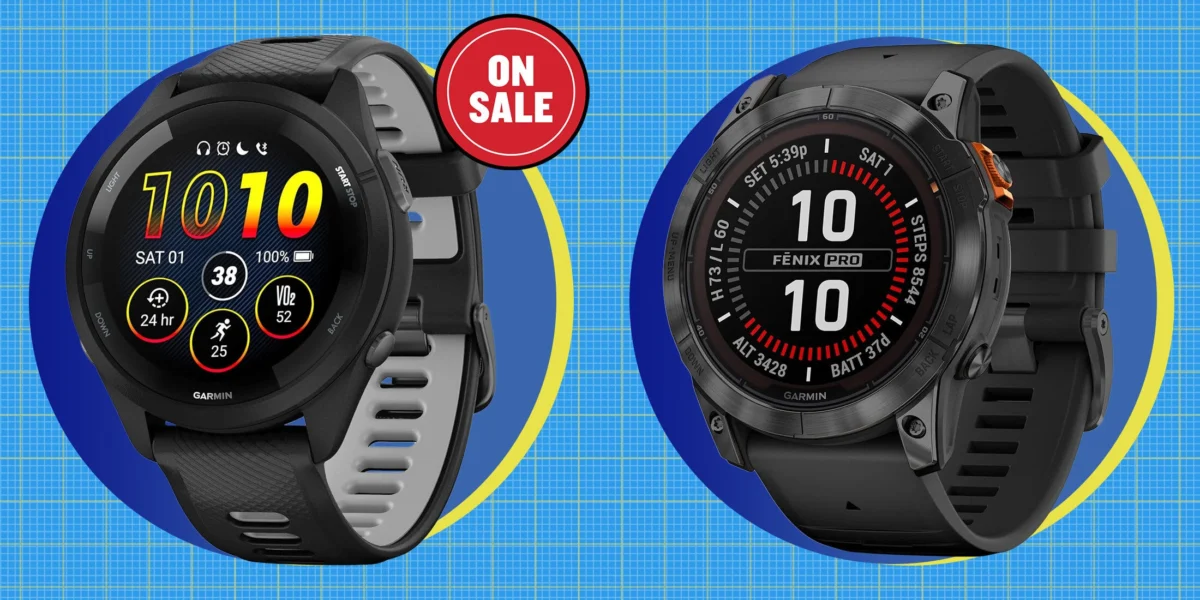
That is precisely why major promotional windows—such as seasonal sales events—are the ideal time for fitness enthusiasts to upgrade their setup. When you can secure a rugged, editor-tested, professional-grade outdoor sports watch at a substantial discount (sometimes up to 40% or more off retail price), the value equation changes completely. Instead of compromising with a basic lifestyle tracker that you will outgrow in six months, you invest in a durable tool that will serve as your reliable training partner for years to come.
When shopping for these deals, look out for:
- Current-Gen vs. Previous-Gen Models: Often, the generational leap in fitness tracking software is incremental. A slightly older flagship model will still offer 95% of the performance, battery life, and durability of the absolute newest release, but at a fraction of the cost.
- Solar Charging Features: If you spend hours outside under direct sunlight, solar-augmented models can drastically reduce your charging frequency.
- Sizing Options: Ensure you select the casing size (e.g., standard vs. compact or "X" large variants) that fits your wrist comfortably without bouncing around during high-impact sprints or trail descents.
Motivational Conclusion: Your Best Self Awaits
Data does not do the work for you. No piece of technology can lift the barbell, run the hill, or lace up your shoes when it is freezing outside. That grit, dedication, and mental toughness must come from within you.
What a great fitness wearable does do is remove the guesswork. It turns your sweat into a science, illuminates your weak points, celebrates your milestones, and keeps you accountable when motivation runs low. It transforms a routine workout into a measurable journey of self-improvement.
Whether you are preparing for your first endurance race, trying to shed stubborn body fat, or simply looking to bring more structure and purpose to your daily movement, arming yourself with the right tools makes all the difference. Check the current seasonal price drops, secure a reliable device that matches your ambition, and start tracking every step of your journey toward a stronger, fitter, and more resilient you. Your goals are within reach—go claim them.