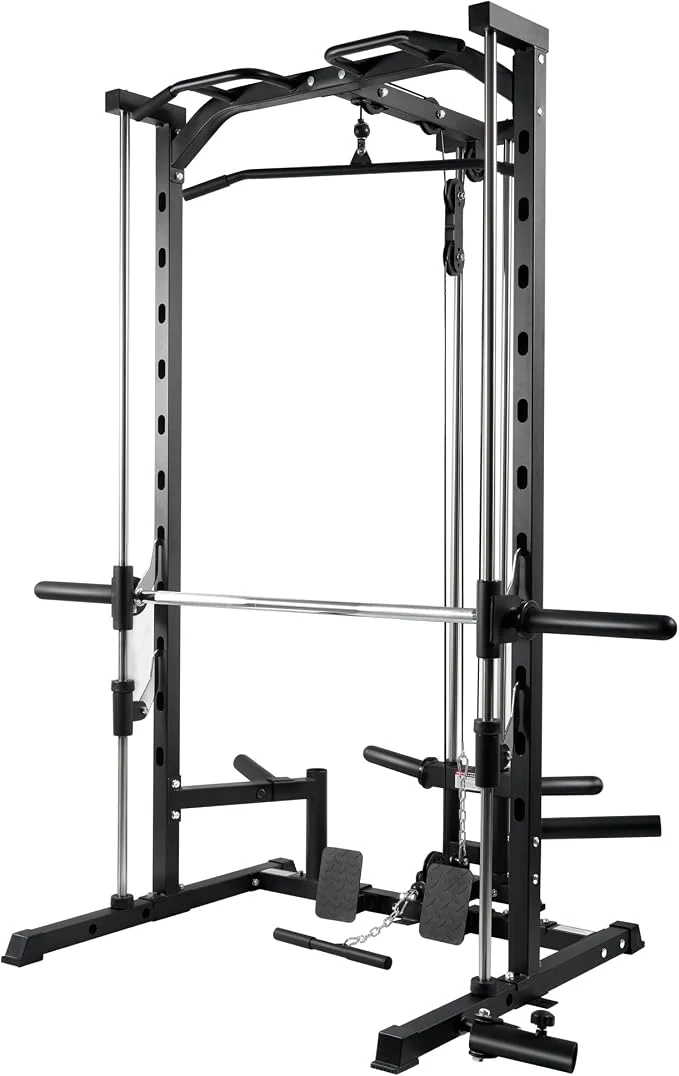
The journey into fitness can often feel like navigating a complex maze of equipment, exercises, and conflicting advice. Amidst the barbells, dumbbells, and various resistance machines, one piece of equipment frequently stands out in both commercial and increasingly, home gyms: the Smith machine. Often misunderstood or relegated to specific uses, this robust apparatus holds immense potential for fitness enthusiasts of all levels, from those just starting their strength journey to intermediate lifters seeking to refine their technique and push their limits safely.
Far from being just a beginner’s tool or a substitute for free weights, the Smith machine offers a unique blend of stability, safety, and versatility. It’s a powerhouse for building muscle, enhancing strength, and mastering movement patterns without the constant need for a spotter. If you’ve ever felt intimidated by heavy squats or bench presses, or if you’re looking to add a new dimension to your training, understanding how to properly leverage the Smith machine can be a game-changer for your fitness regimen.
This article will cut through the noise, providing a professional, motivational, and authoritative guide to unlocking the full potential of the Smith machine. We’ll explore its undeniable benefits, delve into a diverse range of effective exercises, offer practical tips for optimal performance, and emphasize crucial safety protocols. Prepare to transform your approach to strength training and discover how this versatile piece of equipment can become a cornerstone of your fitness success.
The Unrivaled Advantages of Smith Machine Training
While some fitness purists might argue for free weights exclusively, the Smith machine brings a distinct set of benefits to the table, making it an invaluable asset for many lifters. Understanding these advantages is the first step toward integrating it effectively into your routine.
Enhanced Stability and Predictable Movement Path
One of the most defining characteristics of the Smith machine is its fixed, vertical or slightly angled bar path. This guided motion provides an unparalleled level of stability that free weights simply cannot replicate. For beginners, this means a significantly reduced learning curve for compound movements like squats and presses, allowing them to focus intensely on muscle engagement and proper form without the added challenge of balancing the bar.
For intermediate lifters, this stability can be exploited for specific purposes, such as:
- Targeted Muscle Isolation: The fixed path minimizes the involvement of stabilizing muscles, allowing you to isolate and fatigue primary muscle groups more effectively.
- Overcoming Sticking Points: By removing the balance component, you can push past plateaus in specific ranges of motion, building strength precisely where you need it most.
- Rehabilitation and Injury Prevention: The controlled movement is excellent for gradually reintroducing load after an injury, or for individuals with limited mobility who need a secure environment to perform exercises.
Training Without a Spotter: Uncompromised Safety
The integrated safety mechanisms of the Smith machine are arguably its most significant advantage, especially for those who train alone. The bar features multiple lock-out points along its path, allowing you to simply twist and re-rack the weight at any moment. Additionally, adjustable safety stoppers can be set to prevent the bar from descending beyond a certain point.
This built-in safety net empowers you to:
- Push Your Limits: Experiment with heavier loads or perform repetitions to muscular failure with confidence, knowing you can safely bail out if needed.
- Explore New Exercises: Try variations or movements you might otherwise avoid due to safety concerns with free weights.
- Maintain Consistency: No need to wait for a gym buddy or struggle to find an available spotter; your workouts can proceed without interruption, fostering greater consistency in your training.
Versatility for Diverse Exercise Selection
Despite its fixed path, the Smith machine is remarkably versatile, accommodating a wide array of exercises for every major muscle group. Its design allows for creative variations and adaptations that can target muscles from different angles, leading to comprehensive development.
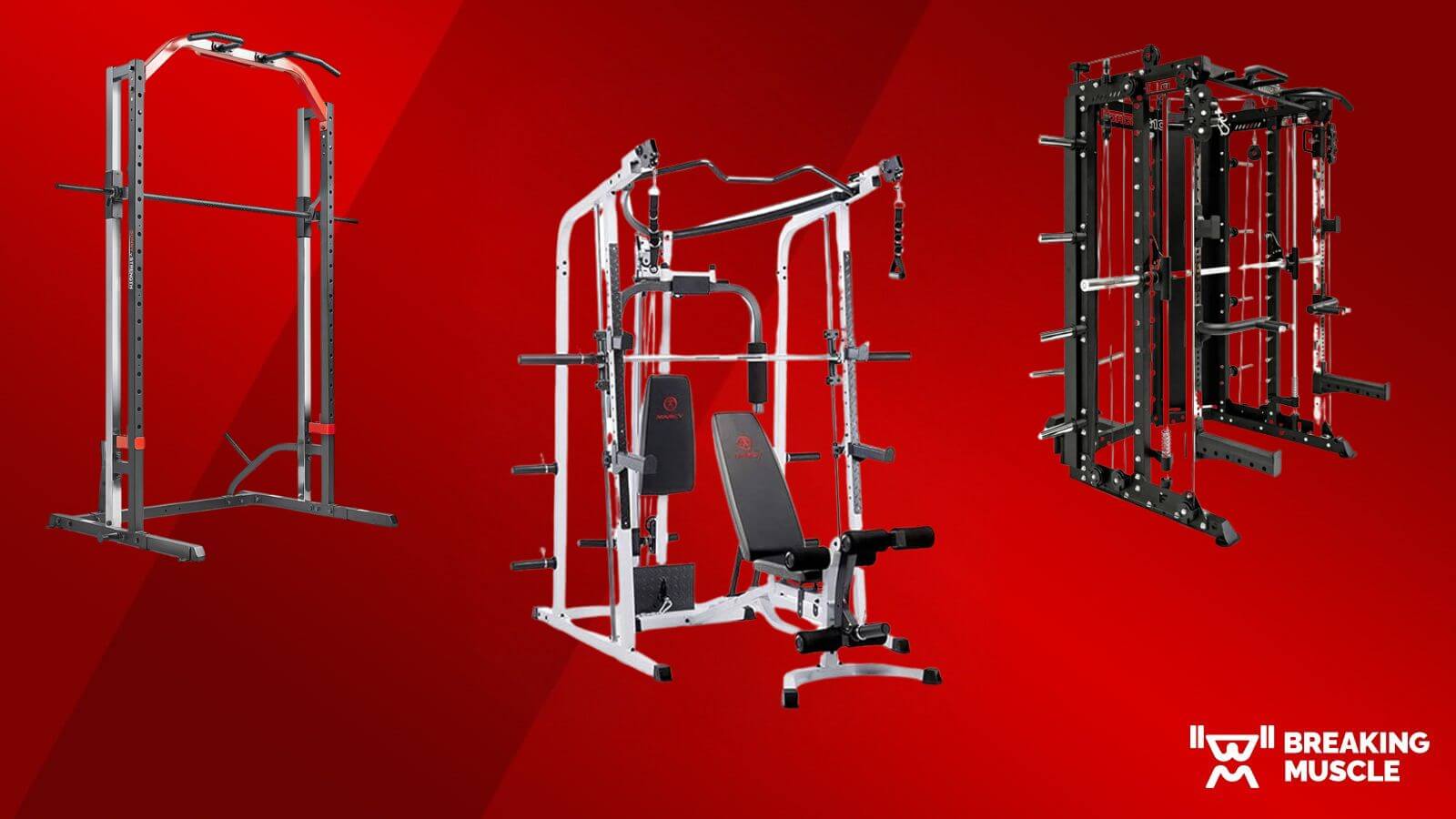
From foundational strength movements to specific isolation exercises, the Smith machine can support:
- Compound Lifts: Squats, bench presses, shoulder presses, and rows.
- Isolation Movements: Calf raises, shrugs, bicep curls (with a bench), and triceps extensions.
- Unique Variations: Inverted rows, glute bridges, and even some core exercises.
This extensive exercise library makes it a "Swiss Army knife" in the gym, capable of facilitating full-body workouts with just one piece of equipment.
Essential Exercises: Maximizing Your Smith Machine Workouts
Now that we understand the benefits, let’s dive into practical, actionable advice on how to perform key exercises safely and effectively on the Smith machine. Remember, while the fixed path aids stability, proper form is still paramount to prevent injury and maximize muscle activation.
Lower Body Power: Sculpting Stronger Legs and Glutes
The Smith machine is exceptional for leg and glute development, offering stable platforms for various movements.
1. Smith Machine Squats (Various Stances)
- Why it’s effective: Reduces the need for balance, allowing you to focus on quad and glute activation. You can also experiment with foot placement more easily.
- How to do it:
- Position yourself under the bar, typically with feet slightly forward of the bar for a more natural squat pattern, or directly under for a quad-focused squat.
- Unrack the bar, ensuring your shoulders are comfortably supporting it.
- Descend into a squat, keeping your chest up and back straight. Aim for at least parallel thighs to the floor.
- Drive back up through your heels, squeezing your glutes at the top.
- Tips: Experiment with foot width and how far forward your feet are positioned to feel different muscle groups working. For example, feet further forward can emphasize glutes and hamstrings.
2. Smith Machine Lunges (Static or Split Squats)
- Why it’s effective: Great for unilateral (single-leg) strength and stability without complex balancing.
- How to do it:
- Set the bar at shoulder height. Step one foot forward, placing it directly under the bar. The other foot remains back, ready for the lunge.
- Unrack the bar and hold it steady.
- Lower your hips until your front knee is at a 90-degree angle and your back knee hovers just above the floor. Keep your torso upright.
- Drive back up, focusing on the front leg.
- Tips: Perform all reps on one leg before switching. Use a controlled tempo to feel the burn.
3. Smith Machine Glute Bridges/Hip Thrusts
- Why it’s effective: Direct glute activation with less lower back strain than traditional barbell hip thrusts, as the bar is fixed.
- How to do it:
- Lie on the floor or with your upper back on a bench, with the bar positioned across your hips. Pad the bar for comfort.
- Feet flat on the floor, close to your glutes.
- Unrack the bar. Drive your hips up towards the ceiling, squeezing your glutes powerfully at the top.
- Lower with control.
- Tips: Focus on the mind-muscle connection with your glutes. Avoid overextending your lower back.
4. Smith Machine Calf Raises
- Why it’s effective: Excellent for isolating calf muscles without balance issues, allowing for heavier loads.
- How to do it:
- Place a small step or weight plate under the bar.
- Position the bar across your upper back/shoulders.
- Unrack the bar, standing with the balls of your feet on the step and your heels hanging off.
- Slowly lower your heels to get a full stretch in your calves.
- Explosively push up onto your tiptoes, squeezing your calves at the peak contraction.
- Tips: Hold the peak contraction for a second or two to maximize engagement.
Upper Body Development: Building Strength and Definition
The Smith machine provides a safe and effective platform for targeting chest, shoulders, and back.

1. Smith Machine Bench Press (Flat, Incline, Decline)
- Why it’s effective: Allows you to press heavy without a spotter, and the fixed path helps maintain consistent form.
- How to do it:
- Set up a bench under the bar. Lie on the bench with your eyes directly under the bar.
- Grip the bar slightly wider than shoulder-width.
- Unrack the bar. Lower it to your mid-chest (flat), upper chest (incline), or lower chest (decline).
- Press the bar back up, locking out your elbows.
- Tips: Focus on controlled negatives. Don’t let the fixed path make you complacent; maintain core tension.
2. Smith Machine Overhead Press (Seated or Standing)
- Why it’s effective: Excellent for shoulder strength and hypertrophy, with added safety for heavy lifts.
- How to do it:
- Position a bench (for seated) or stand under the bar.
- Grip the bar slightly wider than shoulder-width, with the bar resting on your upper chest/front deltoids.
- Unrack the bar. Press it straight overhead until your arms are fully extended.
- Lower with control.
- Tips: Keep your core tight to protect your lower back, especially when standing. Avoid arching your back excessively.
3. Smith Machine Bent-Over Rows
- Why it’s effective: Provides a stable base to pull heavy, targeting your back muscles effectively.
- How to do it:
- Set the bar at a height that allows you to hinge forward with a straight back and grasp the bar.
- Bend at your hips, keeping your back straight and core engaged. Grip the bar with an overhand or underhand grip.
- Unrack the bar. Pull it towards your upper abdomen, squeezing your shoulder blades together.
- Lower the bar with control, allowing a full stretch in your lats.
- Tips: Maintain a flat back throughout the movement. Avoid using momentum; let your back muscles do the work.
4. Smith Machine Shrugs
- Why it’s effective: Ideal for isolating the trapezius muscles for thicker upper back and neck development.
- How to do it:
- Stand under the bar, gripping it slightly wider than shoulder-width.
- Unrack the bar. Keeping your arms straight, elevate your shoulders towards your ears.
- Hold the contraction briefly, then slowly lower your shoulders back down.
- Tips: Don’t roll your shoulders; move them straight up and down. Focus on the squeeze at the top.
Smith Machine for Different Fitness Goals
The versatility of the Smith machine means it can be adapted to various training objectives.
For Beginners: Building a Foundation
For those new to lifting, the Smith machine is an excellent starting point.
- Focus on Form: Use light weights to master the movement patterns of squats, presses, and rows. The fixed path helps engrain correct motor patterns.
- Confidence Building: The safety features allow beginners to gain confidence with heavier loads without the fear of getting pinned.
- Introduction to Progressive Overload: Learn to gradually increase weight or reps, understanding how your body adapts, in a controlled environment.
For Isolation and Advanced Techniques
Intermediate lifters can leverage the Smith machine for specific purposes:
- Targeted Muscle Growth: Use it for isolation exercises or to pre-fatigue a muscle group before a free-weight compound lift.
- Drop Sets and Supersets: The quick re-racking mechanism makes it ideal for intensity techniques like drop sets (immediately reducing weight) or supersets (performing two exercises back-to-back).
- Negative Training: Safely emphasize the eccentric (lowering) phase of a lift by slowly controlling the bar down, knowing you can rack it if you can’t push it back up.
For Rehabilitation and Injury Support
As noted, the controlled path is a boon for those recovering from injuries or managing chronic pain.
- Controlled Range of Motion: Set safety stoppers to limit the movement to a pain-free range.
- Reduced Stabilizer Demand: Allows primary muscles to be strengthened without overburdening smaller, supporting muscles that might be compromised.
- Gradual Load Progression: Slowly increase weight as strength and confidence return, ensuring a safe return to full function.
Maximizing Your Smith Machine Workouts: Actionable Advice
Beyond just performing exercises, how you approach your Smith machine training can significantly impact your results.

1. Master Controlled Movements: The fixed path can sometimes lead to complacency. Actively engage your muscles throughout the entire range of motion. Avoid letting gravity do the work on the eccentric phase; control the descent and explode on the concentric (lifting) phase.
2. Don’t Neglect Free Weights (If Available): While the Smith machine offers unique benefits, it’s wise to complement your training with free weights if you have access. Free weights challenge your stabilizing muscles, improve coordination, and mimic real-life movements more closely. Think of the Smith machine as a powerful tool in your arsenal, not the only tool.
3. Prioritize Warm-Up and Cool-Down: Even with the added safety, proper warm-up prepares your muscles and joints for the work ahead, reducing injury risk. A cool-down aids recovery and flexibility.
4. Embrace Progressive Overload: This fundamental principle of strength training is crucial. To continue building muscle and strength, you must continually challenge your body.
- Increase Weight: Gradually add more weight to the bar.
- Increase Reps/Sets: Perform more repetitions or sets with the same weight.
- Improve Tempo: Control the movement more slowly, especially the eccentric phase.
- Decrease Rest Time: Shorten the rest periods between sets to increase intensity.
5. Listen to Your Body: Pay attention to any discomfort or pain. The fixed path can sometimes feel unnatural for certain body types or joint structures. Adjust your foot placement, grip, or exercise selection if something doesn’t feel right. Never push through sharp pain.
Safety First: Essential Protocols for Smith Machine Use
Safety is paramount in all forms of strength training, and the Smith machine, despite its built-in features, still requires adherence to proper protocols.
1. Inspect the Equipment: Before every use, quickly check that the bar slides smoothly, the locking mechanisms engage properly, and the safety stoppers are secure.
2. Set Safety Stoppers Correctly: This is your primary safeguard. For squats, set them just below your lowest comfortable squat depth. For presses, set them just above your chest. This ensures the bar won’t pin you if you fail a lift.
3. Understand the Locking Mechanism: Familiarize yourself with how to quickly and smoothly lock the bar into place at any point in the movement. Practice this without weight.

4. Optimal Foot Placement (for Squats/Lunges): Experiment with foot placement to find what feels most natural and effective for your body. Avoid standing too far forward or backward, as this can put undue stress on your knees or back.
5. Maintain Core Engagement: Regardless of the exercise, a braced core provides stability for your spine and transfers power more effectively.
6. Controlled Breathing: Exhale during the effort phase (lifting) and inhale during the recovery phase (lowering). This helps maintain intra-abdominal pressure, supporting your core.
Integrating the Smith Machine into Your Training Routine
The Smith machine can seamlessly fit into various workout splits and routines.
- Full Body Workouts: Use it for 1-2 compound exercises (e.g., squats and bench press) per session, then move to other equipment for accessory work.
- Upper/Lower Splits: Dedicate specific upper or lower body days to Smith machine exercises, taking advantage of its ability to target those muscle groups effectively.
- Push/Pull/Legs (PPL): Integrate Smith machine presses on push day, rows on pull day, and squats/lunges on leg day.
- Accessory Work: Even if your main lifts are free weights, the Smith machine is excellent for accessory work to further fatigue specific muscles or work on a weakness.
A real-life example might involve a beginner performing Smith machine squats and bench presses as their primary strength builders for a few weeks, focusing purely on form and feeling the muscles work. An intermediate lifter might use it for incline presses to target their upper chest more intensely after a free-weight flat bench, or for negative-focused leg presses to break through a strength plateau.
Common Myths and Misconceptions Debunked
The Smith machine often faces criticism, but a balanced perspective reveals its true value.
- Myth: "It’s not functional."
- Reality: While the fixed path doesn’t mimic real-world movements exactly, it builds foundational strength and muscle mass that is functional. A strong squat, even on a Smith machine, translates to stronger legs for everyday activities. It’s a tool for building raw strength.
- Myth: "It’s only for beginners."
- Reality: As discussed, it’s excellent for beginners, but intermediate and even advanced lifters use it for isolation, intensity techniques, and safer heavy lifting without a spotter.
- Myth: "It’s bad for your joints."
- Reality: Any exercise performed with poor form or excessive weight can be bad for your joints. The fixed path can feel unnatural if your body isn’t aligned correctly, but with proper setup and attention to form, it can actually be safer for joints by removing uncontrolled lateral movement. Listen to your body and adjust.
The key is to understand its strengths and weaknesses and use it strategically as part of a well-rounded fitness program.
Conclusion: Embrace the Power of the Smith Machine
The Smith machine is more than just another piece of gym equipment; it’s a versatile, safe, and powerful tool that can significantly enhance your fitness journey. Whether you’re taking your first steps into strength training, looking to break through plateaus, or seeking a reliable way to work out safely and efficiently in your home gym, the Smith machine offers a unique blend of benefits.
By understanding its mechanics, mastering proper form for a diverse range of exercises, and adhering to essential safety protocols, you can unlock its full potential. Don’t let misconceptions limit your training; embrace the stability, the safety, and the sheer versatility that the Smith machine provides. Integrate it wisely into your routine, listen to your body, and commit to progressive overload.

Your path to a stronger, more confident, and more capable you is within reach. Step up to the Smith machine, take control, and embark on a rewarding journey of muscle building, strength enhancement, and unwavering progress. The power to transform your physique and redefine your limits awaits.
Smith Machine FAQs
Q: Are there different types of Smith machines?
A: Yes, while all Smith machines feature a guided barbell, some offer a strictly vertical path, while others have a slight angle, which can feel more natural for certain movements like squats. Additionally, some are standalone units, while others are integrated into multi-functional trainers that include power racks, cable systems, and other stations.
Q: Can I deadlift on a Smith machine?
A: You can perform a deadlift-like movement on a Smith machine, but it’s important to understand the differences. A traditional deadlift requires significant stabilization and a free range of motion, which the Smith machine’s fixed path limits. If you do perform them, focus on stiff-leg deadlifts or Romanian deadlifts to target hamstrings and glutes, using a lighter weight to prevent lower back strain due to the restricted bar path. Always prioritize proper form and listen to your body.
Q: Can you build muscle with a Smith machine?
A: Absolutely! The Smith machine is an excellent tool for building muscle. Its stability allows for consistent muscle activation, targeted isolation, and safe progression of weight or repetitions, all of which are key drivers of muscle hypertrophy (growth). For beginners, it’s a great way to learn to feel the target muscles working, and for intermediate lifters, it’s effective for intensity techniques or working muscles to failure safely.
Q: Is it OK to squat on a Smith machine?
A: Yes, it is perfectly fine and often highly beneficial to squat on a Smith machine, especially for beginners or those training without a spotter. The fixed bar path helps you focus on quad and glute engagement without needing to stabilize the weight. You can also experiment with different foot positions to target specific muscle groups more effectively. However, ensure your form is correct, and adjust your stance to feel natural, avoiding any knee or back discomfort.