
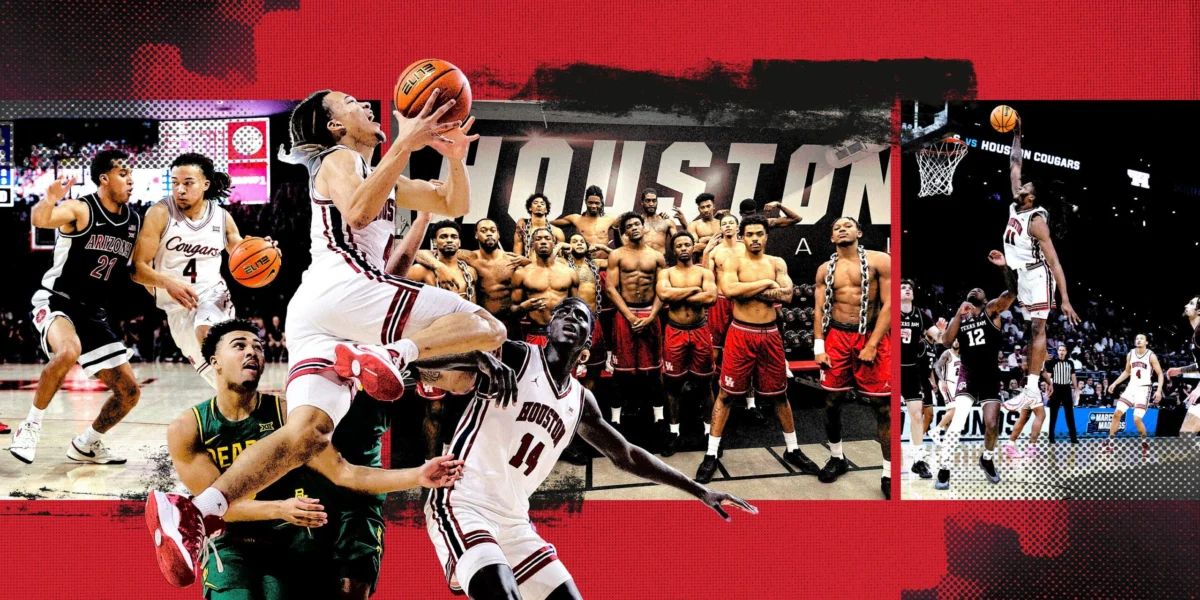
March Madness. The very phrase conjures images of buzzer-beaters, Cinderella stories, and the electrifying tension of elite basketball. But behind the dazzling plays and nail-biting finishes, there’s a foundational element that often goes unseen: raw, functional strength. This year, the University of Houston Cougars are making waves not just with their strategic prowess, but with a visibly formidable physique, a testament to the groundbreaking work of their Director of Sports Performance, Alan Bishop. Forget the stereotype of lean, wiry basketball players; the Cougars are a squad built for battle, and their success is a direct reflection of Bishop’s holistic approach to athletic development.
The early morning grind is legendary at Houston. When players arrive at 6:30 a.m. for summer workouts, the entire coaching and support staff is already present. This isn’t about micromanagement; it’s a powerful visual cue, as Bishop explains, "That emphasizes the importance of development. We have our standards, and now there is an accountability component." This commitment to building a strong, resilient team has translated into a powerful on-court identity: physical, tough, and demanding. It’s an identity that has propelled them deep into the NCAA tournament, showcasing the tangible benefits of prioritizing strength training in a sport often perceived to favor agility and endurance above all else.
The Foundation of Power: More Than Just Muscle
The viral sensation of the 2024-25 Houston squad, showcasing a team with impressive musculature, wasn’t an accident. It was the result of a deliberate, science-backed strategy designed to enhance both power and endurance. Bishop’s philosophy hinges on three core tenets: mobility, stability, and skill.
- Mobility: "You must have mobility to get into positions, like a deep squat," Bishop emphasizes. Without the ability to move through a full range of motion, athletes are limited in their potential for power generation and are more susceptible to injury.
- Stability: "You must build stability to add load," he continues. True strength isn’t just about lifting heavy; it’s about controlling that weight with a stable core and integrated muscle groups. This translates to more efficient movement on the court and better force transfer.
- Skill: "A critical component often missed is you must develop the skill of training—developing and teaching guys what the mind-muscle connection feels like," Bishop states. This is where true mastery comes in. It’s about understanding how your body moves, how to engage specific muscles, and how to practice the act of training itself with intent.
This comprehensive approach means that when recruits arrive, they understand the program’s demands. Bishop is upfront: "A lot of guys out there will run away from that. We get the kind of kids who run to that challenge." This filters in a culture of dedication and a willingness to push boundaries.
Building an Unrivaled Training Environment
Since his arrival in 2017, Bishop has worked closely with Head Coach Kelvin Sampson to cultivate a world-class training facility. Recognizing the need for specialized tools, Bishop advocated for significant investment in customized equipment. The result? Approximately 75% of the weight room’s gear is custom-made, sourced from leading strength and conditioning innovators worldwide.
From thick-handled dumbbells designed for enhanced grip strength by Watson in the UK, to Eleiko barbells and bumper plates from Sweden, and even a custom-built hack squat machine from Atlantis in Canada that accommodates athletes over seven feet tall, Houston has spared no expense. Prime Fitness USA, based in Pennsylvania, even crafted bespoke hamstring equipment. "We’ve pinpointed the companies that would build things out exactly the way we want," Bishop says. "If there’s a machine we need with a custom build, we go get it." This dedication to having the right tools for the job is a critical factor in their success.
The Science of Peak Performance: Periodization and Recovery
Houston’s offseason workouts operate on a concurrent periodization model. This sophisticated approach simultaneously targets multiple physical attributes, cycling through blocks of:
- Volume Accumulation: Building a base of work capacity.
- Hypertrophy: Increasing muscle size.
- Intensification: Focusing on heavier loads.
- Strength: Maximizing maximal force production.
- Power: Developing explosive movements.
The final phase before the season is the "realization block," meticulously designed to peak power output. Wednesdays are dedicated to a full hour of mobility and recovery using the ELDOA method, a protocol Bishop favors for its deep focus on joint health, tissue elasticity, and overall body alignment.

Summer workouts also venture beyond the traditional gym setting. Bishop incorporates non-traditional drills to foster speed, power, and conditioning:
- Danny Ball: A unique take on volleyball using 12-pound medicine balls.
- Strongman Training: Exercises that build functional strength and grip.
- VersaClimbers: A full-body cardiovascular challenge.
- Varied Running Sessions: From tempo runs to mile-long sprints, building a robust aerobic base and the ability to explode at a moment’s notice.
As practices commence and the season approaches, the training evolves. Three total-body sessions per week become the norm. During the season, high-minute players engage in strength training twice weekly, while lower-minute players receive additional conditioning and lifting sessions. Injured or redshirt athletes, depending on their specific needs, might be in the weight room four to five days a week, ensuring continuous development.
Fueling the Machine: Nutrition for Optimal Performance
A cornerstone of Houston’s philosophy is achieving and maintaining sub-10 percent body fat for every player. "Fat doesn’t flex. Excess fat is a stressor," Bishop states unequivocally. "This is just necessary for how we play, the conditioning level required." This commitment to leanness is supported by a meticulously structured nutrition program.
The program is divided into three essential components:
-
The Training Table: This encompasses full, nutrient-dense meals.
- Post-Training Breakfast Buffets: Featuring staples like eggs, lean meats, nuts, fruits, berries, breakfast potatoes, oats, and even grits to honor Southern traditions.
- Lunch Buffets: Providing another opportunity for balanced, performance-fueling meals.
- In-Season Dinners: For athletes with late afternoon practices, to-go boxes from local restaurants are provided. The strategy? "So they have to pick up the food to sit down," Bishop explains, encouraging a mindful approach to eating.
-
The Fueling Station: This is a 24/7 accessible snack and hydration bar.
- Hydration: Sports drinks with carbohydrates are reserved strictly for practice and games. Otherwise, the focus is on water, and select nutrient-enhanced beverages.
- Snacks: A wide array of fruits, pre-packaged meals, and trail mixes are available to ensure players have access to nourishment whenever they need it.
-
Supplements: Bishop views supplements as a final layer, not a primary solution. "We try to address our nutrition from a standpoint of health driving performance," he says. The emphasis is on micro-nutrients crucial for overall well-being and longevity, including Vitamin D, Omega-3s, magnesium, zinc, and multivitamins. "Anything that positively impacts your blood panel will drive your longevity."
The Power of Rest: Sleep as a Performance Enhancer
In the relentless pursuit of athletic excellence, sleep is often the most overlooked, yet arguably the most critical, component of recovery and performance. Bishop treats it with the same seriousness as nutrition and training. The Houston facility boasts eight custom-built sleeping pods, designed to comfortably accommodate even the tallest athletes. This private sanctuary allows players to optimize their rest.

"You have to think of sleep as a meal, and naps as a supplement," Bishop advises. "Yes, we want our guys sleeping at night. And if we can get a nap during the day, it serves almost like a supplement to drive recovery." This understanding of sleep as an active performance enhancer is a game-changer for athlete well-being and long-term success.
Exercises for Championship-Level Strength
Bishop’s expertise shines through in the specific exercises he employs to forge the Cougars into a powerhouse. Here are a few key movements that build the strength and toughness needed for a deep postseason run:
Overhead Press
Bishop champions vertical pressing strength for its profound impact on shoulder health and overall upper body power.
- Why it’s crucial: "Long-term shoulder health is going to be much more predicated on vertical strength and mobility versus horizontal," he explains. The overhead press has a significant carryover to the bench press, but focusing solely on horizontal pressing doesn’t guarantee a strong overhead press. By prioritizing vertical strength, athletes build a more robust and transferable foundation.
- Other key movements: Pull-ups/chin-ups, and weighted dips are also integral to developing upper body pulling and pushing strength.
Front Squat
Often lauded as the king of lower body exercises, Bishop believes the front squat offers the most athletic transfer.
- The Athlete’s Advantage: "The example I like to use is this: You can go to gyms all over this country and you can find somebody who’s got a decent strike level. They can do a 315-pound back squat. But it doesn’t mean that they can do a full depth, 250-pound one. But if you go and find anybody that can full depth 250 on the front squat, they’re guaranteed they can do that 315 on the back." The front squat’s upright posture demands greater core engagement and mobility, leading to a more potent and controlled squat pattern.
- Optimizing for Long Limbs: For athletes with long legs and wingspans, a slight heel elevation (using a squat wedge or slant board) can be beneficial. "By elevating the heels, you can target leg strength a bit more versus that forward lean on the back squat," Bishop notes. This adjustment helps to emphasize quad development, crucial for vertical jump power.
- Supporting Exercises: Glute-Hamstring Raises/Romanian Deadlifts and Front Foot-Elevated Split Squats are also vital for building a well-rounded lower body.
The Mindset of a Champion
The Houston Cougars’ journey to the top is not just about physical conditioning; it’s about cultivating a resilient mindset. Bishop emphasizes that the demanding nature of their program is by design. "These guys want to have something that they need to struggle to overcome," he says. "Because if you go through that struggle, you go through the challenge and you overcome it. Now, you own it."
This philosophy of embracing challenges, pushing through adversity, and ultimately owning the success that follows is the true secret weapon. The physical strength is undeniable, but it’s the mental fortitude, forged in the crucible of intense training and unwavering commitment, that truly sets the Houston Cougars apart. As they continue their pursuit of a national championship, they serve as a powerful reminder that in sports, and in life, true greatness is built from the ground up, with strength, dedication, and an unyielding belief in oneself.