The journey to a stronger, fitter you often begins with a single step – or, in the world of fitness, a single piece of equipment that can transform your entire routine. For many home gym enthusiasts, the Smith machine stands as a silent powerhouse, offering a unique blend of safety, versatility, and focused muscle engagement. Far from being a mere imitation of free weights, this ingenious apparatus presents a distinct advantage, particularly for those building their strength foundation or seeking to isolate muscle groups with unwavering precision.
Imagine having a built-in spotter for every heavy lift, the confidence to push your limits without fear, and the flexibility to target almost every major muscle group within a compact footprint. This is the promise of the Smith machine, a staple in commercial gyms now increasingly finding its rightful place in home setups. Whether you’re a beginner eager to master fundamental movements safely, or an intermediate lifter looking to break through plateaus with controlled intensity, understanding and utilizing the Smith machine effectively can unlock new dimensions in your fitness journey.
This comprehensive guide will demystify the Smith machine, revealing its core mechanics, exploring a wealth of exercises, and providing actionable strategies to integrate it seamlessly into your training. We’ll delve into safety protocols, advanced techniques, and crucial considerations for choosing the right model for your personal fitness sanctuary. Prepare to harness the precision power of the Smith machine and elevate your home workouts to new heights.
The Smith Machine Unveiled: A Home Gym Game-Changer
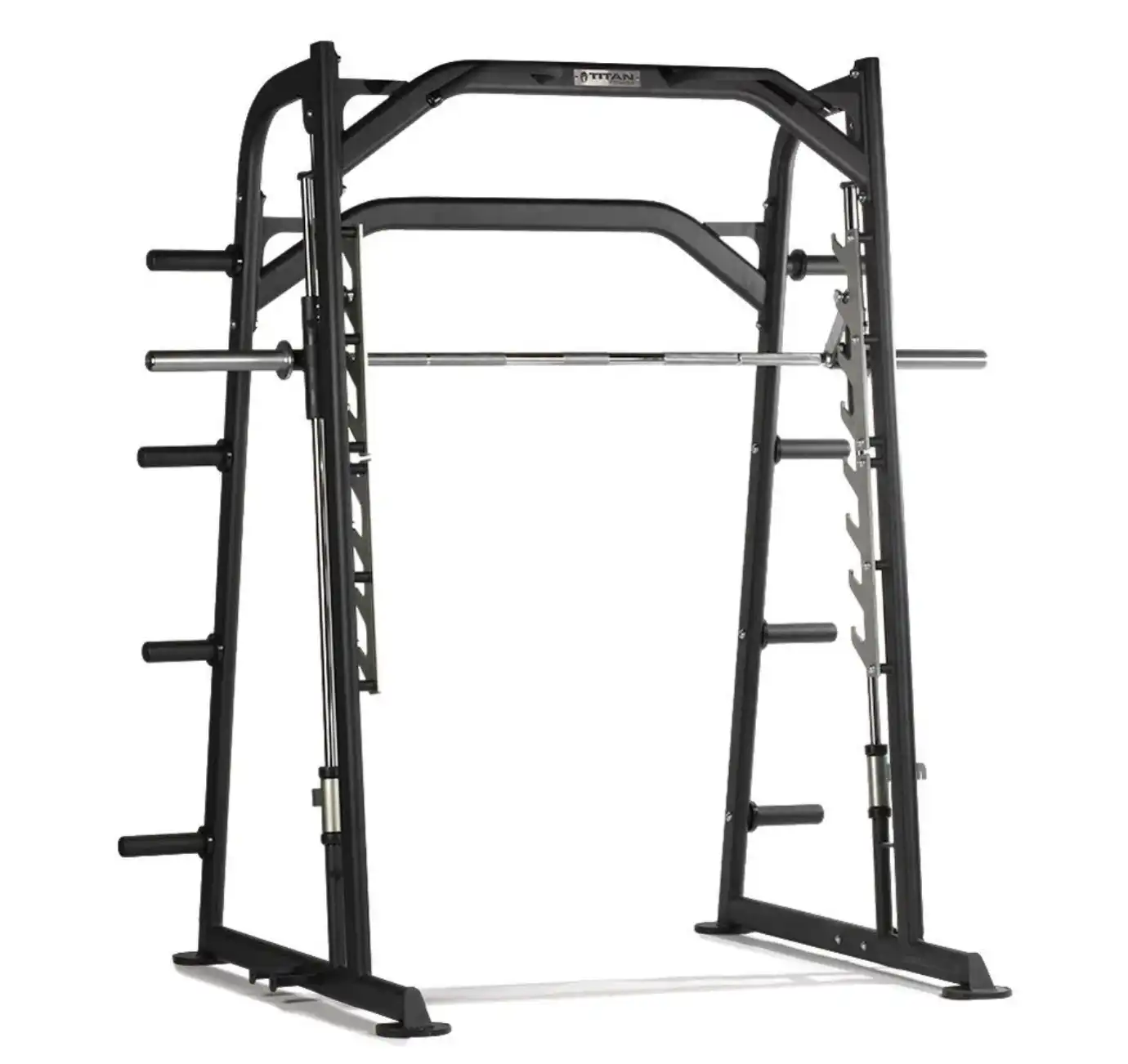
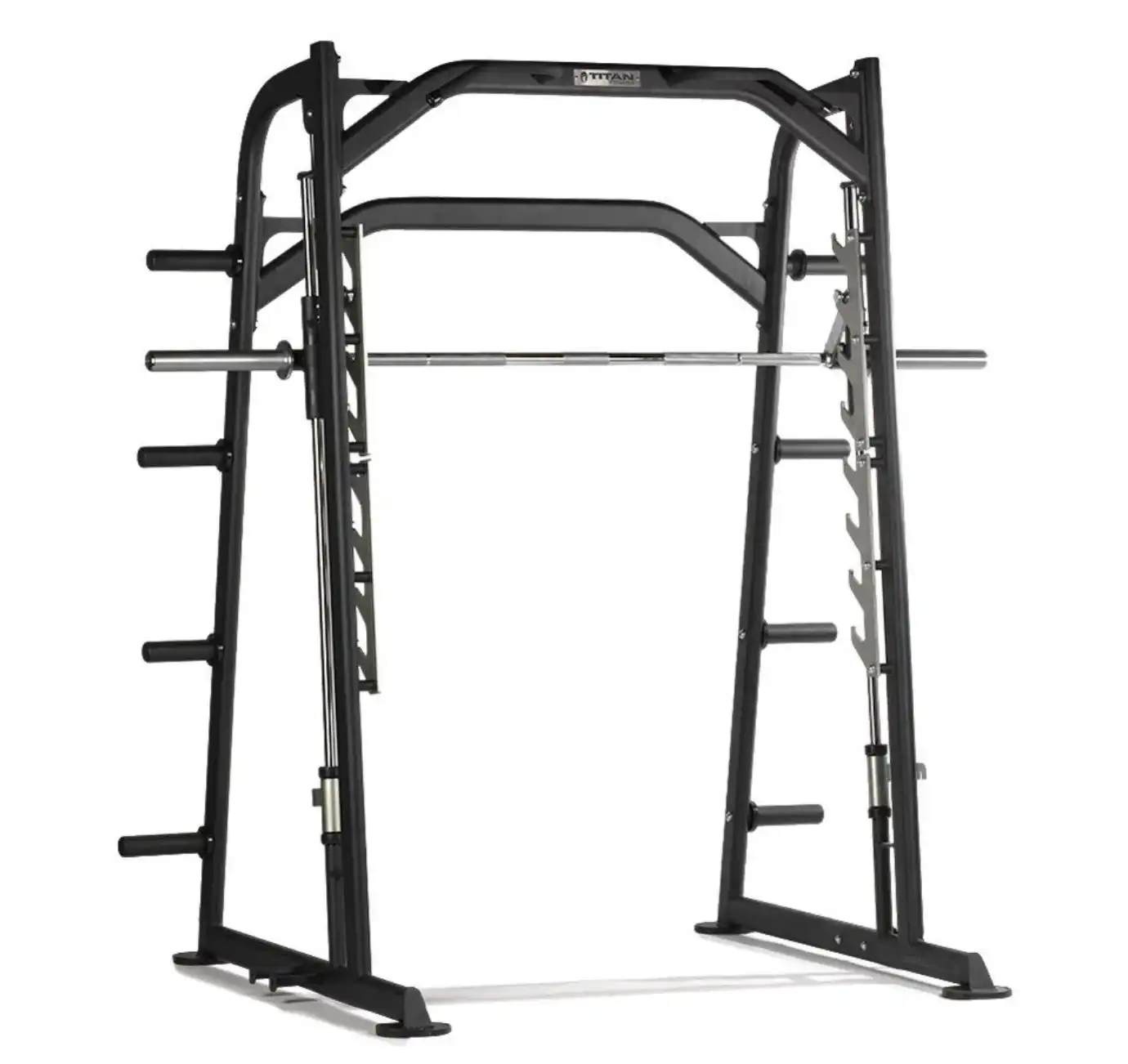
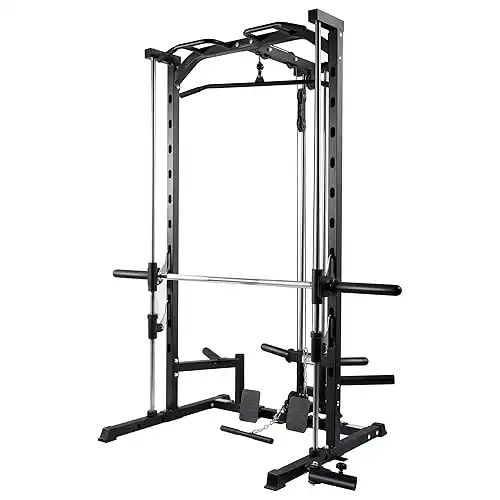
At its heart, the Smith machine is a barbell integrated into a steel frame, moving vertically (or sometimes at a slight angle) along fixed rails. This unique design incorporates safety hooks along the bar path, allowing you to instantly rack the weight at any point with a simple twist of the wrist. This fundamental difference from a traditional free-weight barbell is precisely what makes it such a valuable asset for a home gym.
More Than Just a Barbell: Understanding Its Core Function
The defining characteristic of the Smith machine is its fixed path of motion. While this might seem restrictive to some, it offers significant benefits, especially for specific training goals and demographics:
- Guided Movement: The bar’s predictable path removes the need for extensive stabilization, allowing you to focus intensely on the target muscle group. This can be invaluable for learning proper form for compound movements like squats and presses, as it reduces the complexity of balancing the weight.
- Integrated Safety: The adjustable safety stoppers and immediate re-racking mechanism provide an unparalleled level of security. If you fail a lift, you simply twist the bar to lock it in place or let it rest on the safety stoppers. This eliminates the need for a human spotter, making it ideal for solo workouts at home.
- Consistent Form Feedback: Because the bar moves in a predictable plane, any deviations in your body’s movement pattern become more apparent. This can help you refine your technique and identify weaknesses in your form that might be masked by the compensatory movements required with free weights.
Why the Smith Machine Deserves a Spot in Your Home Gym
For anyone crafting their ideal home workout space, the Smith machine offers compelling advantages that extend beyond its basic mechanics:
- Unrivaled Safety for Solo Training: This is arguably the biggest selling point for a home gym. Lifting heavy without a spotter can be dangerous. The Smith machine mitigates this risk significantly, allowing you to push your strength limits with confidence, knowing you can safely bail out of a lift at any moment. This peace of mind is invaluable for consistent, progressive training.
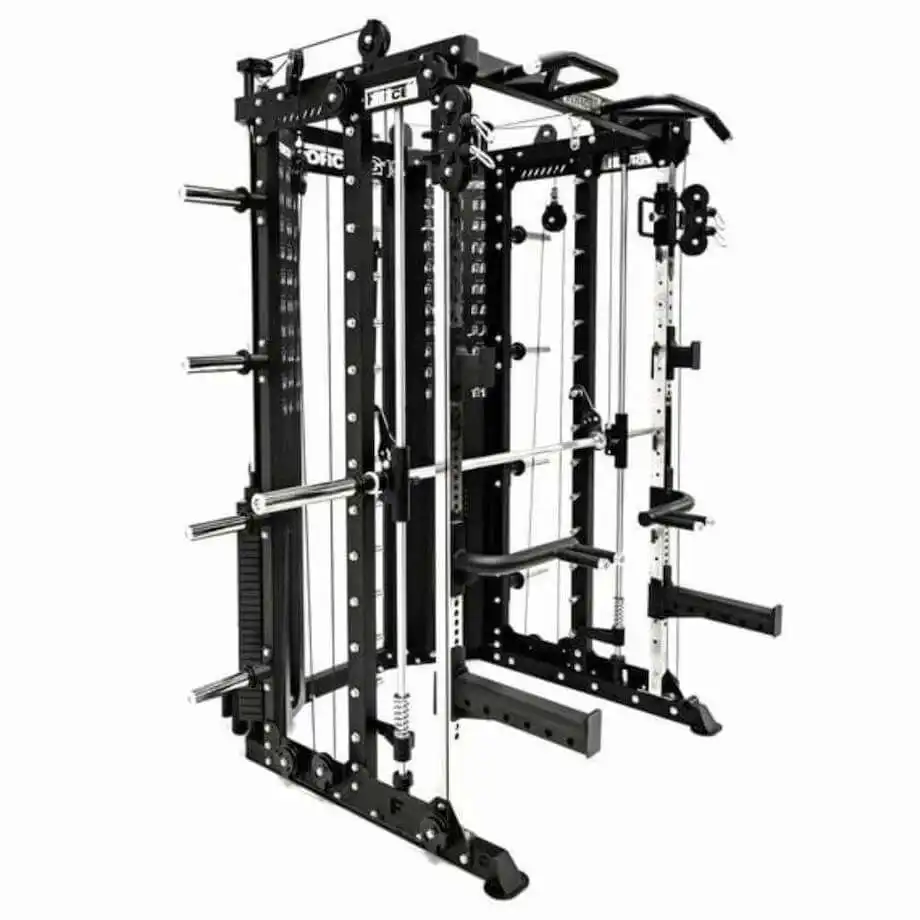
- Exceptional Versatility in a Compact Design: Despite its imposing appearance, many modern Smith machines, particularly all-in-one units, are incredibly space-efficient. They can replace multiple pieces of equipment, offering stations for:
- Compound Lifts: Squats, bench presses, overhead presses, rows.
- Isolation Exercises: Calf raises, triceps extensions, bicep curls, shoulder raises.
- Accessory Work: Many units include pull-up bars, dip stations, or even cable pulley systems for functional training.
This multifunctionality means you can achieve a comprehensive full-body workout with just one machine, maximizing your available space.
- Targeted Muscle Engagement: The fixed bar path allows for a unique focus on the primary mover muscles. By reducing the involvement of stabilizing muscles, you can often lift heavier loads for specific exercises or achieve a deeper burn in the targeted muscle group. This can be particularly useful for bodybuilding-style training or for overcoming strength plateaus in certain lifts.
- Ideal for Beginners: Newcomers to strength training can quickly become intimidated by free weights. The Smith machine provides a controlled environment to learn the basic movement patterns of key exercises, building confidence and muscle memory before potentially progressing to free-weight variations. It’s a fantastic stepping stone for mastering form.
Mastering Movement: Essential Smith Machine Exercises
The true power of the Smith machine lies in its extensive exercise repertoire. By understanding how to manipulate your body position relative to the fixed bar path, you can perform a vast array of movements, targeting every major muscle group.
Lower Body Power: Sculpting Strong Legs and Glutes
The Smith machine is exceptional for leg day, offering stable platforms for heavy lifting.
- Smith Machine Squats (Back & Front):
- Back Squat: Stand with the bar across your upper back (traps). Position your feet slightly forward of the bar to allow for a more vertical torso and deeper squat, mimicking a hack squat feel. Drive through your heels.
- Front Squat: Position the bar across your front deltoids, elbows high. Again, feet slightly forward can help maintain an upright posture. This variation emphasizes the quads more.
- Practical Tip: Experiment with foot placement. Moving your feet slightly forward allows you to lean back into the bar, reducing stress on the lower back and targeting the quads and glutes more directly. Focus on a controlled descent and an explosive ascent.
- Smith Machine Lunges:
- Reverse Lunge: Stand facing the machine, unrack the bar, and step one leg back into a lunge. This offers great stability for developing single-leg strength and balance.
- Bulgarian Split Squat: Place your non-working foot on a bench behind you. Perform lunges with the bar on your back. The stability of the Smith machine allows you to focus purely on the quad and glute engagement of the working leg.
- Smith Machine Glute Bridges/Hip Thrusts: Sit on the floor with your upper back against a bench, feet flat. Roll the bar over your hips (use a pad for comfort). Drive through your heels, lifting your hips towards the ceiling, squeezing your glutes at the top. The fixed bar path makes loading and performing this exercise incredibly safe and effective for glute development.
- Smith Machine Calf Raises: Stand with the balls of your feet on a small step or weight plate, heels hanging off. Position the bar on your upper back. Lower your heels for a deep stretch, then push up onto your toes, squeezing your calves.
Upper Body Strength: Building a Powerful Torso
From chest to shoulders to back, the Smith machine provides a stable platform for pushing and pulling movements.
- Smith Machine Bench Press (Flat, Incline, Decline):
- Set up a weight bench under the bar. Lie down, position yourself so the bar is directly over your chest (or upper chest for incline, lower chest for decline). Unrack, perform the press, and use the safety catches if needed.
- Practical Tip: The fixed path allows for consistent muscle tension throughout the movement. Focus on a slow, controlled eccentric (lowering) phase to maximize time under tension and muscle growth.
- Smith Machine Overhead Press (Seated or Standing):
- Position a bench (with back support for seated) or stand under the bar. Unrack the bar from shoulder height and press straight overhead.
- Practical Tip: The stability makes this excellent for isolating the deltoids. If standing, ensure your core is braced to prevent hyperextension of the lower back.
- Smith Machine Bent-Over Rows:
- Stand facing the bar, bend at the hips with a slight knee bend, keeping your back straight. Grab the bar with an overhand grip, slightly wider than shoulder-width. Pull the bar towards your lower chest/upper abdomen, squeezing your shoulder blades.
- Practical Tip: While not identical to free-weight rows, the fixed path allows you to pull heavier, focusing intensely on the back muscles without worrying about balancing the bar.
- Smith Machine Shrugs:
- Stand under the bar, unrack it with an overhand grip. Keeping your arms straight, shrug your shoulders up towards your ears, holding briefly at the top. This is fantastic for isolating the traps.
Core and Isolation: Targeting Specific Muscle Groups
Beyond compound movements, the Smith machine excels at isolation, allowing you to focus on smaller muscle groups or specific parts of a muscle.
- Smith Machine Abdominal Crunches:
- Lie on your back under the bar, knees bent, feet flat. Position the bar across your upper chest/shoulders (pad recommended). Crunch up, using the bar as resistance. This helps ensure a full range of motion and controlled movement for your core.
- Smith Machine Triceps Extensions (Skullcrushers):
- Lie on a flat bench under the bar. Unrack with an overhand grip, arms extended. Lower the bar towards your forehead by bending only at the elbows. Extend back up, squeezing the triceps.
- Practical Tip: The fixed path makes this exercise incredibly stable, allowing for heavier loads and greater focus on triceps isolation.
- Smith Machine Bicep Curls:
- While less common, you can perform curls by standing facing the bar, gripping it with an underhand grip, and curling it upwards. The fixed path offers constant tension.
- Practical Tip: This is best for beginners learning the movement or for high-rep sets where form might break down with free weights.
Optimizing Your Training: Smith Machine Strategies for Success
Integrating the Smith machine effectively into your routine requires more than just knowing the exercises. It demands a strategic approach to safety, technique, and programming.
Safety First: Non-Negotiable Principles
The Smith machine’s greatest strength is its safety, but only when used correctly.
- Always Use Safety Stoppers: Before every set, set the adjustable safety stoppers just below your lowest intended range of motion. This acts as your ultimate safeguard, preventing the bar from pinning you if you fail a rep. This is non-negotiable for solo lifting.
- Learn to Quickly Re-rack: Practice twisting the bar to engage the safety hooks. This motion should be second nature. In a critical moment, a quick twist can save you from a dangerous situation.
- Start Light, Master Form: Even with the added stability, improper form can lead to injury. Begin with lighter weights to perfect your movement patterns, especially for new exercises. Focus on the mind-muscle connection and feel the target muscles working.
- Warm-Up and Cool-Down: Never skip your warm-up. Dynamic stretches and light cardio prepare your muscles and joints for the work ahead. A proper cool-down with static stretches helps with recovery and flexibility.
Beyond the Basics: Advanced Techniques and Variations
Once you’ve mastered the fundamentals, the Smith machine can be a powerful tool for advanced training techniques:
- Tempo Training: Control the speed of each rep. For example, a 3-second eccentric (lowering), a 1-second pause at the bottom, and a 1-second concentric (lifting). This increases time under tension, enhancing muscle growth.
- Partial Reps for Specific Strength Zones: Use the safety stoppers to limit the range of motion to a specific sticking point in a lift (e.g., the top half of a bench press). This allows you to overload that specific range and build strength where you’re weakest.
- Drop Sets: After completing a set to failure, immediately reduce the weight and perform more reps until failure again. The quick re-racking mechanism of the Smith machine makes drop sets incredibly efficient and effective for pushing muscle fatigue.
- Supersets with Bodyweight Exercises: Combine a Smith machine exercise with a complementary bodyweight movement. For example, Smith machine squats immediately followed by jump squats or Smith machine bench press followed by push-ups. This maximizes intensity and muscular endurance.
Integrating with Free Weights and Other Equipment
While powerful, the Smith machine is best viewed as a complementary tool, not a complete replacement for free weights.
- Complement, Don’t Replace: Free weights challenge stabilizer muscles and mimic more natural movement patterns. Use the Smith machine to supplement your free-weight training, focusing on specific strength gains or when you need the added safety for heavy lifts.
- Use for Specific Movements or When Fatigue Sets In: The Smith machine excels for exercises where stability is paramount (e.g., certain isolation movements) or for pushing volume when your stabilizer muscles might be fatigued from free-weight work.
- Combine with Dumbbells, Resistance Bands, or Cables: Many all-in-one Smith machines include cable pulley systems or power rack components. Utilize these for functional movements, anti-rotation exercises, or to add accommodating resistance with bands. Dumbbells can be used for unilateral work or movements not suited for the Smith bar.
Choosing Your Smith Machine: Key Considerations for Your Home Gym
Selecting the right Smith machine for your home gym involves evaluating several factors, balancing your fitness goals, available space, and budget.
Standalone vs. All-in-One: What Fits Your Space?
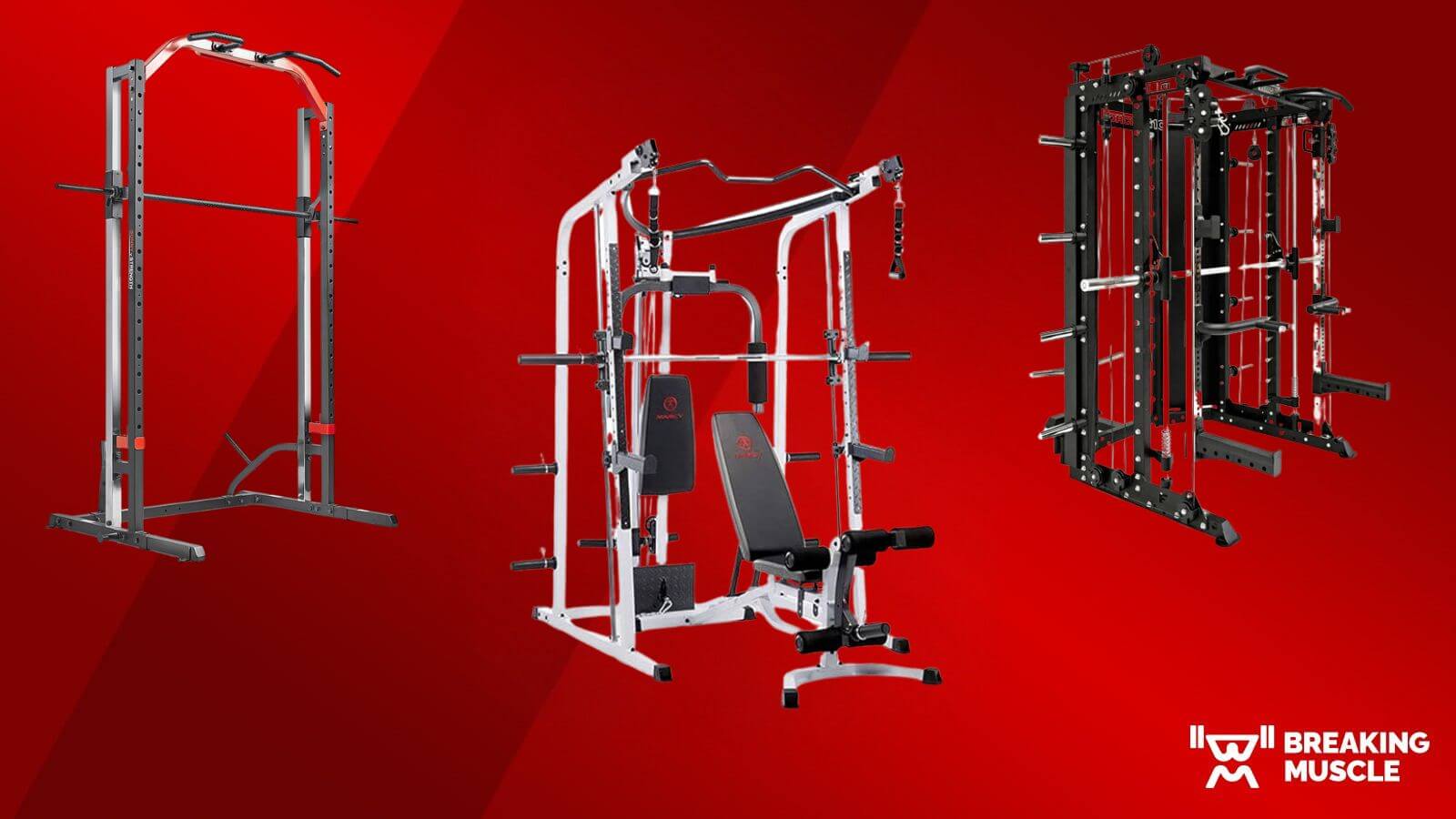
- Footprint: Measure your available space carefully. Standalone Smith machines are dedicated to the fixed bar path, while all-in-one units integrate additional features like power racks, cable systems, pull-up bars, and dip stations.
- Additional Features: An all-in-one trainer might be a higher initial investment but can save significant space and money in the long run by combining multiple pieces of equipment. Consider if you need functional trainer capabilities, a full power rack for free weights, or just the Smith machine function.
- Budget Implications: Generally, standalone Smith machines are more affordable than comprehensive all-in-one trainers. Determine what features are essential for your training and what you can realistically afford.
Build Quality and Smoothness: Investing in Durability
The quality of construction directly impacts the machine’s longevity, safety, and user experience.

- Frame Construction (Steel Gauge): Look for heavy-duty steel construction (e.g., 11-gauge steel) for maximum stability and durability. Thicker steel indicates a more robust and stable machine, especially important if you plan to lift heavy.
- Bearing System for Bar Movement: The smoothness of the bar’s travel is crucial. Look for machines with linear bearings (often sealed ball bearings) rather than bushings. Bearings provide a fluid, almost frictionless movement, which enhances the feel of every lift.
- Bar Knurling: The texture on the barbell (knurling) is important for grip. While Smith machine bars often have passive knurling, a more aggressive pattern can provide better grip, especially during heavy lifts or when your hands are sweaty.
- Weight Capacity: Check the maximum weight capacity of both the bar and the frame. Ensure it can comfortably support your current and projected lifting capabilities.
Practical Features: Enhancing Your Workout Experience
Small details can make a big difference in the usability and enjoyment of your Smith machine.
- Adjustable Safety Stops: Ensure the safety stoppers are easy to adjust and securely lock into place. More adjustment points offer greater precision for different exercises and body types.
- Integrated Storage for Plates/Accessories: Plate storage pegs keep your weight plates organized and easily accessible, maintaining a tidy and safe workout area. Some machines also offer storage for attachments like lat pulldown bars or dip handles.
- Counterbalanced Bar vs. Non-Counterbalanced: Some Smith machines feature a counterbalanced bar, meaning internal weights or pulleys reduce the effective weight of the bar itself (e.g., a 45lb bar might feel like 15lbs). This can be beneficial for beginners or for isolation exercises where even an empty bar is too heavy. Non-counterbalanced bars provide the actual weight, which is often preferred by experienced lifters.
- Pulley Ratios (if applicable for all-in-one): If considering an all-in-one unit with a cable system, understand the pulley ratio (e.g., 1:1, 2:1, 4:1). A 1:1 ratio means you lift the exact weight loaded, while a 2:1 ratio means you lift half the loaded weight, making the movement smoother but requiring more weight plates for the same resistance.
Common Misconceptions and How to Overcome Them
The Smith machine, like any specialized fitness tool, often faces scrutiny. Understanding and addressing common misconceptions can help you appreciate its unique value.
"It’s Not as Good as Free Weights"
This is a frequently heard critique, but it’s an oversimplification.
- Acknowledge Differences: It’s true that the fixed path of the Smith machine reduces the engagement of smaller stabilizer muscles that are crucial for balance and coordination with free weights. Free weights force your body to work harder to control the bar in three dimensions.
- Emphasize Its Unique Benefits: However, this "limitation" is also its strength. The reduced need for stabilization allows for superior muscle isolation and the ability to safely push heavier loads on the primary movers. It’s excellent for hypertrophy (muscle growth) and specific strength gains without the constant risk of losing balance.
- It’s a Tool, Not a Replacement: View the Smith machine as a specialized tool in your fitness arsenal. It complements free weights by offering a different stimulus and a safer environment for certain exercises, rather than trying to replace them entirely. Many elite athletes and bodybuilders incorporate both into their routines.
"It Limits Natural Movement Patterns"
The fixed plane of motion can indeed feel unnatural for some exercises, but this can be managed.
- True to an Extent: For highly complex, multi-joint movements that demand dynamic stability and unique biomechanical paths (e.g., Olympic lifts), the Smith machine is not suitable.
- Mitigated by Intelligent Exercise Selection and Positioning: For many common strength exercises, the fixed path can be advantageous. By adjusting your foot placement for squats or the angle of your bench for presses, you can still find a comfortable and effective path of motion that aligns with your body’s mechanics. The key is to experiment and find what feels right for your body within the machine’s constraints.
- Excellent for Targeting Specific Muscles: The stability allows you to remove variables and focus purely on contracting the target muscle. This can lead to a stronger mind-muscle connection and more effective stimulus for growth.
Conclusion: Forge Your Strength, Safely and Effectively
The Smith machine is more than just a piece of gym equipment; it’s an invitation to train with confidence, precision, and unwavering focus. For the burgeoning home gym, it offers an unparalleled combination of safety, versatility, and efficiency, empowering you to pursue your fitness goals without the need for a spotter or multiple specialized machines.
By understanding its mechanics, mastering its diverse exercise potential, and adhering to sound training principles, you can transform your home workouts into powerful sessions that build significant strength, sculpt impressive musculature, and enhance your overall fitness. From beginners seeking a secure foundation to intermediate lifters pushing new limits, the Smith machine stands ready to be your steadfast training partner.
Embrace the unique advantages it offers. Experiment with foot placements, explore new exercise variations, and leverage its built-in safety to push your boundaries. Your fitness journey is a continuous evolution, and with the Smith machine as your ally, you have a potent tool to forge a stronger, more resilient, and more confident you. Step up to the bar, set your intentions, and unleash the precision power within. The path to your strongest self begins now.