
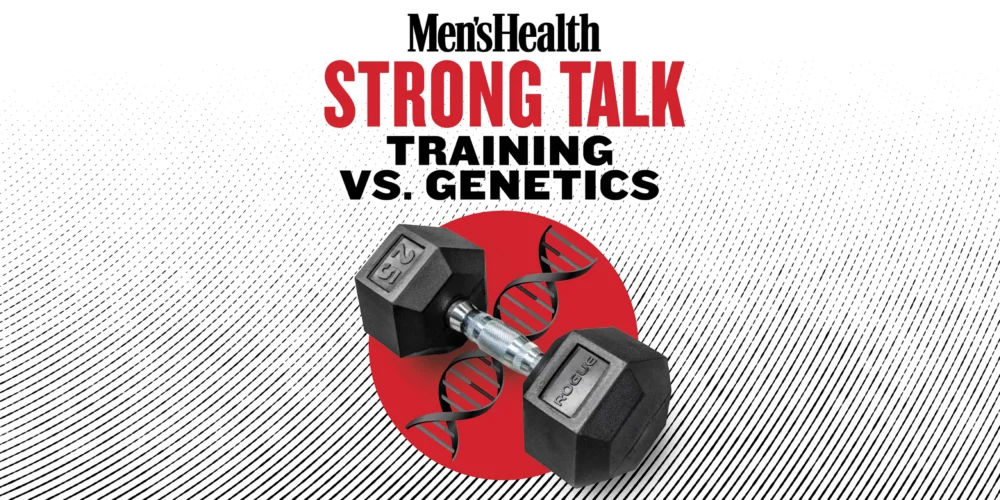
We’ve all seen them – those individuals in the gym who seem to pack on muscle with effortless grace, while your own progress feels like a slow and arduous climb. You might wonder if they’ve stumbled upon a secret elixir, a revolutionary supplement, or perhaps a hidden training technique. While those possibilities exist, the truth is often rooted in something far more fundamental: your genetic makeup.
Your DNA, the blueprint that dictates everything from your height and metabolic rate to the very shape of your physique, also plays a significant role in how your body responds to exercise. For some, this means a predisposition for rapid muscle growth, making biceps bulge and V-taper torsos materialize with remarkable speed. It’s a concept that can feel discouraging, especially if you perceive yourself as not being genetically “gifted.”
But before you resign yourself to a life of less-than-ideal gains, let’s delve deeper. The conversation around genetics and muscle building isn’t a simple win-or-lose scenario. Renowned sports scientist and competitive bodybuilder, Mike Israetel, Ph.D., offers invaluable insights into how genetics truly impact our fitness journeys. He emphasizes that while genetics can provide an advantage, they are far from the sole determinant of success. In fact, your dedication, strategic training, and understanding of your own unique physical landscape can powerfully override perceived genetic limitations.
This article will explore the multifaceted influence of genetics on muscle gain, equip you with strategies to navigate your genetic predispositions, and provide actionable advice to maximize your potential in the gym, regardless of your starting point.
Understanding the Genetic Advantage: Where Does DNA Truly Shine?
Genetics can influence muscle growth in two primary ways, affecting both your starting point and your body’s inherent capacity to respond to training stimuli.
1. The Starting Frame: Initial Physique and Body Composition
Imagine two teenagers. One, at 15, already possesses a robust, muscular build without ever having touched a weight. The other is naturally leaner and slighter. Dr. Israetel points out that the individual with the larger initial frame has a significant head start. Their genetic predisposition for a larger body composition means they are already ahead of the curve when it comes to potential muscle mass. This isn’t about being "lazy" or "gifted" in a magical sense; it’s about the underlying genetic factors that influence bone structure, muscle fiber type distribution, and overall tissue composition.
2. The Responsive Engine: Muscle Fiber Type and Hypertrophy Potential
Beyond initial size, genetics also dictate how efficiently your muscles respond to the stress of training. When you consistently challenge your muscles through resistance exercise, they adapt and grow larger – a process known as hypertrophy. For individuals with a genetic predisposition for rapid hypertrophy, this growth can be more pronounced and occur at a faster rate. Their muscle fibers may be more receptive to the signals that trigger growth, leading to quicker and more substantial gains.
Can You Truly Fight Genetics? Strategies for Overcoming Disadvantages
The good news is that a perceived genetic disadvantage doesn’t spell the end of your muscle-building aspirations. While you can’t change your DNA, you can certainly implement strategies to maximize your results and build an impressive physique.
The Power of Consistency and Progressive Overload
The most fundamental principle in muscle building, regardless of genetics, is consistent effort combined with progressive overload. This means continually challenging your muscles to do more over time.
- Consistency is King: Showing up to the gym regularly, adhering to a well-structured training plan, and prioritizing recovery are non-negotiable. Your muscles need a consistent stimulus to grow.
- Progressive Overload: This is the engine of muscle growth. It means gradually increasing the demands placed on your muscles. This can be achieved by:
- Increasing Weight: Lifting slightly heavier weights over time.
- Increasing Reps: Performing more repetitions with the same weight.
- Increasing Sets: Adding more sets to your exercises.
- Improving Form: Executing exercises with better technique and control.
- Decreasing Rest Times: Reducing the rest periods between sets.
- Increasing Frequency: Training a muscle group more often (within recovery limits).
Leveraging Your Strengths and Attacking Your Weaknesses
Dr. Israetel highlights a crucial aspect of optimizing your training: understanding your individual genetic strengths and weaknesses. Your genetic blueprint doesn’t impact every muscle group equally.
Anatomical Nuances and Exercise Selection
Consider the mechanics of certain lifts. For instance, individuals with a shorter torso and longer legs might find squats more challenging to perform with optimal form. Maintaining an upright posture can be difficult, potentially limiting the weight they can lift effectively and the stimulus they can provide to their quadriceps.
Conversely, someone with shorter legs and a longer torso, like Dr. Israetel himself, might find squatting more biomechanically advantageous, allowing for better posture and a more direct stimulus.
- Real-Life Example: If you struggle with a particular exercise due to your limb lengths or torso proportions, don’t force it. Instead, explore variations or alternative exercises that target the same muscle group but are better suited to your anatomy. For example, if traditional back squats are a challenge, consider front squats, goblet squats, or even leg press variations to build your leg strength.
Targeting Individual Muscle Group Strengths and Weaknesses
Your genetics might predispose you to excel in developing certain muscle groups while making others more stubborn.
-
Dr. Israetel’s Experience: He notes that his genetics favor chest development. A few well-executed pressing movements and weighted dips are sufficient for him to sculpt a powerful chest. However, his biceps are not a genetically strong suit. To achieve noticeable growth in this area, he has to implement a more rigorous and exhaustive training plan specifically for his biceps.

-
Actionable Advice:
- Identify Your "Strong" Muscles: What muscle groups seem to grow relatively easily for you? Continue to train them effectively, but don’t neglect them. You can use these as your "powerhouses" to build overall muscle mass and strength.
- Identify Your "Weak" Muscles: Which muscle groups are lagging behind? These require a more strategic and potentially higher-volume approach.
- Increased Volume: You might need more sets and reps for these lagging areas.
- Increased Frequency: Training a lagging muscle group twice a week, with adequate recovery, can be more effective than once a week.
- Varied Rep Ranges: Experiment with different rep ranges (e.g., higher reps for endurance, moderate reps for hypertrophy, lower reps for strength) to find what works best for these stubborn muscles.
- Mind-Muscle Connection: Focus intensely on feeling the target muscle working during each repetition. This can be especially important for lagging body parts.
The Nick Walker Phenomenon: Transformation Through Perseverance
The story of professional bodybuilder Nick Walker serves as a powerful testament to what can be achieved through sheer dedication and smart training, even when perceived genetics are not initially favorable. Many observers initially doubted Walker’s potential for bodybuilding success, noting his naturally lean physique. However, through relentless training, strategic programming, and unwavering consistency, he has dramatically transformed his physique, filling out his frame and earning accolades for his impressive muscularity.
His journey underscores a vital point: while genetics might influence the speed or ease of muscle gain, they do not dictate the ultimate potential. It’s about making the most of what you have and continuously pushing your boundaries.
Practical Workout Tips to Maximize Your Genetic Potential
Regardless of your genetic predispositions, these practical tips will help you train smarter and more effectively:
1. Prioritize Compound Lifts
Compound exercises work multiple muscle groups simultaneously, leading to greater overall muscle activation and a more efficient workout. They are the cornerstones of any effective strength training program.
- Examples: Squats, deadlifts, bench presses, overhead presses, rows, pull-ups.
- Why they matter: They build a solid foundation of strength and muscle mass across your entire body.
2. Master Your Form
Improper form not only increases your risk of injury but also reduces the effectiveness of an exercise. Ensure you are performing each movement with controlled, deliberate motions, focusing on the target muscles.
- Tip: Film yourself performing exercises and compare your form to reputable sources, or consider working with a qualified trainer for personalized feedback.
3. Implement Deload Weeks
Overtraining can hinder progress and increase the risk of injury. Deload weeks, where you reduce the intensity and volume of your training for a week, allow your body to recover and rebuild.
- When to Deload: Typically every 4-8 weeks, or when you notice persistent fatigue, decreased performance, or nagging aches and pains.
- How to Deload: Reduce your lifting weight by 40-50%, decrease the number of sets by one or two, and focus on perfect form.
4. Nutrition: The Unsung Hero of Muscle Growth
You can have the best training program in the world, but without proper nutrition, muscle growth will be severely limited.
- Protein Intake: Aim for 0.7 to 1 gram of protein per pound of body weight daily. Protein is the building block of muscle tissue.
- Caloric Surplus: To build muscle, you generally need to consume slightly more calories than you burn. Focus on nutrient-dense foods.
- Hydration: Water is crucial for all bodily functions, including muscle repair and growth.
- Micronutrients: Don’t forget vitamins and minerals, which play vital roles in recovery and overall health.
5. Sleep: Your Body’s Ultimate Recovery Tool
Muscle growth and repair primarily occur during sleep. Prioritize 7-9 hours of quality sleep per night.
- Create a Sleep Routine: Go to bed and wake up around the same time each day, even on weekends.
- Optimize Your Sleep Environment: Make your bedroom dark, quiet, and cool.
6. Track Your Progress
Keeping a workout journal or using a fitness app allows you to monitor your lifts, reps, sets, and overall progress. This data is invaluable for ensuring you are implementing progressive overload and making informed adjustments to your training.
Embracing Your Journey: Beyond the Genetic Lottery
The conversation about genetics in fitness can sometimes lead to a sense of fatalism. However, the truth is far more empowering. While your genetic makeup might influence the pace and degree of your muscle gains, it does not define your ultimate potential.
Think of genetics as the starting point of a race. Some may begin further ahead, but the race is won by the one who runs with the most dedication, strategy, and perseverance. Your commitment to consistent training, your willingness to learn about your body, and your strategic approach to overcoming challenges are the true drivers of your fitness success.
Don’t let the perceived advantage of others discourage you. Instead, use their progress as inspiration. Focus on what you can control: your effort, your nutrition, your recovery, and your unwavering commitment to becoming the strongest, most muscular version of yourself. Your genetic blueprint is just one chapter in your fitness story; the rest is up to you to write. Now, go hit the gym and build the physique you deserve!