The kettlebell is a deceptively simple yet incredibly powerful tool for building strength, improving conditioning, and enhancing overall athleticism. Its unique design allows for dynamic, full-body movements that engage multiple muscle groups simultaneously, leading to efficient and effective workouts. While the world of kettlebell training offers a vast array of complex exercises, success truly hinges on a solid understanding and mastery of a few fundamental movements.
For those venturing into the realm of kettlebell training, or for seasoned enthusiasts looking to refine their technique, focusing on these core exercises is paramount. They are the building blocks upon which more advanced techniques are built, and by dedicating time to perfecting them, you’ll unlock a new level of power, control, and resilience. This guide will break down these essential movements, providing you with the knowledge and actionable advice to integrate them into your training regimen and supercharge your gains.
The Pillars of Kettlebell Proficiency: Essential Exercises to Master
Kettlebell training is built upon a foundation of fundamental movement patterns. By dedicating yourself to understanding and executing these core exercises with proper form, you’ll not only build a robust physical foundation but also cultivate the coordination, control, and power necessary for more advanced techniques. Let’s dive into the essential movements that will transform your kettlebell practice.
The Kettlebell Good Morning: Unlocking the Hip Hinge
Why it Matters: The hip hinge is arguably the most critical movement pattern you can develop, and the Kettlebell Good Morning is an excellent way to learn and reinforce it. This movement is the cornerstone of nearly every powerful action, from lifting objects off the floor to generating force in sports. Mastering the hip hinge will protect your lower back, improve your posture, and enhance your ability to transfer power efficiently throughout your body. Think of it as the fundamental motion for bending and lifting safely and effectively.
Key Performance Points:

- Focus on the Hinge, Not the Bend: The movement originates from your hips, not your knees. Imagine pushing your hips backward as if you’re trying to close a door with your glutes.
- Maintain a Flat Back: Your spine should remain in a neutral, flat position throughout the entire range of motion. Avoid rounding your lower back.
- Keep the Kettlebell Close: The closer the kettlebell stays to your body, the more effectively you’ll engage your posterior chain (hamstrings, glutes, and lower back).
- Controlled Descent and Ascent: Move with intention. Don’t let gravity do all the work on the way down, and drive powerfully through your hips on the way up.
How to Do It:
- Stand with your feet hip-width apart, holding a kettlebell by the horns (the sides of the handle) with your hands cupped around it.
- Allow the kettlebell to rest against your upper chest, with your elbows pointing down.
- With a slight bend in your knees, push your hips back, keeping your back straight, until you feel a stretch in your hamstrings. The kettlebell should travel down along your shins.
- Engage your glutes and hamstrings to pull yourself back up to a standing position, returning the kettlebell to the starting position.
Sets and Reps:
Aim for 3 sets of 10-12 repetitions. Focus on feeling the engagement in your glutes and hamstrings. Rest for 60 seconds between sets.
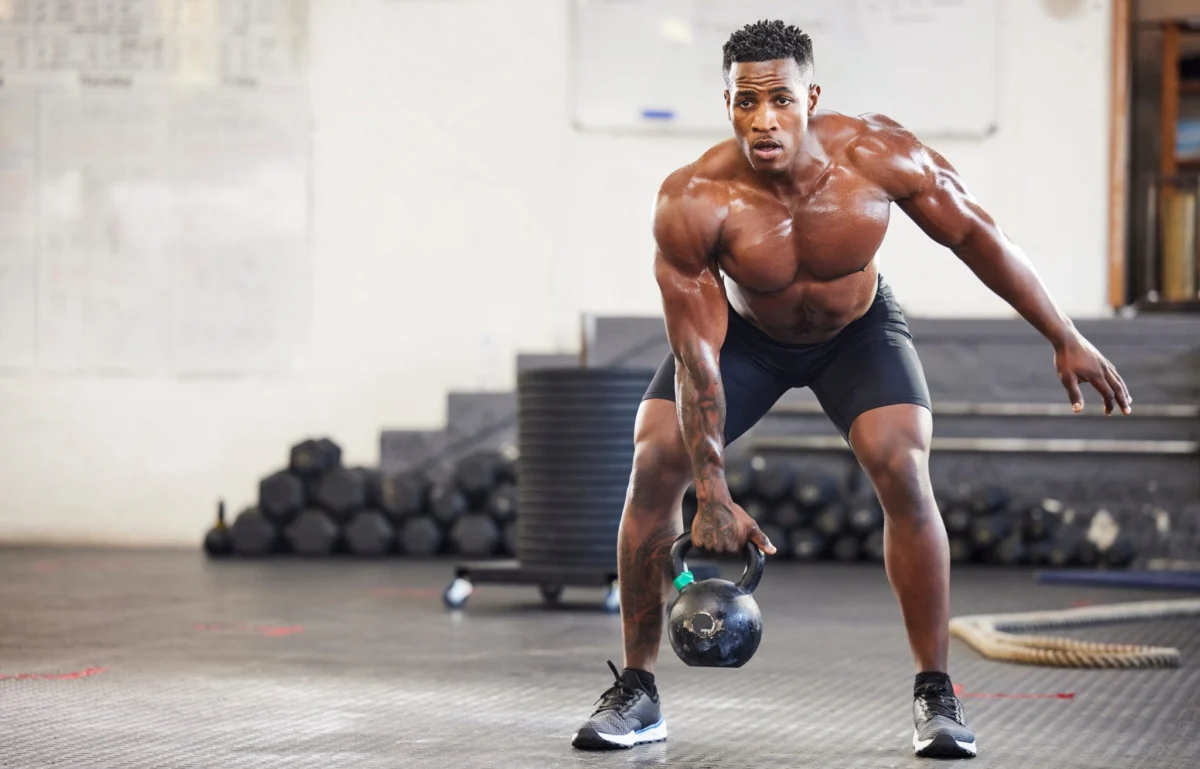
The Kettlebell Swing: The Powerhouse of Kettlebell Training
Why it Matters: The kettlebell swing is the undisputed king of dynamic kettlebell exercises. It’s a full-body movement that builds explosive power, strengthens the posterior chain, and dramatically improves cardiovascular conditioning. The key to a powerful swing lies in mastering the hip hinge – driving force from your hips and glutes, not your arms or shoulders. This explosive, yet controlled, movement translates to increased athleticism and a more resilient physique.
Key Performance Points:
- Hip-Driven Power: Your arms are merely conduits for the weight. The power comes from a forceful hip extension, squeezing your glutes to propel the kettlebell forward and upward.
- Brace Your Core: A tight core is crucial for protecting your spine as the kettlebell swings back between your legs and then forward.
- Don’t Squat: Avoid bending your knees excessively. The movement should be a hinge, not a squat.
- Controlled Backswing: Allow the kettlebell to swing back between your legs naturally, maintaining control and keeping your back flat.
How to Do It:
- Stand with your feet slightly wider than hip-width apart, with a kettlebell placed a foot or so in front of you.
- Hinge at your hips, keeping your back straight, and grip the kettlebell with both hands.
- Let the kettlebell rest between your legs. With a powerful hip snap, drive your hips forward and squeeze your glutes, propelling the kettlebell up to chest or eye level.
- Allow the kettlebell to swing back down between your legs, maintaining a controlled descent and preparing for the next hinge.
Sets and Reps:
Perform 10-15 repetitions within 45 seconds, then rest for 15 seconds. Repeat for 5 sets. This interval-style training builds both strength and endurance.
The Kettlebell Clean: Bridging the Gap to Overhead Power
Why it Matters: The kettlebell clean is a fundamental movement that teaches you to efficiently transfer power from the ground up, bringing the kettlebell from a dead-lifted position to a "rack" position at shoulder height. It’s a complex interplay of the hip hinge, explosive leg drive, and a controlled roll of the wrist. Mastering the clean is a crucial step towards more advanced overhead movements and develops significant upper back, shoulder, and core strength.
Key Performance Points:
- Thumb to Chest: As you pull the kettlebell up, aim to keep your thumb brushing your chest. This helps guide the bell in a tight arc close to your body.
- Guide, Don’t Slam: If the kettlebell feels like it’s crashing into you, it means you’re not guiding it properly. Focus on a smooth, controlled transition.
- The "Roll" into the Rack: The key to a successful clean is the subtle rotation of your wrist as the kettlebell comes into the rack position. Your thumb should naturally lead this rotation.
- Keep Your Elbows Down: In the rack position, your elbows should be pointing down, not flaring out.
How to Do It:
- Start in a deadlift position with the kettlebell on the floor between your feet.
- Hinge at your hips and grip the kettlebell.
- Drive through your heels, extending your hips and knees explosively, and pull the kettlebell up your body in a tight arc.
- As the kettlebell reaches chest height, slightly bend your knees and "catch" the bell by rotating your wrist and settling it into the rack position at your shoulder.
Sets and Reps:
Perform 3 sets of 8 repetitions. Focus on the smooth transition and proper rack position.

The Kettlebell Rack Position: The Foundation for Stability
Why it Matters: The rack position is not a standalone exercise in the traditional sense, but it’s a critical holding position for numerous kettlebell exercises, including presses, lunges, and carries. Mastering the rack position teaches you to stabilize the kettlebell close to your body, engaging your core, shoulders, and grip. This stable base is essential for executing more dynamic movements with control and preventing injury.
Key Performance Points:
- Forearm Against Chest: The inner part of your forearm should be pressed against your chest, with your elbow pointing downwards.
- Neutral Wrist: Avoid straightening your wrist. It should be slightly flexed to take pressure off your elbow.
- Shoulders Packed Down: Pull your shoulder blades down and back, away from your ears. This engages your lats and creates a stable shoulder girdle.
- Core Engagement: Maintain a braced core to support the weight and prevent your torso from twisting.
How to Do It:
- From a clean, bring the kettlebell to the rack position at your shoulder.
- Ensure your forearm is resting against your chest, elbow tucked in.
- Maintain a neutral wrist and packed shoulders.
Sets and Reps:
Hold the single-arm front rack position for 30 seconds. Perform 3 sets per side. This builds isometric strength and endurance.
The Kettlebell Overhead Press: Building Upper Body Power
Why it Matters: The overhead press is a fundamental strength movement that builds shoulder strength, stability, and core control. With a kettlebell, it’s an excellent way to work on pressing power while maintaining a healthy shoulder position. Mastering this movement sets you up for more complex overhead carries, windmills, and get-ups, making your overall kettlebell practice more robust.

Key Performance Points:
- Start from the Rack: Begin in a solid rack position with the kettlebell at your shoulder.
- Press Vertically: Drive the kettlebell straight overhead, keeping your wrist neutral and your biceps close to your ear.
- Engage Lats and Shoulders: Actively engage your lats and shoulder blades to create a stable platform for the press.
- Controlled Descent: Lower the kettlebell back to the rack position with control.
How to Do It:
- Begin in the rack position with the kettlebell at your shoulder.
- Engage your core and glutes.
- Press the kettlebell directly overhead until your arm is fully extended.
- Lower the kettlebell back to the rack position with control.
Sets and Reps:
Perform 3 sets of 8-10 repetitions per side. Rest minimally between sets to maintain intensity.
The Kettlebell Snatch: The Pinnacle of Explosive Power
Why it Matters: The kettlebell snatch is a highly dynamic and demanding exercise that integrates the hip hinge, explosive power, and overhead stability into one fluid motion. It’s a true test of your ability to generate force from the ground up and coordinate your entire body. Mastering the snatch will significantly enhance your athletic capabilities and build remarkable resilience.
Key Performance Points:

- Tight Arc: Guide the kettlebell close to your body throughout the pull. Avoid letting it drift too far forward.
- Powerful Hip Drive: The upward momentum comes from a forceful hip extension, not an arm pull.
- Punch Up: Once the kettlebell reaches head height, actively "punch" your arm through to lock out overhead.
- Controlled Catch: Learn to catch the kettlebell in a stable overhead position.
How to Do It:
- Start with the kettlebell on the floor between your feet, similar to the swing.
- Hinge at your hips and grip the kettlebell.
- Perform an explosive hip hinge and pull the kettlebell upwards in a tight arc.
- As the kettlebell reaches chest height, continue the upward pull and simultaneously punch your arm overhead, locking out your elbow.
- Catch the kettlebell in a stable overhead position.
Sets and Reps:
Perform 10 repetitions, then switch arms and repeat. Focus on fluidity and power.
The Kettlebell Halo: Enhancing Core and Shoulder Mobility
Why it Matters: The kettlebell halo is an exceptional exercise for improving shoulder mobility, building rotational core strength, and enhancing mind-muscle connection. It requires your entire core to work in concert to stabilize the weight as it moves around your head, mimicking real-life movements where your body needs to adapt to forces from all directions. This transverse plane movement is key to building a truly resilient and functional core.
Key Performance Points:
- Brace Your Abs: Keep your abdominal muscles tight throughout the movement to prevent your hips from swaying or your lower back from arching.
- Slow and Controlled: Move the kettlebell around your head with deliberate control. Avoid jerky motions.
- Maintain Ribcage Position: Keep your ribcage pulled down and in, not flared out.
- Focus on Smoothness: The goal is a smooth, circular motion, not just moving the weight.
How to Do It:

- Hold the kettlebell by the horns in front of your chest.
- Keeping your core braced, slowly move the kettlebell around your head in a circular motion, passing it from one hand to the other behind your head.
- Continue the halo motion for the desired repetitions.
Sets and Reps:
Start with 10-20 repetitions in each direction. As you progress, you can add variations like kneeling or squatting for increased difficulty.
The Kettlebell Deadlift: Building a Solid Base
Why it Matters: The kettlebell deadlift is a foundational strength exercise that directly translates to the hip hinge pattern. It’s an excellent entry point for beginners to learn how to safely and effectively lift weight from the floor. By engaging the posterior chain, improving grip strength, and reinforcing proper spinal mechanics, the kettlebell deadlift builds a strong and stable base for all other movements.
Key Performance Points:
- Neutral Spine: Maintain a flat back throughout the lift.
- Hinge at the Hips: Initiate the lift by pushing your hips back.
- Gaze Downward: Keep your eyes focused on a spot on the floor in front of you to maintain a neutral neck position.
- Drive Through Heels: Engage your glutes and hamstrings to power the lift.
How to Do It:
- Stand with your feet hip-width apart, with the kettlebell on the floor between your feet.
- Hinge at your hips and bend your knees to grip the kettlebell.
- Keeping your back straight and chest up, drive through your heels to stand up, pulling the kettlebell with you.
- Lower the kettlebell back to the floor with control by reversing the movement.
Sets and Reps:
Perform 8-12 repetitions. Focus on mastering the movement pattern rather than lifting heavy weight.

The Kettlebell Goblet Squat: Mastering the Squat Pattern
Why it Matters: The goblet squat is an invaluable exercise for learning and perfecting the squatting motion. Holding the kettlebell in front of your chest naturally encourages an upright torso and proper bracing, making it an excellent precursor to barbell squats. It builds lower body strength, improves hip and ankle mobility, and enhances core stability.
Key Performance Points:
- Upright Torso: The front-loaded weight helps you maintain an upright posture.
- Depth is Key: Aim to squat as low as you can comfortably and with good form, ideally breaking parallel.
- Brace Your Core: Engage your core muscles to support your spine.
- Knees Track Toes: Ensure your knees track in line with your toes throughout the movement.
How to Do It:
- Hold the kettlebell by the horns at chest level.
- Stand with your feet shoulder-width apart, toes pointed slightly outward.
- Hinge at your hips and bend your knees to lower yourself into a squat, keeping your chest up and back straight.
- Descend as low as possible while maintaining good form.
- Drive through your heels to return to a standing position.
Sets and Reps:
Perform 8-12 repetitions. Focus on controlled depth and form.
The Kettlebell March: Challenging Core Stability
Why it Matters: The kettlebell march might appear simple, but it’s a highly effective core strengthening exercise. Holding the kettlebell in a rack position while marching forces you to stabilize your torso and resist rotation. This challenges your abdominal muscles in a dynamic way, improving your ability to maintain a strong and stable core during movement.

Key Performance Points:
- Slow and Deliberate Steps: Take each step with control, focusing on maintaining balance.
- Square Hips: Resist any tendency for your hips to tilt or rotate.
- Braced Core: Keep your abdominal muscles tight to stabilize your spine.
- Controlled Kettlebell Position: Maintain the kettlebell in a stable rack position.
How to Do It:
- Hold a kettlebell in a rack position on one side of your body.
- Engage your core and begin to march in place, lifting one knee at a time.
- Focus on keeping your hips level and your torso stable.
- Continue marching for the designated time or repetitions.
Sets and Reps:
Try for 30 seconds of marching, followed by 30 seconds of rest. Repeat for 3 minutes.
Half-Kneeling Kettlebell Windmill: Advanced Core and Shoulder Work
Why it Matters: The half-kneeling kettlebell windmill is an advanced exercise that targets core stability, shoulder health, and hip mobility simultaneously. Holding the kettlebell overhead while performing a controlled torso tilt challenges your core’s ability to resist rotation and maintain stability from a compromised position. This exercise is crucial for building a robust and resilient core capable of handling complex athletic movements.
Key Performance Points:

- Eyes on the Prize: Keep your gaze locked on the kettlebell overhead throughout the entire movement.
- Ribcage Tight: Maintain a braced core and keep your ribcage pulled down.
- Slow and Intentional Movement: Move with deliberate control, avoiding any jerking or momentum.
- Controlled Descent and Ascent: Focus on the smooth, controlled movement through the range of motion.
How to Do It:
- Assume a half-kneeling position with the kettlebell in the hand opposite your kneeling leg.
- Press the kettlebell overhead.
- Keeping your eyes on the kettlebell, hinge at your hips and torso, tilting your body sideways as you lower the kettlebell towards the ground.
- Maintain a straight line from the kettlebell to your foot.
- Return to the starting position with control.
Sets and Reps:
Perform 3 sets of 6-8 repetitions per side, moving slowly and deliberately through each movement.
Kettlebell Push Press: Building Explosive Overhead Power
Why it Matters: The kettlebell push press is a fantastic exercise for developing explosive upper body power without the technical complexity of the snatch. It utilizes a slight dip and drive from the legs to assist in pressing the kettlebell overhead, allowing you to handle heavier loads and build more power. This movement is an excellent bridge to barbell push presses and can contribute to healthier shoulder mechanics.
Key Performance Points:
- Shallow Dip: The leg drive should be minimal – a slight bend of the knees, not a full squat.
- Explosive Drive: Use your legs to generate upward momentum to assist the press.
- Press with Authority: Drive the kettlebell overhead with conviction.
- Controlled Lowering: Bring the kettlebell back to the rack position with control.
How to Do It:
- Begin in a rack position with the kettlebell at your shoulder.
- Perform a slight dip by bending your knees a few inches.
- Explosively extend your legs and hips to drive the kettlebell overhead.
- Lock out your arm at the top.
- Lower the kettlebell back to the rack position with control.
Sets and Reps:
Perform 3 sets of 6-8 repetitions. Focus on generating power from your legs.
Putting It All Together: Your Path to Kettlebell Mastery
Mastering these fundamental kettlebell exercises is not just about learning a few movements; it’s about building a strong, resilient, and athletic body. Each of these exercises contributes to a holistic approach to fitness, developing strength, power, stability, and coordination.
Practical Workout Tips:
- Start Light: Prioritize perfect form over lifting heavy weight. As a beginner, focus on mastering the movement patterns with lighter kettlebells.
- Consistency is Key: Aim to incorporate these fundamental movements into your training routine regularly. Even short, focused sessions can yield significant results.
- Listen to Your Body: Pay attention to any discomfort or pain. If something doesn’t feel right, stop and reassess your form or consult with a qualified fitness professional.
- Progress Gradually: As you become more proficient, you can gradually increase the weight of your kettlebells, the number of repetitions, or the complexity of the exercises.
- Consider Professional Guidance: If you’re new to kettlebells or unsure about your form, consider working with a certified kettlebell instructor. They can provide personalized feedback and ensure you’re progressing safely and effectively.
Real-Life Application:
Imagine a simple task like picking up a heavy grocery bag from the floor. The hip hinge you practice in the Good Morning and Deadlift will protect your back and allow you to lift efficiently. The core stability developed in the March and Windmill will help you carry that bag with ease. The explosive power of the Swing will translate to dynamic movements in everyday life, whether you’re lifting furniture or playing with your children.

Your Kettlebell Journey Starts Now
The path to kettlebell mastery is paved with dedication to fundamental movements. By embracing the Kettlebell Good Morning, Swing, Clean, Rack Position, Overhead Press, Snatch, Halo, Deadlift, Goblet Squat, March, Windmill, and Push Press, you are building a formidable foundation for strength, power, and overall athleticism.
Don’t be discouraged if some of these movements feel challenging at first. Every elite athlete started somewhere. The beauty of kettlebell training lies in its progressive nature. With consistent practice and a focus on proper form, you will witness remarkable transformations in your strength, conditioning, and confidence. Embrace the challenge, stay committed to these foundational exercises, and unlock the incredible potential that lies within the humble kettlebell. Your stronger, more capable self awaits.