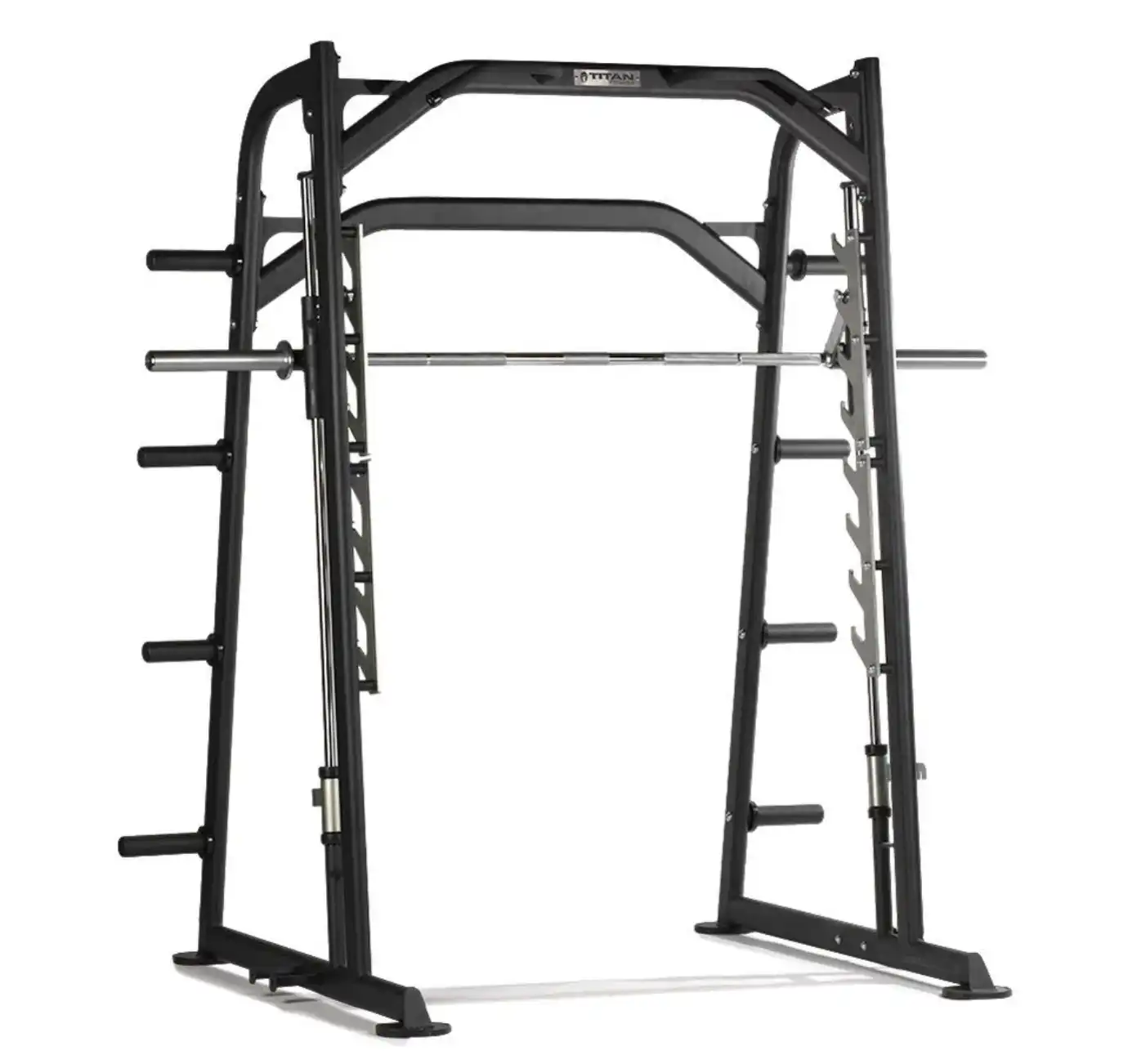
In the dynamic landscape of fitness, certain tools stand out for their ability to transform bodies and empower journeys. Among these, the Smith machine often sparks debate, yet its potential for fostering strength, refining form, and ensuring safety for lifters of all levels is undeniable. Far from being a mere "cheating" device, the Smith machine, when understood and utilized correctly, can become a cornerstone of your training regimen, propelling you towards your fitness goals with confidence and control.
Whether you’re just embarking on your fitness adventure or are an experienced enthusiast looking to diversify your routine, the Smith machine offers a unique blend of stability and versatility. It acts as a steadfast partner, guiding your movements and allowing you to push your limits without the constant need for a spotter. This article will demystify the Smith machine, revealing its true capabilities and providing you with a comprehensive guide to integrating it effectively into your workouts. Get ready to unlock new levels of strength, sculpt your physique, and train smarter, safer, and with unwavering determination.
Unlocking the Power of the Smith Machine: More Than Just a "Fixed" Lift
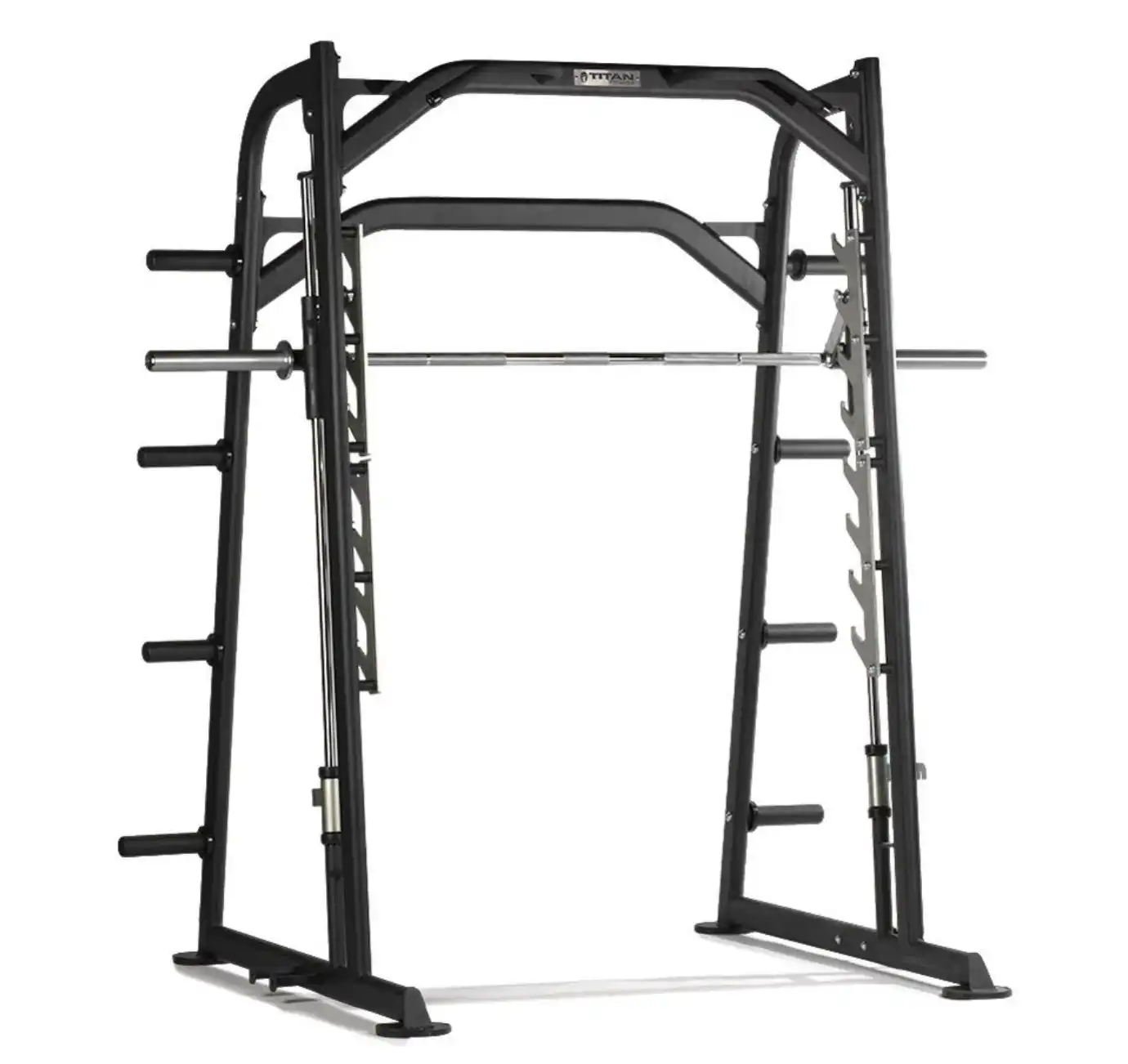
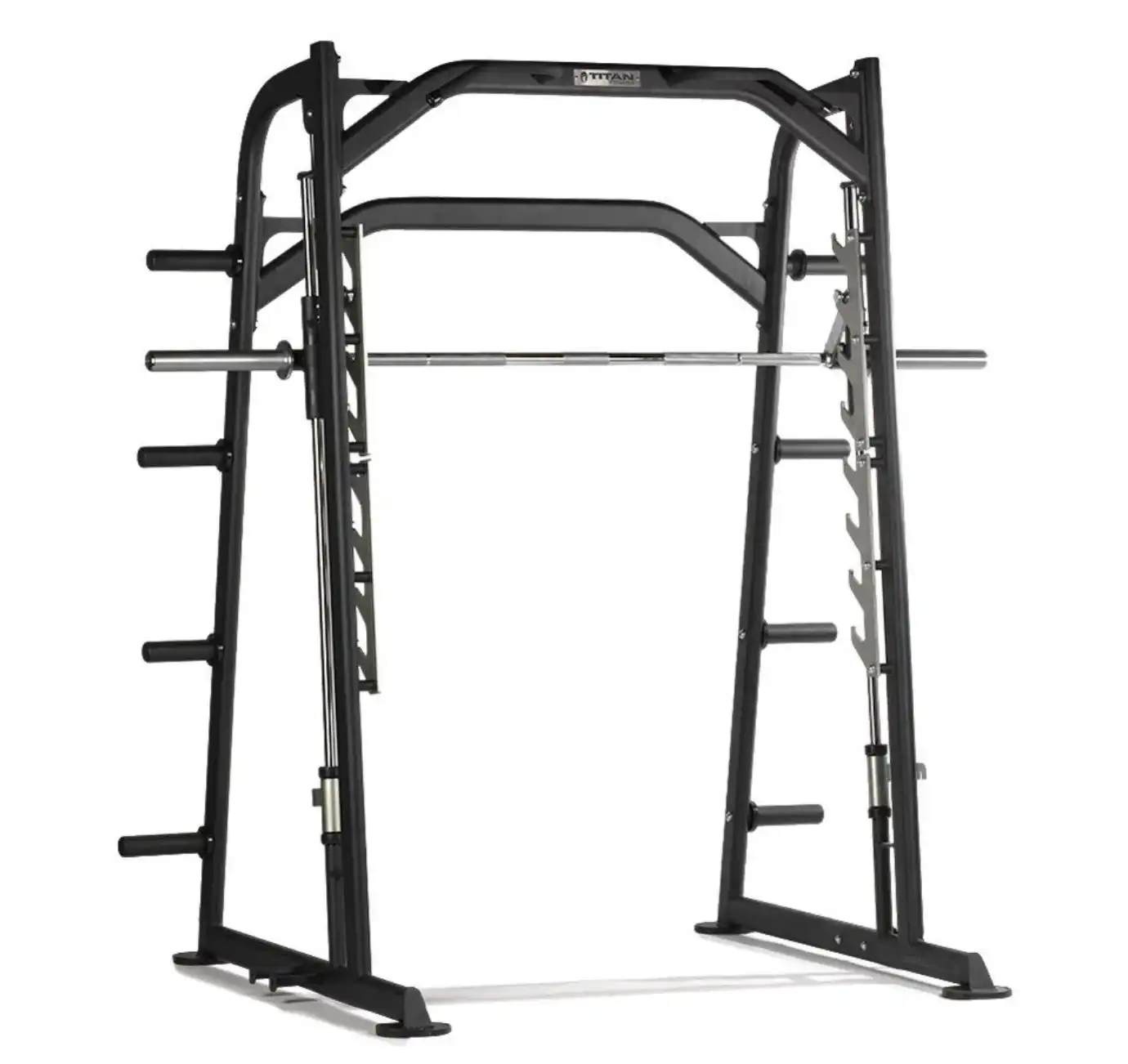
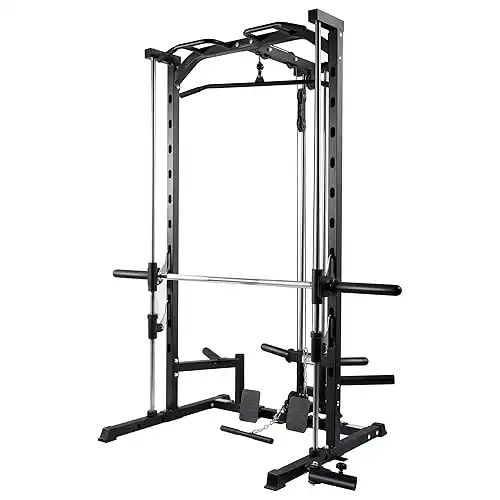
The Smith machine, with its barbell fixed within steel rails, often carries a reputation for limiting natural movement. However, this very characteristic is its greatest asset, offering a controlled environment that translates into distinct advantages for your training.
The Fundamental Advantage: Guided Motion for Enhanced Control
At its core, the Smith machine’s design dictates a precise, vertical (or slightly angled) bar path. This guided motion simplifies complex compound lifts, making them more accessible and safer for many individuals.
- Form Refinement: For beginners, the fixed path is an invaluable teacher. It removes the need to stabilize the bar laterally, allowing you to focus intensely on the primary movement pattern of exercises like squats, presses, and rows. You can concentrate on muscle activation, joint alignment, and the sensation of proper form without the added complexity of balancing a free weight. This focused learning accelerates your understanding of mechanics and builds a strong foundation for future training.
- Targeted Muscle Isolation: Intermediate lifters can leverage the guided path to pinpoint specific muscle groups. For instance, in a Smith machine squat, by adjusting your foot position, you can shift emphasis more directly to your quadriceps or glutes, creating a deeper stimulus without worrying about bar sway. This precision can be incredibly effective for addressing muscle imbalances or bringing up lagging body parts.
- Reduced Risk of Injury: The predictable bar path significantly reduces the likelihood of awkward movements or uncontrolled drops, which are common culprits in gym injuries. This built-in stability allows you to explore your strength boundaries with greater peace of mind, knowing the machine will support the load.
Safety First: Your Built-in Spotter
Perhaps the most compelling benefit of the Smith machine, particularly for solo trainers, is its unparalleled safety system. Integrated safety hooks and adjustable stoppers transform the machine into a personal, ever-present spotter.
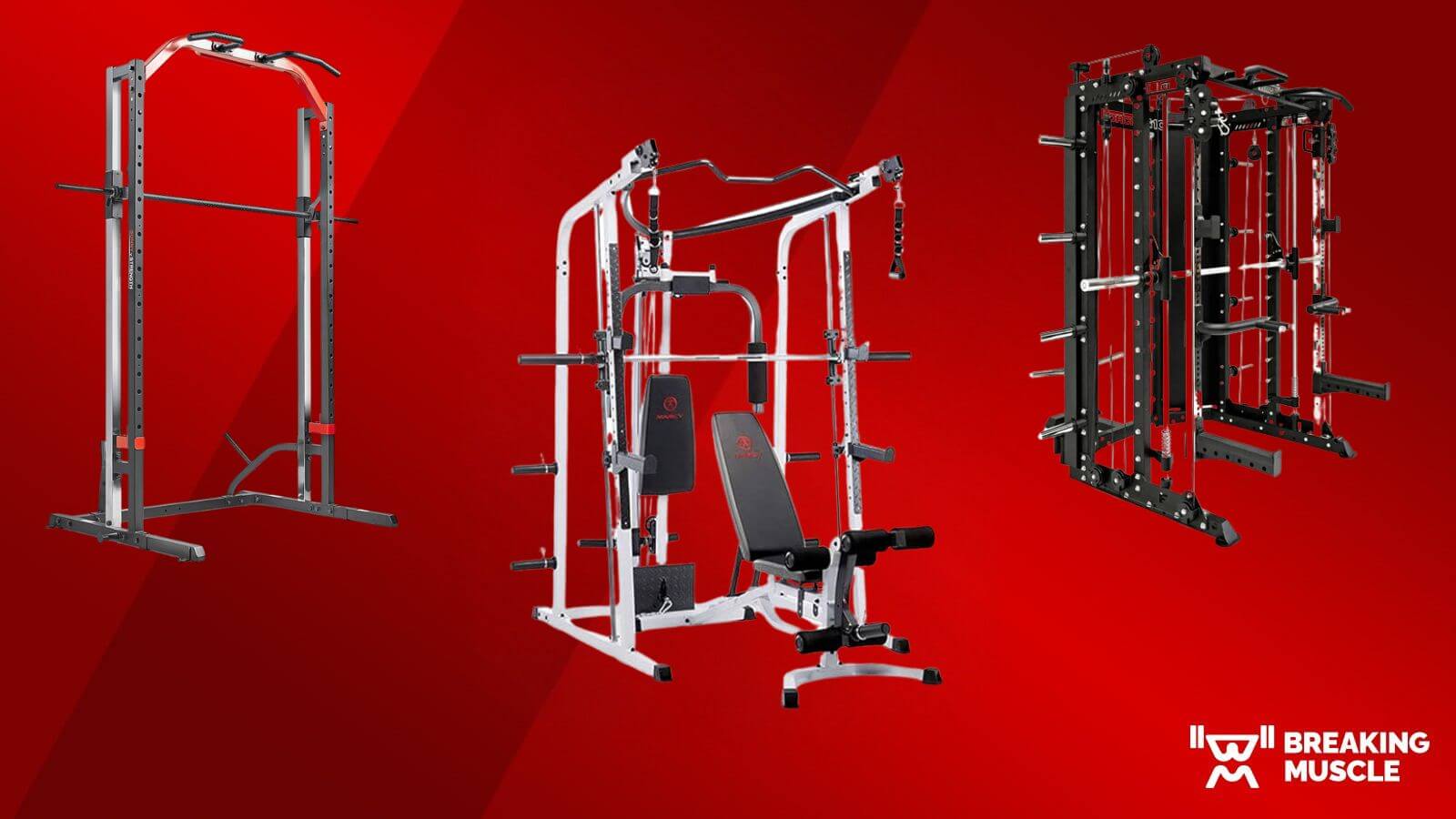
- Empowering Solo Workouts: Imagine pushing for that last rep on a heavy bench press or squat, knowing that if you fail, a simple twist of your wrist can re-rack the weight instantly. This empowers you to train to muscle failure safely, a crucial element for progressive overload and muscle growth. You no longer need to rely on a training partner or fear getting stuck under the weight.
- Overcoming the Fear of Failure: For many, the apprehension of failing a lift with free weights can limit their intensity and progress. The Smith machine alleviates this psychological barrier, encouraging you to challenge yourself more aggressively. This newfound confidence can be a game-changer, allowing you to truly test your limits and discover your true strength potential.
- Rehabilitation and Return to Training: Individuals recovering from injuries or those with mobility limitations can benefit immensely from the Smith machine’s controlled environment. It allows for a gradual, safe reintroduction to resistance training, helping to rebuild strength and confidence without compromising healing or stability. The ability to set safety stoppers at precise points can also limit range of motion if needed, accommodating specific rehabilitation protocols.
Versatility Beyond the Basics: A Multi-Functional Hub
While often associated with compound lifts, the Smith machine’s versatility extends to a wide array of exercises, making it a powerful tool for a full-body workout. From heavy presses and squats to more isolated movements and even bodyweight variations, it can serve as a central piece of equipment in any gym, especially a home setup where space and equipment are often limited. Its ability to accommodate various attachments and body positions unlocks a diverse training potential, catering to different fitness goals and levels.
Mastering Smith Machine Form: Foundations for Success
While the Smith machine provides a guided path, proper form remains paramount for maximizing effectiveness and preventing injury. The key difference lies in understanding how your body interacts with this fixed trajectory.
Understanding Your Body’s Alignment
The fixed bar path means you need to adjust your body to the machine, rather than the bar adjusting to your natural movement. This requires conscious attention to foot and body placement.
- Foot Placement for Squats: Experiment with foot position. Placing your feet slightly forward of the bar can often allow for a more upright torso and greater quadriceps activation, mimicking a hack squat. Conversely, a more traditional under-the-bar stance with careful knee tracking can emphasize glutes and hamstrings. The goal is to find a position where your joints feel comfortable, and you can generate power efficiently.
- Bench Press Setup: When bench pressing, ensure your eyes are directly under the bar. Retract your shoulder blades and drive them into the bench to create a stable base. The fixed path means you need to ensure your elbows track in a comfortable and powerful line, typically at a 45-degree angle to your torso, avoiding excessive flaring or tucking that could strain your shoulders.
- General Principle: Always ensure your joints (knees, hips, shoulders) are moving smoothly and without pain. The machine shouldn’t force an unnatural movement pattern on your body. Listen to your body and make micro-adjustments until you find your optimal setup.
The Importance of Mind-Muscle Connection
With the stability provided by the Smith machine, you have a unique opportunity to truly connect with the muscles you’re targeting.
- Slow, Controlled Movements: Avoid rushing through reps. Focus on the eccentric (lowering) phase, controlling the weight, and feeling the stretch in the target muscle. Then, powerfully contract the muscle during the concentric (lifting) phase.
- Squeeze and Hold: At the peak contraction of an exercise, consciously squeeze the working muscle for a brief moment. This intensifies the muscle activation and enhances neural pathways, leading to better muscle development over time. For example, at the top of a Smith machine squat, squeeze your glutes; at the top of a Smith machine bench press, contract your chest.
Setting Up for Safety: Locks, Stops, and Proper Loading
Before every set, double-check your safety protocols. This diligence is what makes the Smith machine such a safe training tool.
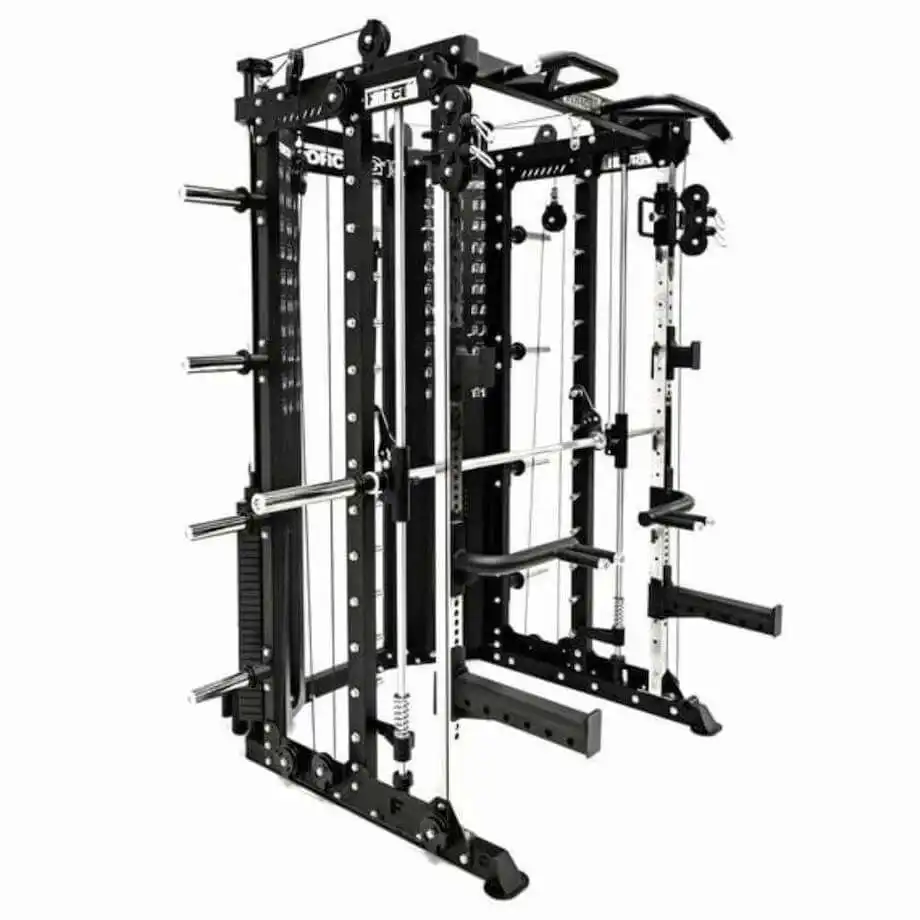
- Engage Safety Mechanisms: Always set the adjustable safety stoppers to a height that prevents the bar from descending too far, allowing you to escape from under the weight if you fail a rep. For squats, this might be just below your deepest comfortable squat position. For bench presses, it’s typically just above your chest.
- Even Weight Distribution: When loading weight plates, ensure they are distributed evenly on both sides of the bar. Uneven loading can lead to imbalances, compromise the smoothness of the movement, and potentially strain the machine or yourself.
- Check the Hooks: Before beginning your set, confirm that the bar’s hooks are properly disengaged from the rack and freely moving. After your set, ensure they securely engage when you re-rack the weight. A quick visual and tactile check can prevent accidents.
Essential Smith Machine Exercises for Every Muscle Group
The Smith machine is incredibly versatile, allowing you to target nearly every major muscle group effectively. Here are some foundational exercises for beginners and intermediate lifters.
Lower Body Power: Squats and Lunges
The fixed bar path can be particularly beneficial for lower body exercises, allowing for deep contractions and focused muscle engagement.
- Smith Machine Back Squat:
- Setup: Position your feet slightly forward of the bar, about shoulder-width apart, toes slightly out. Place the bar comfortably across your upper back (traps), not on your neck.
- Execution: Brace your core, keep your chest up, and initiate the movement by pushing your hips back and bending your knees as if sitting in a chair. Descend until your thighs are parallel to the floor or deeper if comfortable, ensuring knees track over toes. Drive back up through your heels, squeezing your glutes at the top.
- Tip: Experiment with foot position. A slightly wider stance can target glutes more, while a narrower, feet-forward stance emphasizes quads.
- Smith Machine Front Squat:
- Setup: Position the bar across the front of your shoulders, resting on your deltoids. Cross your arms to hold the bar in place, or use a clean grip if comfortable. Feet shoulder-width apart, directly under the bar.
- Execution: Maintain an upright torso, brace your core, and descend into a squat, keeping your elbows high. Drive back up, leading with your chest.
- Tip: This variation strongly targets the quadriceps and demands excellent core strength and ankle mobility.
- Smith Machine Split Squats/Lunges:
- Setup: Place one foot forward and the other back, with the bar resting on your upper back.
- Execution: Descend by bending both knees, keeping your torso upright. The front knee should track over the toes, and the back knee should lower towards the floor. Drive back up, focusing on the glute and quad of the front leg.
- Tip: Great for unilateral strength and addressing imbalances. Focus on one leg at a time.
- Smith Machine Glute Bridges:
- Setup: Lie on the floor with your upper back against a bench, knees bent, and feet flat on the floor. Position the bar across your hips (use a pad for comfort).
- Execution: Drive through your heels, lifting your hips towards the ceiling, squeezing your glutes powerfully at the top. Lower with control.
- Tip: Excellent for direct glute activation with a stable, heavy load.
Upper Body Strength: Presses and Rows
The Smith machine can be a powerful tool for building upper body mass and strength, particularly for presses.
- Smith Machine Bench Press (Flat, Incline, Decline):
- Setup: Lie on a flat, incline, or decline bench with your eyes directly under the bar. Grip the bar slightly wider than shoulder-width. Retract your shoulder blades.
- Execution: Lower the bar to your mid-chest (flat), upper chest (incline), or lower chest (decline) with control. Press the bar back up, driving through your chest and triceps.
- Tip: The fixed path allows you to focus purely on pressing strength without stabilization, making it great for targeting chest development.
- Smith Machine Overhead Press:
- Setup: Sit or stand with a bench, back straight, bar at shoulder height. Grip slightly wider than shoulder-width, palms facing forward.
- Execution: Press the bar directly overhead until your arms are fully extended, maintaining a tight core. Lower with control.
- Tip: For standing presses, ensure your feet are positioned so the bar path feels natural and doesn’t force you too far forward or back. Sitting often provides more stability.
- Smith Machine Bent-Over Row:
- Setup: Stand with feet hip-width apart, knees slightly bent, torso hinged forward at about a 45-degree angle. Grip the bar slightly wider than shoulder-width, palms facing you.
- Execution: Pull the bar towards your lower chest/upper abdomen, squeezing your shoulder blades together. Control the eccentric phase as you lower the bar.
- Tip: Be mindful of the fixed path. It might feel different from a free-weight row. Focus on pulling with your back muscles, not just your arms.
- Smith Machine Upright Row:
- Setup: Stand upright, feet shoulder-width apart, bar resting on your thighs with an overhand grip, hands closer than shoulder-width.
- Execution: Pull the bar straight up towards your chin, leading with your elbows. Your elbows should go higher than your hands. Lower with control.
- Caution: This exercise can put stress on the shoulder joint for some individuals. If you experience pain, opt for other shoulder exercises.
Isolation and Refinement: Arms, Shoulders, and Core
The Smith machine also excels at isolating smaller muscle groups and enhancing bodyweight exercises.
- Smith Machine Close-Grip Bench Press (Triceps):
- Setup: Similar to a flat bench press, but with a narrow grip (hands inside shoulder-width).
- Execution: Lower the bar towards your lower chest/upper abdomen, keeping your elbows tucked close to your body. Press up, focusing on triceps contraction.
- Tip: An excellent way to overload the triceps safely.
- Smith Machine Calf Raises:
- Setup: Stand with the balls of your feet on a raised platform (e.g., a weight plate) and the bar resting on your upper back.
- Execution: Lower your heels to get a deep stretch in your calves, then push up onto your toes as high as possible, squeezing your calves.
- Tip: The stability allows for maximum focus on calf contraction and deep stretch.
- Smith Machine Shrugs:
- Setup: Stand upright with the bar in front of you, hands slightly wider than shoulder-width, palms facing your body.
- Execution: Keeping your arms straight, elevate your shoulders towards your ears, squeezing your traps at the top. Lower with control.
- Tip: Excellent for targeting the trapezius muscles with heavy weight.
- Smith Machine Inverted Rows:
- Setup: Position the bar at hip height or lower. Lie on your back underneath it, gripping the bar with an overhand grip, hands wider than shoulder-width.
- Execution: Keeping your body rigid in a straight line, pull your chest towards the bar, squeezing your shoulder blades. Lower with control.
- Tip: A fantastic bodyweight exercise that can be made harder by lowering the bar or easier by raising it.
Integrating the Smith Machine into Your Training Routine
The Smith machine isn’t just for beginners; it can be a valuable asset for lifters at various stages, complementing a well-rounded program.
For the Beginner: Building a Solid Foundation
As a beginner, your primary goal is to learn proper movement patterns, build foundational strength, and prevent injury. The Smith machine is perfectly suited for this phase.
- Focus on Compound Movements: Start with Smith machine squats, bench presses, and bent-over rows. These exercises engage multiple muscle groups and provide the most bang for your buck.
- Lighter Weights, Perfect Form: Prioritize form over heavy lifting. Use light enough weight to perform 8-12 repetitions with complete control. The guided path allows you to truly feel the muscles working.
- Gradual Progression: Once you’ve mastered the form, gradually increase the weight. Track your progress in a journal.
- Example Beginner Workout (3x per week, Full Body):
- Smith Machine Back Squats: 3 sets of 10-12 reps
- Smith Machine Bench Press: 3 sets of 10-12 reps
- Smith Machine Bent-Over Rows: 3 sets of 10-12 reps
- Smith Machine Overhead Press (seated): 2 sets of 10-12 reps
- Smith Machine Lunges: 2 sets of 10-12 reps per leg
For the Intermediate Lifter: Targeting and Overloading
Intermediate lifters can use the Smith machine to add variety, break through plateaus, and apply advanced training principles.
- Isolation Work: Use it for targeted exercises like close-grip bench presses for triceps, glute bridges for glutes, or calf raises.
- Supersets and Drop Sets: The quick re-racking mechanism makes the Smith machine ideal for advanced techniques. Perform a heavy set, then immediately drop the weight and perform more reps (drop set). Or, pair a Smith machine exercise with a bodyweight exercise (superset).
- Pre-Exhaustion: Perform an isolation exercise (e.g., Smith machine leg extensions if your machine has an attachment, or Smith machine glute bridges) to fatigue a muscle, then immediately follow with a compound exercise (Smith machine squat) to hit that muscle even harder.
- Addressing Sticking Points: If you struggle at a particular point in a free-weight lift, you can use the Smith machine to train that specific range of motion with heavier weights, building strength in your weak link.
- Example Intermediate Workout (Upper/Lower Split):
- Upper Body Day (Example):
- Smith Machine Incline Bench Press: 4 sets of 8-10 reps (with 1 drop set on the last set)
- Smith Machine Bent-Over Rows: 4 sets of 8-10 reps
- Smith Machine Overhead Press (standing): 3 sets of 8-10 reps
- Smith Machine Close-Grip Bench Press: 3 sets of 10-12 reps
- Smith Machine Inverted Rows: 3 sets to failure
- Lower Body Day (Example):
- Smith Machine Front Squats: 4 sets of 6-8 reps
- Smith Machine Split Squats: 3 sets of 10-12 reps per leg
- Smith Machine Glute Bridges: 3 sets of 12-15 reps
- Smith Machine Calf Raises: 3 sets of 15-20 reps
- Upper Body Day (Example):
Complementing Free Weights: When to Choose the Smith Machine
The Smith machine is not a replacement for free weights but a valuable complement. Knowing when to choose it can optimize your training.
- Injury Prevention/Rehabilitation: When recovering from an injury or if you have specific joint issues, the controlled path can allow you to continue training safely.
- Solo Training Sessions: When training alone and pushing heavy weights, the Smith machine provides crucial safety.
- Targeted Muscle Focus: When you want to isolate a specific muscle group and remove stabilization as a limiting factor.
- Fatigue Training: At the end of a demanding workout, when your stabilizer muscles are fatigued, the Smith machine allows you to continue training primary movers safely.
- Learning New Movements: Before attempting complex free-weight movements, use the Smith machine to practice the motor pattern.
Common Pitfalls and How to Avoid Them
While the Smith machine offers many advantages, it’s essential to be aware of potential drawbacks and how to mitigate them for balanced development.
Over-Reliance on the Fixed Path
The greatest strength of the Smith machine – its fixed bar path – can also become a weakness if it leads to an over-reliance that neglects other aspects of fitness.

- Risk of Neglecting Stabilizer Muscles: Free-weight exercises demand activation of numerous small stabilizing muscles that work to keep the weight balanced. The Smith machine largely removes this demand. Over-reliance can lead to an imbalance where your primary movers are strong, but your stabilizers are weak, potentially increasing injury risk in real-world movements or when transitioning to free weights.
- Importance of Balanced Training: To counteract this, ensure your overall training program includes a mix of free weights (dumbbells, barbells), bodyweight exercises, and functional movements that challenge your balance and coordination. The Smith machine should be a tool in your arsenal, not your entire arsenal.
- Real-Life Application: Real-life strength requires dynamic stability. Incorporate exercises like lunges with dumbbells, single-leg Romanian deadlifts, and core stability work to develop well-rounded functional strength.
Improper Foot and Body Positioning
Because the bar path is fixed, you must adapt your body position. Incorrect setup can lead to awkward angles and joint strain.
- How to Experiment: Take time to find your optimal foot placement for squats and your bench position for presses. Start with light weights and experiment with subtle shifts in stance, foot angle, and how far forward or back you stand/sit relative to the bar. What feels good for one person might not feel right for another.
- Avoiding Awkward Angles: If an exercise feels "off" or creates discomfort in your knees, hips, or shoulders, stop and re-evaluate your position. The machine should facilitate a natural range of motion for your body, not force an uncomfortable one. Sometimes, a slight adjustment of a few inches can make all the difference.
Neglecting Core Engagement
The stability of the Smith machine can sometimes lull lifters into neglecting their core. However, a strong, engaged core is vital for every lift, even when the bar path is guided.
- Remind Users to Brace the Core: Before initiating any lift on the Smith machine, consciously brace your core as if preparing to take a punch. This creates intra-abdominal pressure, protecting your spine and transferring power more efficiently.
- Incorporate Dedicated Core Work: Don’t let the Smith machine replace your dedicated core training. Continue to perform planks, side planks, anti-rotation exercises, and other core stability movements to build a robust and resilient midsection.
Maximizing Your Smith Machine Workouts
To truly harness the power of the Smith machine, apply foundational training principles with intention.
Progressive Overload on the Smith Machine
The principle of progressive overload – consistently challenging your muscles with increasing demands – is the cornerstone of muscle growth and strength gains, and it’s easily applied to the Smith machine.
- Track and Increase Weight/Reps/Sets: The most straightforward way to progressively overload is to increase the weight you lift. Once you can comfortably perform your target reps with perfect form, add a small amount of weight. Alternatively, increase the number of repetitions or sets you perform with the same weight.
- Tempo Training: Manipulate the speed of your repetitions. For example, performing a 3-second eccentric (lowering) phase, a 1-second pause at the bottom, and a 1-second concentric (lifting) phase can increase time under tension, providing a new stimulus without necessarily increasing weight.
- Reduce Rest Intervals: Shorter rest periods between sets can increase the intensity and metabolic demand of your workout, challenging your muscles in a different way.
Incorporating Advanced Techniques (Safely)
The Smith machine’s safety features make it an ideal environment to safely experiment with advanced training techniques.
- Drop Sets: After completing a set to near-failure, immediately reduce the weight by 20-30% and perform as many additional reps as possible. Repeat this process 1-2 more times. The Smith machine’s easy re-racking makes this seamless.
- Partial Reps: If you have a sticking point in a lift (e.g., the top half of a squat), you can use the Smith machine to load heavier weight and perform only partial repetitions within that specific range of motion, building strength where you need it most.
- Negatives: Focus purely on the eccentric (lowering) phase of a lift. Load a weight heavier than you can lift concentrically, lower it slowly and with control, then have a partner help you re-rack it or stand up. The Smith machine’s safety stoppers are invaluable here.
- Emphasize Caution and Proper Execution: While these techniques are effective, they are also highly demanding. Incorporate them sparingly, listen to your body, and always prioritize proper form to prevent injury. Ensure you are adequately warmed up and well-rested before attempting them.
Forge Your Path to Unstoppable Progress
The Smith machine, often overlooked or misunderstood, stands as a formidable ally in your fitness journey. It offers a unique blend of safety, stability, and versatility that can empower beginners to confidently learn fundamental movements and enable intermediate lifters to push past plateaus with targeted intensity.
By understanding its mechanisms, mastering proper form, and strategically integrating it into a balanced training regimen, you unlock its true potential. Remember, fitness is about continuous learning and adaptation. Embrace the Smith machine not as a shortcut, but as a sophisticated tool that can enhance your technique, deepen your muscle connection, and provide the crucial confidence to challenge your limits without fear.
Your strength is not just built on the weight you lift, but on the consistency, intelligence, and dedication you bring to every workout. Step up to the Smith machine with purpose, apply these principles, and forge your path to unstoppable progress. The power to transform your body and achieve your fitness aspirations is within your grasp – seize it, one controlled, powerful rep at a time.