
Embarking on the journey of golf is a thrilling prospect, a blend of precision, strategy, and the serene beauty of the outdoors. As you stand at the precipice of this engaging sport, one of the most crucial first steps is assembling your toolkit: your golf clubs. For the uninitiated, the sheer variety of clubs and brands can feel overwhelming, akin to navigating a dense fairway without a map. But fear not. This guide is your compass, designed to demystify the process and empower you to choose a set that will foster your growth and enjoyment on the course.
Beyond the Fairway: Why Your First Set Matters More Than You Think
The allure of golf extends far beyond the physical act of swinging a club. It’s a game of patience, mental fortitude, and strategic thinking. Your initial investment in golf clubs isn’t merely a purchase; it’s a foundational element that will shape your learning curve, your confidence, and ultimately, your passion for the sport. A well-chosen beginner set is designed with forgiveness and ease of use in mind, allowing you to focus on developing your swing mechanics and understanding the nuances of the game, rather than fighting against ill-suited equipment.
Think of it like this: if you’re learning to drive, you wouldn’t start with a high-performance race car. You’d opt for a reliable, user-friendly vehicle that allows you to master the fundamentals of steering, braking, and accelerating. Golf clubs are no different. The right beginner set will be your patient mentor, forgiving your mis-hits and celebrating your solid connections, thereby building a positive feedback loop that encourages consistent practice and improvement.

The Power of a Complete Package: Why Beginner Sets Shine
For newcomers, the appeal of a complete golf club set is undeniable. These meticulously curated collections typically include all the essential clubs you’ll need to play a full round, from the tee box to the green, often bundled with a golf bag. This eliminates the guesswork and the potentially daunting task of selecting individual clubs, which can be confusing for those unfamiliar with loft angles, shaft flexes, and clubhead designs.
The advantages of opting for a complete set include:
- Cost-Effectiveness: Bundled sets are generally more economical than purchasing individual clubs. Manufacturers often offer a better value when selling a complete package.
- Curated Selection: These sets are specifically designed for beginners, featuring clubs engineered for forgiveness, ease of launch, and distance.
- Convenience: You get everything you need in one purchase, saving you time and the stress of making numerous individual choices.
- Consistency: The clubs within a complete set are designed to work together harmoniously, providing a consistent feel and performance across your bag.
Deconstructing the Starter Set: What’s Inside the Bag?
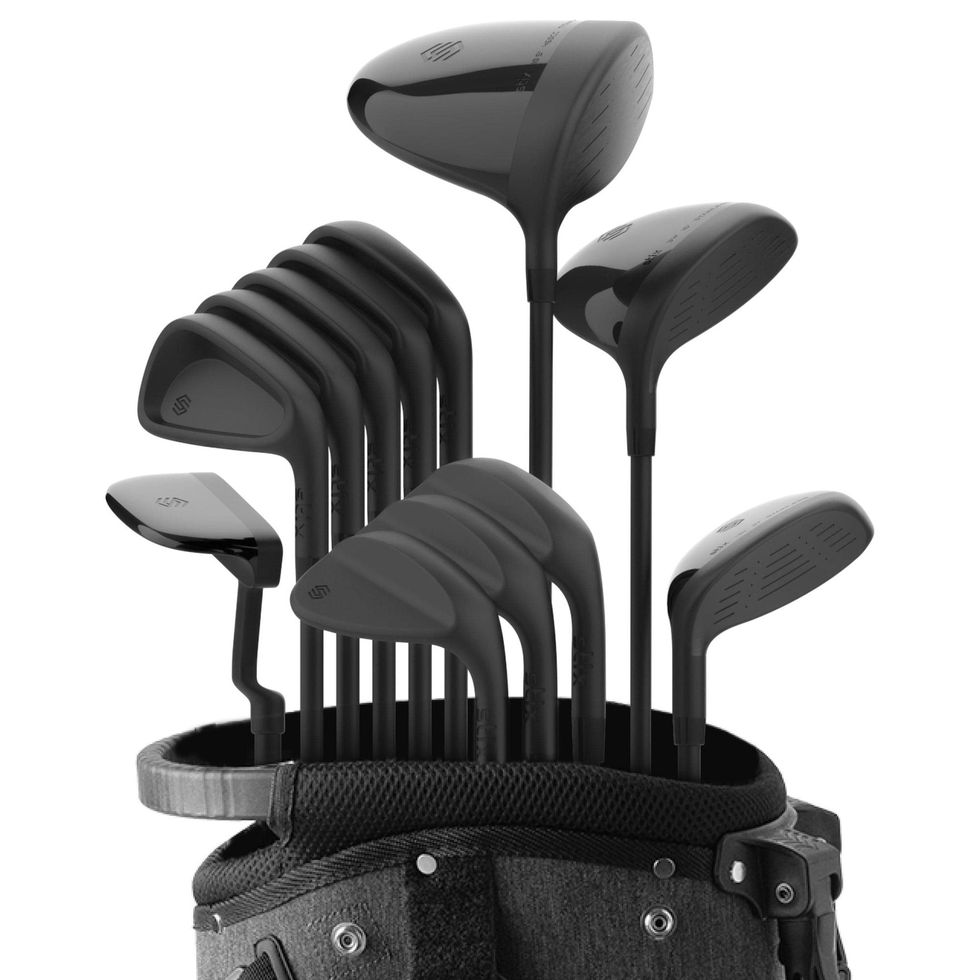
A typical complete golf club set for beginners will include a range of clubs designed to cover various distances and situations on the course. While the exact composition can vary, you can generally expect to find the following:

The Driver: Your Longest Weapon
The driver is your longest club, designed for maximum distance off the tee. Beginner drivers are typically oversized, with a large sweet spot to increase forgiveness on off-center hits. They also feature a higher loft to help get the ball airborne easily.
- Key Features for Beginners:
- Large Clubhead: Offers a bigger sweet spot for more forgiving shots.
- High Loft: Aids in getting the ball airborne for greater distance.
- Lightweight Shaft: Promotes faster swing speeds.
Fairway Woods: Versatility from the Tee and the Fairway
Fairway woods, often a 3-wood and a 5-wood, are shorter than the driver but still designed for distance. They are more versatile, allowing you to hit the ball from the tee or the fairway. Beginner-friendly fairway woods will also prioritize a larger sweet spot and ease of launch.
- Key Features for Beginners:
- Lower Profile Clubhead: Makes it easier to get the ball airborne from turf.
- Slightly Shorter Shafts: Offers more control than a driver.
- Forgiving Sole Design: Glides through the grass for cleaner contact.
Hybrids: The Best of Both Worlds
Hybrids have become a staple in modern golf bags, especially for beginners. They combine the loft and distance of a fairway wood with the playability of an iron. Their design makes them easier to hit than long irons, offering a higher launch and more forgiveness.

- Key Features for Beginners:
- Iron-like Sole and Iron-like Shaft Length: Familiar feel for many players.
- Wood-like Clubhead: Generous forgiveness and a larger sweet spot.
- Versatile: Can be used from the fairway, rough, or even off the tee.
Irons: The Workhorses of Your Bag
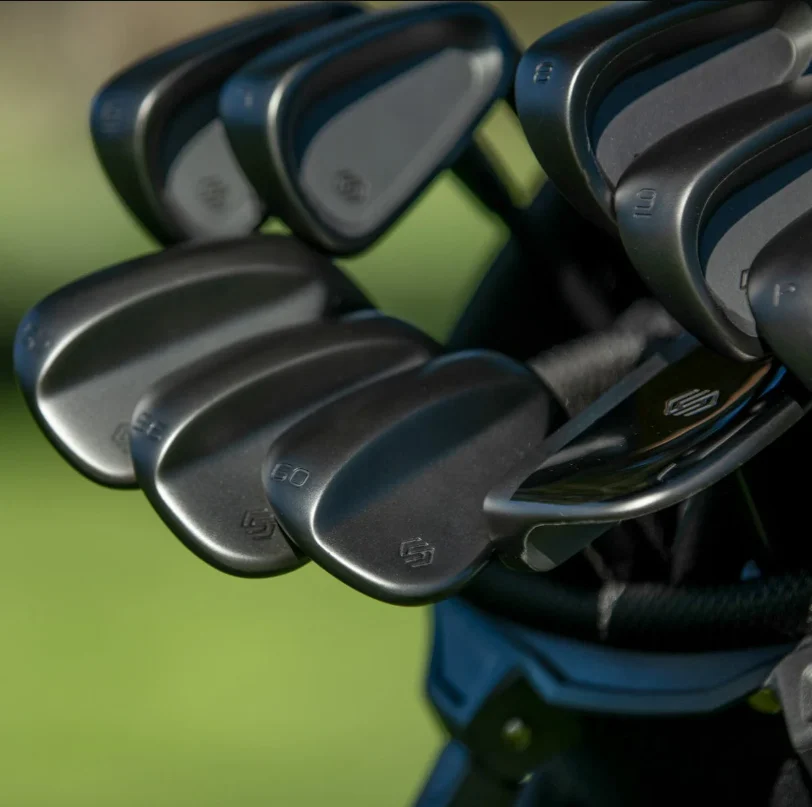
Irons are numbered, typically from 5-iron through 9-iron, with pitching wedge (PW) and sand wedge (SW) often included as well. Each iron has a progressively lower loft and shorter shaft than the one before it, designed for different distances and shot types. For beginners, "game-improvement" irons are key.
- Key Features for Beginners:
- Cavity Back Design: Removes weight from the center and places it around the perimeter of the clubface, increasing stability and forgiveness.
- Thicker Top Line: Indicates a larger sole, which helps the club glide through the turf more easily.
- Offset: The clubface is set slightly behind the hosel, promoting a more square clubface at impact and helping to prevent slicing.
The Putter: Your Scoring Club
The putter is arguably the most important club in your bag, as it’s used on every hole to get the ball into the cup. Beginner putters often feature alignment aids on the top of the clubface to help you aim more accurately. Stability and a good feel are paramount.
- Key Features for Beginners:
- Alignment Aids: Lines or dots on the clubface to help with aiming.
- Balanced Design: Promotes a smooth, consistent putting stroke.
- Soft Insert: Offers a comfortable feel on impact.
The Golf Bag: Carrying Your Arsenal
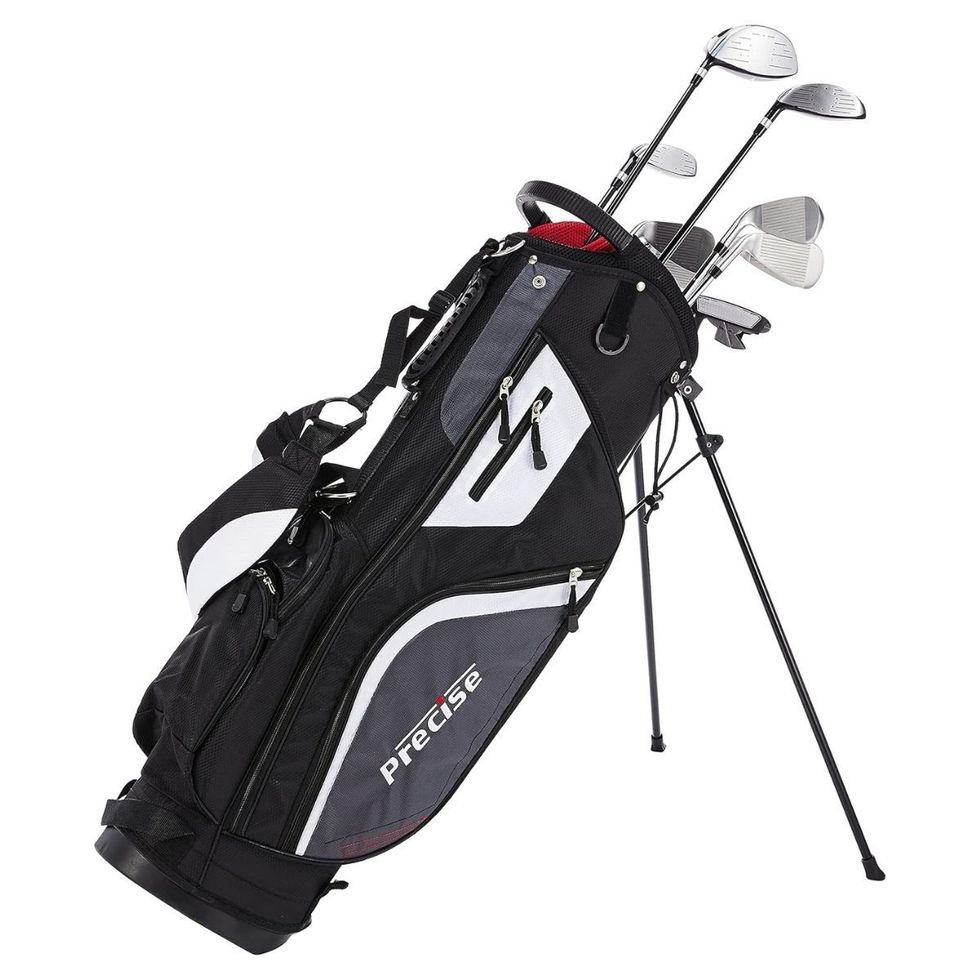
A complete set will almost always include a golf bag. For beginners, look for a bag that is lightweight, comfortable to carry if you plan on walking the course, and has ample pocket space for your essentials like balls, tees, water, and a rain jacket. Cart bags are generally larger and designed to sit securely on a golf cart.
Your Personal Fit: Factors to Consider When Choosing
While the general makeup of a beginner set is similar, there are nuances that can make one set a better fit for you than another. Consider these factors:
1. Your Physical Attributes: Height and Strength
The length and weight of your clubs should complement your physique.
- Height: Most standard sets are designed for golfers between 5’8" and 6’1". If you are significantly taller or shorter, you might consider clubs that are extended or shortened. Many manufacturers offer options for custom fitting, even within their beginner lines.
- Strength and Swing Speed: This primarily dictates your shaft flex.
- Senior/Ladies Flex: For those with slower swing speeds, these shafts offer more flex to help generate clubhead speed.
- Regular Flex: The most common flex, suitable for the average male golfer.
- Stiff Flex: For golfers with faster swing speeds who can generate more power.
It’s often better to err on the side of slightly more flexible shafts when starting, as you’re still developing your swing.

2. Your Playing Style and Goals
Are you looking to casually play a few rounds a year with friends, or do you have aspirations of improving and perhaps joining a league?
- Casual Play: A more budget-friendly, highly forgiving set will be ideal. The focus here is on enjoyment and making the game accessible.
- Aspiring Improvement: You might consider a set that offers slightly more advanced technology, perhaps with options for different shaft materials or adjustable features, even if it comes at a slightly higher price point. These sets can help you grow into them for a longer period.
3. Budget Considerations: Value Over Price Tag
Golf clubs can range from a few hundred dollars to several thousand. For your first set, it’s wise to focus on value and suitability rather than the most expensive option.
- Entry-Level Sets: Often priced between $300-$600, these are excellent for discovering if golf is for you. They offer good forgiveness and all the necessary clubs.
- Mid-Range Complete Sets: Typically $700-$1200, these sets may offer more advanced technology, better materials, and potentially more clubs or a higher quality bag. These are great for those who are committed to improving and want a set that will last longer.
- Premium Complete Sets: While less common for absolute beginners, some brands offer higher-end complete sets ($1200+) that bridge the gap between beginner and intermediate. These are for individuals who are serious about the game and want a high-quality, long-lasting investment.
Real-Life Example: Sarah, a busy professional, decided to take up golf to de-stress. She opted for a well-regarded entry-level complete set in the $400 range. She found it incredibly easy to hit, allowing her to enjoy her weekend rounds without frustration. After two years, as her handicap improved, she decided to invest in a higher-end set. Her initial affordable set served its purpose perfectly – introducing her to the game and fostering her enjoyment.
4. The "Feel" Factor: Trust Your Instincts
While technical specifications are important, the subjective "feel" of a club cannot be overstated. When you have the opportunity, try to swing a few different clubs.
- Grip: Ensure the grip feels comfortable in your hands. It shouldn’t be too thick or too thin.
- Balance: The club should feel balanced through your swing.
- Sound and Feedback: While beginners might not immediately discern subtle differences, a club that feels "solid" on contact is generally a good sign.
Practical Workout Tips to Complement Your New Gear
Investing in a new set of clubs is a fantastic motivator, but remember that golf is a sport that requires physical conditioning. To maximize your enjoyment and performance, incorporate these fitness tips:
1. Focus on Core Strength
A strong core is the engine of your golf swing, providing stability and power transfer.

- Exercises: Planks, Russian twists, bird-dog, and bicycle crunches.
- Frequency: Aim for 2-3 sessions per week.
2. Enhance Flexibility and Mobility
Good flexibility, particularly in your hips, shoulders, and thoracic spine, allows for a greater range of motion and a more fluid swing, reducing the risk of injury.
- Exercises: Dynamic stretching before practice (arm circles, leg swings), and static stretching after (hamstring stretches, chest openers, spinal twists). Yoga and Pilates are also excellent for golfers.
- Frequency: Daily stretching, with dedicated flexibility sessions 1-2 times a week.
3. Build Leg Strength for Power and Stability
Your legs are your base of support. Strong legs provide a stable platform for your swing and contribute to power generation.
- Exercises: Squats, lunges, deadlifts (with proper form), calf raises.
- Frequency: 1-2 sessions per week, focusing on controlled movements.
4. Improve Hand and Wrist Strength
While not the primary power source, stronger hands and wrists can improve club control and grip security.

- Exercises: Grip trainers, wrist curls, reverse wrist curls.
- Frequency: Can be incorporated into strength training days or done as a quick addition during breaks.
Workout Example: Before heading to the driving range, spend 10-15 minutes on a dynamic warm-up. Include some torso twists, shoulder rotations, and light leg swings. After your practice session, dedicate 10 minutes to static stretching, focusing on your hips and shoulders.
Common Pitfalls to Avoid
As you navigate the exciting world of golf club selection, be mindful of these common missteps:
- Buying Too Advanced a Set: Resist the temptation to buy clubs designed for professionals. They are often less forgiving and can hinder your progress.
- Ignoring Your Budget: While it’s an investment, don’t overspend on your first set. There are excellent options at various price points.
- Not Considering Fit: Simply buying the cheapest set without considering your height or general strength can lead to discomfort and poor swing mechanics.
- Focusing Solely on Aesthetics: While you want clubs that look good, prioritize performance and forgiveness over superficial design elements.
The Journey Begins: Your First Swing Awaits
Selecting your first set of golf clubs is a significant step in your golfing adventure. It’s an opportunity to set yourself up for success and enjoyment on the course. Remember, the goal is to find a set that feels comfortable, is forgiving of your early mistakes, and inspires you to get out and play. Don’t be afraid to ask for advice at your local golf shop, read reviews, and most importantly, trust your instincts.
The perfect set is out there, waiting to help you discover the joy and challenge of golf. So, take a deep breath, embrace the process, and get ready to feel the satisfying thwack of a well-struck ball. Your journey on the green has just begun, and with the right equipment, it promises to be a rewarding one. Go forth, choose wisely, and swing with confidence!