
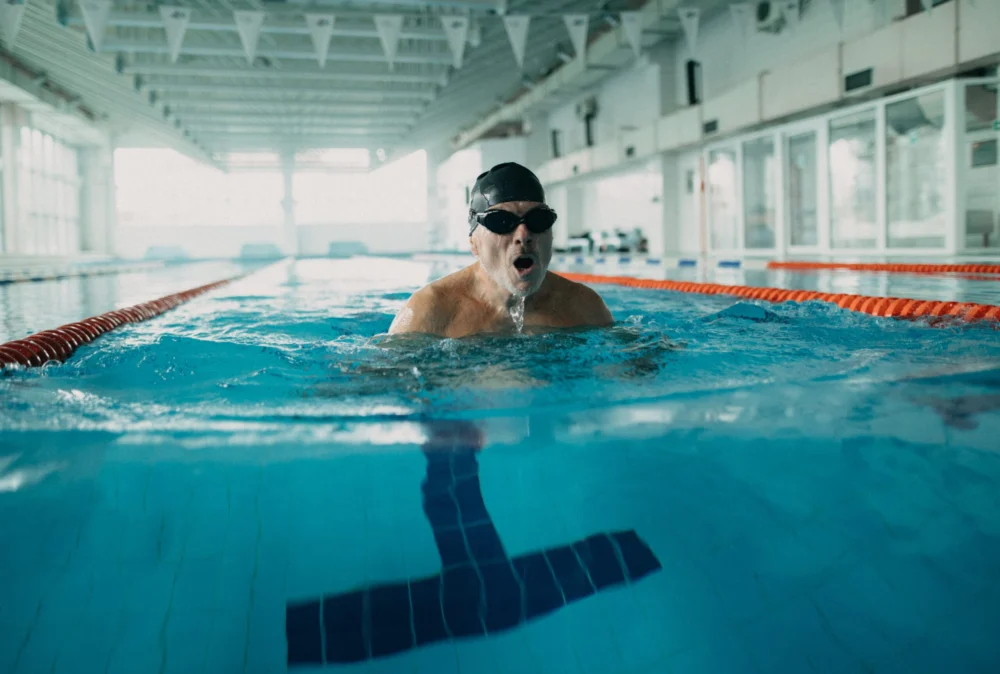
The rhythmic glide through water, the soothing sensation of buoyancy, the sheer exhilaration of propelling yourself forward – swimming offers a unique and invigorating fitness experience. For many, it’s a beloved cardio workout, a way to de-stress, or a gentle form of exercise. But what if we told you that your time in the pool could be far more than just laps? What if you could transform your swim sessions into a powerful engine for building lean muscle, enhancing cardiovascular endurance, and refining your technique to a level you never thought possible?
While traditional weightlifting is often seen as the gold standard for muscle hypertrophy, the water itself is a potent resistance medium. Every stroke, kick, and movement you make in the pool engages your muscles against the inherent density of water, offering a full-body workout that can be surprisingly effective. You might not be sculpting the physique of a competitive bodybuilder solely through swimming, but you can absolutely build a strong, toned, and resilient body. By incorporating specific exercises and strategic approaches, you can harness the power of the water to target muscle groups often overlooked in a standard swim, boost your endurance, and dramatically improve your efficiency in the water.
Terry Heggy, a highly accomplished Level 3 USMS coach and NASM-certified personal trainer, emphasizes a crucial point: "You must do short, high-intensity work, which requires an entirely different approach than people usually take in lap swimming. It’s about choosing the right motion, the right resistance, and the right number of repetitions." This insight is key. Moving beyond simply swimming from point A to point B, we can strategically leverage water resistance and specific movements to create a comprehensive strength and conditioning program.
To help you unlock this potential, we’ve collaborated with swim coaches and fitness experts to bring you a curated selection of swimming exercises designed to elevate your strength, cardiovascular fitness, and overall swimming prowess. Prepare to redefine your understanding of what a swim workout can achieve.
Leg Powerhouse: Elevating Your Kick
Your legs are the engine of your swim stroke, providing propulsion and stability. While standard kicking sets are beneficial, we can amplify their impact with targeted drills.
The Tombstone Kick
This drill takes your leg workout to the next level by increasing resistance and demanding greater engagement from your leg muscles.
How to Do It:
- Grip: Hold a kickboard firmly with both hands, extending your arms forward.
- Body Position: Keep your body as streamlined as possible, with your head submerged or just breaking the surface for breaths.
- The Kick: Initiate a powerful flutter kick from your hips, maintaining a relatively straight leg but with a relaxed, soft knee. Think of driving your thighs downwards and then recovering with a controlled, whip-like motion.
- Focus: The kickboard acts as a drag device, forcing your hip flexors, quadriceps, and hamstrings to work harder to maintain momentum. If you feel the primary engagement in your knees, adjust your technique to initiate the kick from your hips.
Expert Tip: "If you don’t feel it in these areas, you may be kicking from your knees," advises swim coach Beth Jones. "Instead, think of kicking with a straight leg, but a soft knee." This subtle shift in focus ensures you’re recruiting the larger muscle groups for maximum benefit.
Kicks with Rotation
This challenging drill is a cornerstone for developing a strong, stable core and improving your overall swim technique by forcing you to rely on your body’s natural rotation.
How to Do It:

- Position: Enter the water with your arms extended overhead at your sides, hands pointing forward.
- Body Alignment: Keep your head down, looking towards the bottom of the pool, and maintain a streamlined body position.
- The Kick: Execute small, controlled flutter kicks. Imagine your legs are confined within a narrow cylinder, preventing them from splaying outwards. This conserves energy and promotes efficiency.
- Core Engagement: The key here is to engage your core muscles to initiate and control the rotation of your body with each kick. Without arm assistance, your core must work overtime to maintain balance and propel you forward.
- Breathing: If you have a swim snorkel, use it to maintain uninterrupted focus on your core and kicking. If not, sneak in breaths as needed, but prioritize maintaining your core engagement.
Expert Insight: "It’s not easy, but it’s worth it," states Jones. "Keep your kicks nice and small, ‘as if your legs are in a circular garbage can and you can’t kick outside that circle.’ I’m a big fan of using a swim snorkel, so you don’t have to worry about breathing and can just think about how to engage your core." This drill directly translates to a more powerful and efficient freestyle stroke.
Upper Body Power: Sculpting Your Shoulders, Chest, and Arms
While swimming is inherently a full-body activity, we can strategically target the upper body for enhanced strength and muscle development.
Kickboard Press and Pull
This dynamic exercise is a fantastic way to engage your chest, shoulders, and arms in both pushing and pulling motions, mimicking the forces experienced in various swimming strokes.
How to Do It:
- Starting Position: Hold a kickboard in front of your chest with both hands, palms facing outwards.
- The Press: Push the kickboard forward and away from your chest, extending your arms.
- The Pull: As the kickboard moves forward, initiate a pulling motion, bringing it back towards your chest. You can vary the grip and angle to target different muscle groups.
- Explosive Movement: For maximum muscle activation, approach this exercise with an explosive intent. "You have to approach it as an explosive motion if you want to entice your muscles to grow," advises Heggy.
- Resistance: To increase the challenge, try dunking the kickboard deeper underwater during the pull phase, creating more drag.
Practical Workout Tip: "You don’t need to do it for a minute each time—you should be able to get yourself cranking within 10 to 15 seconds," Heggy recommends, emphasizing short, intense bursts for muscle stimulation.
Dry Shoulder Treading Water
Don’t underestimate the power of treading water. When performed with intensity, it becomes a potent strength builder for your shoulders and forearms.
How to Do It:
- Water Depth: Stand in water deep enough that your feet cannot touch the bottom.
- The Motion: Engage in a vigorous treading water motion, using your arms and legs to keep your head above the surface. Focus on powerful, deliberate movements.
- Intensity: "If you do these really hard and fast, and you’re really strong, you can get your sternum out of the water," Heggy explains. This level of exertion significantly increases muscle activation.
- Target Muscles: This exercise is excellent for strengthening the rear deltoids (back of the shoulders) and your forearms, crucial for grip strength and arm recovery in your stroke.
Starting Block Pull-Ups and Curls
If your pool is equipped with starting blocks, they offer a unique opportunity for bodyweight resistance exercises that can be adapted for strength gains.
How to Do It (Bicep Curls):
- Grip: Stand facing the starting block, gripping the edge with your hands shoulder-width apart.
- Lean Back: Lean back slightly, allowing your feet to remain on the pool deck or slightly in the water for balance.
- The Curl: Keeping your elbows tucked in, pull yourself upwards towards the block, focusing on squeezing your biceps.
- Controlled Descent: Lower yourself slowly and with control.
- Vary Resistance: Adjust your foot placement on the wall or deck to alter the resistance. The further your feet are from the wall, the more challenging the exercise.
How to Do It (Pull-Ups):

- Grip: Grip the edge of the starting block with an overhand grip, hands slightly wider than shoulder-width.
- Hang: Hang from the block with your arms fully extended.
- The Pull-Up: Pull your chest towards the edge of the block, engaging your back muscles, biceps, and shoulders.
- Controlled Lowering: Lower yourself back down with control.
- Assisted Option: For beginners, the water’s buoyancy can provide some assistance, making it easier to perform pull-ups.
Expert Advice: "These aren’t fancy, nor is there only one way to do them. You’re basically just using your body weight for resistance," says Heggy. "The water’s buoyancy can be helpful if you’re an athlete who’s just starting to work on pull-ups. Mixing up the hand grip, hand width, and elbow angle enables you to target different muscle groups."
Swim with Paddles
For swimmers with a solid foundation in stroke technique, swim paddles can significantly increase the resistance, leading to greater strength development in the lats and shoulders.
How to Do It:
- Selection: Choose paddles that are slightly larger than your hands and have holes to reduce shoulder strain.
- Integration: Incorporate a short segment of your swim workout using paddles.
- Focus: Concentrate on maintaining good stroke form. Paddles amplify any existing stroke inefficiencies, so it’s crucial to have a sound technique before using them.
- Progression: Start with short distances (e.g., 200 yards/meters) and gradually increase the duration as you build strength and endurance.
Cautionary Note: "If you’re a beginning swimmer, wait a while before using paddles, since stroke errors—like the very common one of letting your elbow drop to the bottom of the pool—can put huge, unhelpful, injury-producing stress on your shoulders when you add paddles to the equation," warns Jones. "That builds pain, not muscle."
Core Strength: The Unseen Engine
A strong and stable core is paramount for efficient swimming, providing power transfer and maintaining a streamlined body position.
The "Gutbuster"
This core-centric drill is aptly named for its ability to challenge your abdominal and back muscles from your rib cage to your hips.
How to Do It:
- Body Position: Float on your back, arms by your sides.
- The Kick: Initiate a flutter kick, focusing on keeping your hips high and your core engaged.
- Maintain Stability: The inherent instability of kicking in water forces your stabilizer muscles to work overtime to maintain a balanced position, much like using an unstable surface on land.
- Duration: Continue kicking for a set duration, focusing on maintaining a strong core throughout.
Expert Take: Heggy explains, "This exercise gets all your core muscles, from your rib cage to your hips, involved, and the inherent instability of flutter kicking in water helps all the stabilizer muscles ‘understand they need to participate’."
Adding Resistance for Supercharged Gains
To truly stimulate muscle growth, introducing external resistance is a game-changer.
The Parachute Pull
This is where you actively embrace drag to build serious strength. A swim parachute, worn around the waist, creates significant resistance, forcing your muscles to work harder with every stroke.
How to Do It:
- Attach the Parachute: Secure the parachute around your waist according to the manufacturer’s instructions.
- Swim: Swim your preferred stroke, focusing on maintaining good form despite the added drag.
- Short, Intense Bursts: The parachute will quickly fatigue your muscles, so short, high-intensity swims are most effective. Expect to "fail pretty quickly," as Heggy puts it, and embrace it as a sign of effective training.
Alternative Resistance Methods:
- Drag Suits: Wearing a drag suit, which has built-in pockets to catch water, provides a similar resistance challenge.
- Baggy Shorts: In a pinch, wearing baggy shorts can create a modest amount of drag.
Expert Recommendation: "The commercial gear provides a better range of added resistance while helping you keep good form during the exercise," Heggy advises, highlighting the benefits of purpose-built training aids.
Integrating These Exercises into Your Routine
The beauty of these swimming exercises lies in their versatility. You can integrate them into your existing swim workouts in several ways:
- Dedicated Sets: Replace a portion of your standard lap swimming with specific sets of these drills. For example, after your warm-up, dedicate 4-6 laps to the "Gutbuster" or perform 4 x 50-meter sets of the Tombstone Kick.
- As Warm-ups or Cool-downs: Use exercises like the Kickboard Press and Pull or Dry Shoulder Treading Water as dynamic warm-ups to activate specific muscle groups.
- As Drills within Longer Swims: Incorporate shorter bursts of these exercises within longer swims. For instance, do 25 meters of Kicks with Rotation every 100 meters of freestyle.
- As a Complete Workout: Design a swim session focused entirely on these strength-building exercises, ensuring you hit different muscle groups and aspects of your technique.
Practical Workout Tip: Always prioritize proper form over speed or distance. Listen to your body and gradually increase the intensity and duration of these exercises as you get stronger. Don’t hesitate to use swim aids like snorkels, kickboards, and paddles to enhance your training, but always ensure they are used correctly to prevent injury.
The Takeaway: Beyond the Lap
Swimming is a powerful, holistic activity that offers far more than just a cardiovascular workout. By strategically incorporating these specialized exercises into your routine, you can unlock a new level of physical development. You’ll not only build lean muscle and boost your endurance but also refine your swimming technique, making every stroke more efficient and powerful.
The water is a boundless gymnasium, and with a little knowledge and intention, you can transform your time in the pool into a comprehensive strength training session that sculpts your body, enhances your athletic performance, and invigorates your spirit. So, dive in, embrace the resistance, and discover the full potential of your swim workouts. The strength, endurance, and refined technique you seek are waiting for you beneath the surface.