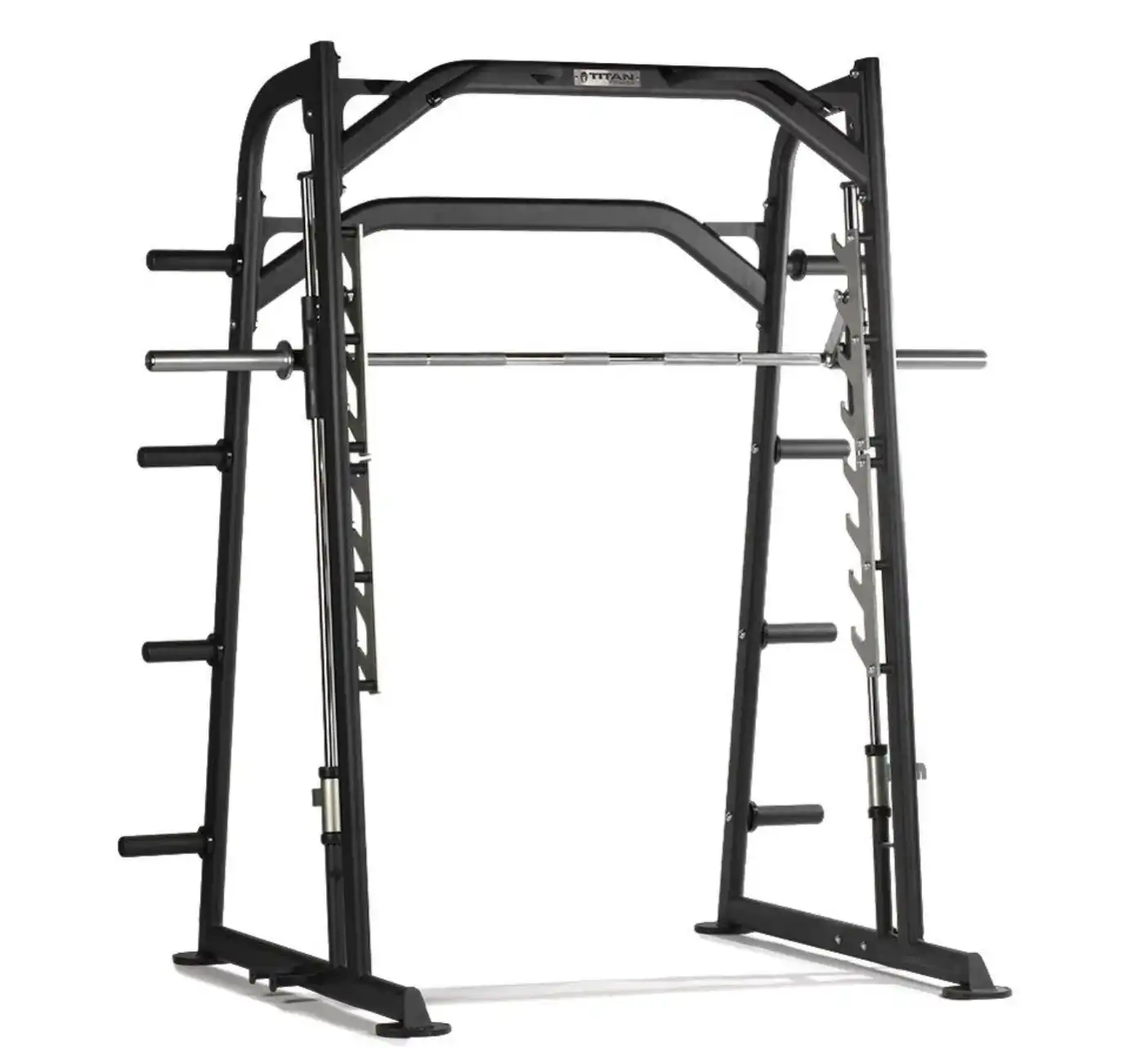
In the dynamic world of fitness, the desire for convenience and efficiency has led many to embrace the home gym. No more waiting for equipment, no more commute, just pure, unadulterated training on your terms. Amidst the array of essential home gym equipment – from dumbbells and resistance bands to treadmills and stationary bikes – one machine often stands out for its unique blend of safety, versatility, and muscle-building potential: the Smith machine.
Often misunderstood or underestimated, the Smith machine is far more than just a fixed-bar alternative to free weights. For beginners, it offers a secure environment to learn proper movement patterns and build foundational strength. For intermediate lifters, it provides an invaluable tool for pushing limits safely, isolating muscle groups, and incorporating advanced training techniques without the constant need for a spotter. It’s a precision instrument designed to guide your path to a stronger, more sculpted physique, making it an indispensable asset in any serious home fitness setup.
This comprehensive guide will delve into the profound advantages of integrating a Smith machine into your home gym. We’ll explore its benefits for safety and form, unveil a repertoire of transformative exercises, discuss critical considerations for its seamless inclusion in your space, demystify common misconceptions, and provide actionable advice to help you maximize every rep. Prepare to unlock a new level of strength, confidence, and control in your home workouts.
The Smith Machine: Your Home Gym’s Versatile Powerhouse
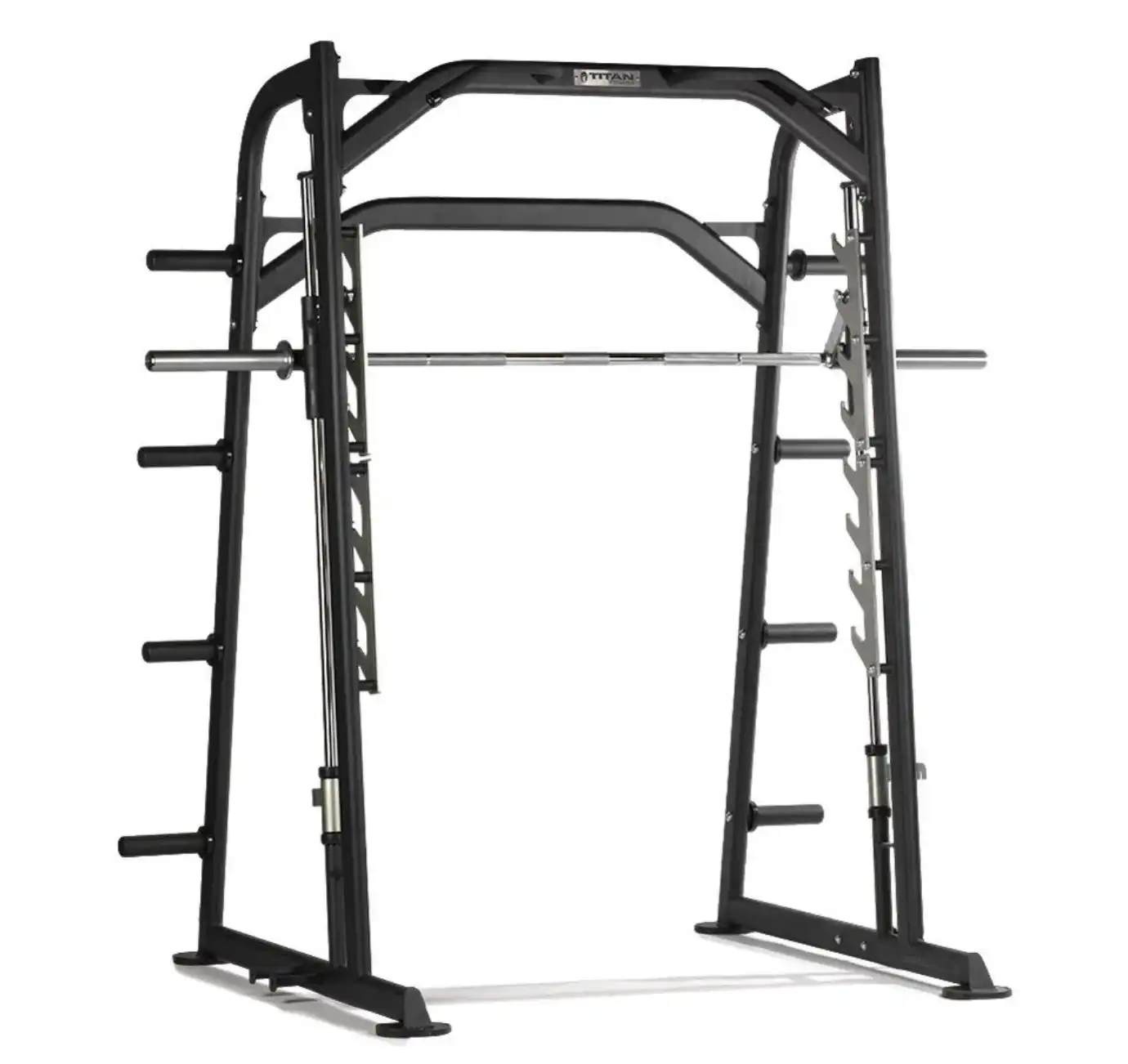
At its core, a Smith machine is a weight training apparatus that features a barbell fixed within steel rails, allowing only vertical (or sometimes slightly angled) movement. This guided path is equipped with adjustable safety stops and multiple re-racking points, providing an inherent layer of security that traditional free weights cannot match without a dedicated spotter.
For the home gym enthusiast, this unique design translates into several compelling advantages:
- Space Efficiency: Many modern Smith machines, particularly all-in-one trainers, consolidate the functions of multiple pieces of equipment into a single footprint. This can save valuable space, making it a smart choice for garages, basements, or spare rooms where square footage is at a premium.
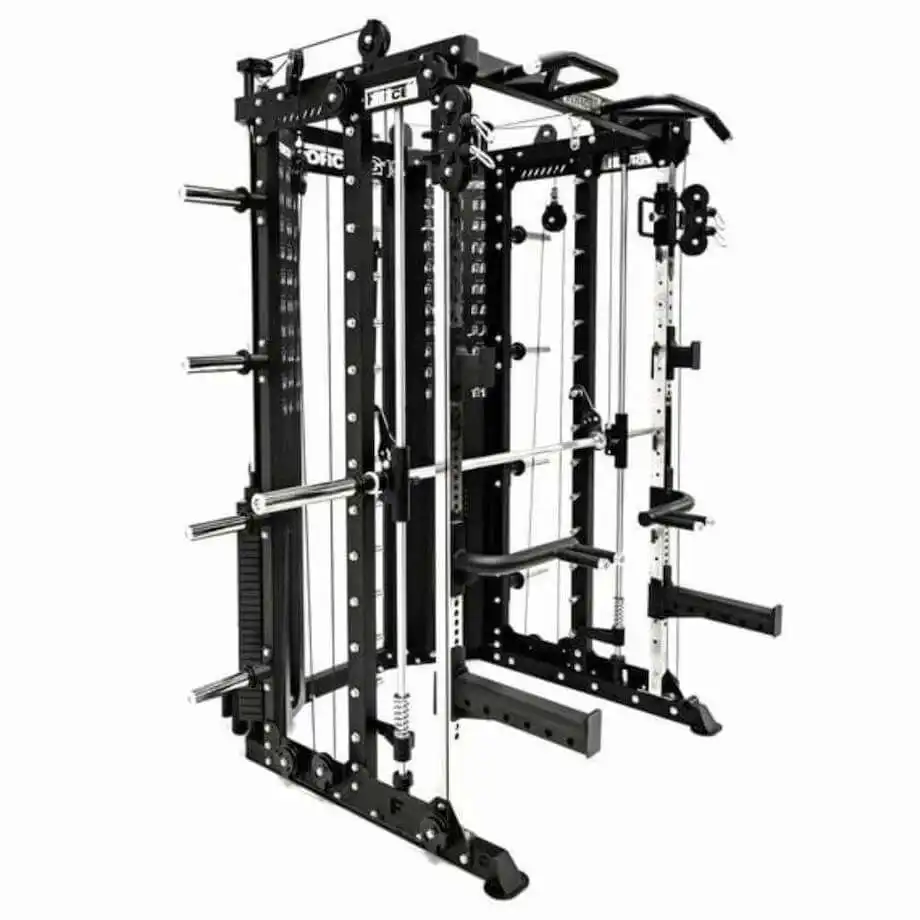
- Multi-functionality: Beyond its primary role as a guided barbell system, many contemporary Smith machines integrate other features like cable pulleys, pull-up bars, and dip stations, transforming them into comprehensive workout hubs.
- Unrivaled Safety for Solo Training: This is arguably the most significant benefit for home gym users. The ability to safely bail out of a lift or set the bar down at any point, even when fatigued, empowers you to train with intensity and confidence, knowing that you’re protected.
- Accessibility for All Levels:
- Beginners can focus intently on mastering the feel of muscle contraction and correct movement patterns without the added challenge of stabilizing a free bar. This builds a strong foundation for future strength gains.
- Intermediate lifters can use the stability to push heavier weights, perform high-rep sets to failure, or experiment with advanced techniques that might be too risky with free weights when training alone.
By understanding what a Smith machine truly offers, you begin to see it not as a substitute for free weights, but as a complementary and highly effective tool that expands the capabilities and safety of your home fitness journey.
Unlocking the Core Advantages of Smith Machine Training
The guided nature of the Smith machine often sparks debate, but its benefits for specific training goals and environments, especially a home gym, are undeniable. Let’s explore the key advantages that make it a formidable addition to your fitness arsenal.
Enhanced Safety and Stability for Confident Lifts
One of the most compelling reasons to embrace the Smith machine in a home setting is the profound sense of security it offers. The barbell’s fixed plane of motion, combined with integrated safety stops and numerous re-racking points, fundamentally alters the risk profile of heavy lifting.
- Eliminates the Need for a Spotter: This is paramount for anyone training alone. Whether you’re attempting a new personal best on squats or pushing your bench press to failure, the ability to simply rotate the bar to lock it into place, or have the safety catches prevent it from crushing you, provides immense peace of mind.
- Reduced Risk of Injury: With the bar path controlled, you eliminate lateral movement and instability, which are common culprits in free weight injuries. This allows you to focus purely on the concentric (lifting) and eccentric (lowering) phases of the exercise, minimizing the chances of dropping the bar or losing balance. Imagine confidently attempting a new heavy set of Smith machine squats, knowing that if fatigue sets in, you can easily rack the bar at any point. This confidence empowers you to push harder and achieve more.
Master Your Form with Controlled Movement
The guided path of the Smith machine is a powerful teacher. It strips away the complex stability demands of free weights, allowing you to isolate and truly feel the target muscles working.
- Focus on Muscle Engagement: Without worrying about balancing the bar, you can direct your mental energy towards achieving a deep muscle contraction. This "mind-muscle connection" is crucial for effective hypertrophy (muscle growth).
- Groove Movement Patterns: For beginners, the Smith machine is an excellent tool for learning the correct range of motion and biomechanics for compound movements. You can establish a solid foundation of form before transitioning to free weights, if desired.
- Targeted Isolation: Certain exercises benefit immensely from the Smith machine’s stability, allowing for greater isolation. For example, Smith machine lunges can help you pinpoint your glutes and hamstrings without the wobble often associated with dumbbell lunges.
Practical Tip: When starting a new exercise on the Smith machine, use a lighter weight than you might anticipate. Focus on slow, controlled movements through the full range of motion, concentrating on the contraction and stretch of the working muscle. This disciplined approach will accelerate your progress and cement proper form.
Unparalleled Exercise Versatility
Far from being a one-trick pony, the Smith machine is a true chameleon of the gym, capable of facilitating a vast array of exercises for every major muscle group. It can effectively replace several standalone machines, making it a highly efficient use of space and resources in a home gym.
- Compound Movements: Squats (back, front, hack), bench presses (flat, incline, decline), overhead presses, and bent-over rows can all be performed with enhanced safety and control.
- Isolation Exercises: From calf raises and shrugs to glute bridges and close-grip presses, the Smith machine allows you to zone in on specific muscles for targeted development.
- Creative Variations: The fixed path encourages creative variations. For instance, by adjusting your foot position during squats, you can shift emphasis to different parts of your legs, similar to a hack squat machine.
Progressive Overload Made Accessible
Progressive overload – the gradual increase in stress placed on the musculoskeletal system – is the fundamental principle for building muscle and strength. The Smith machine excels at making this principle easily and safely implementable.
- Consistent Incremental Loading: The stability of the machine allows for precise and consistent additions of weight. You can add small increments without fear of losing control, ensuring continuous challenge to your muscles.
- Pushing to Failure Confidently: Because of the integrated safety features, you can push your sets closer to muscular failure with less apprehension. This high-intensity training is critical for stimulating muscle growth and strength adaptations.
- Reduced Fatigue from Stabilization: Since your body isn’t expending energy stabilizing the bar, more of your effort can be directed toward lifting the weight, potentially allowing for higher reps or heavier loads on the target muscles.
By harnessing these core advantages, the Smith machine becomes more than just a piece of equipment; it transforms into a strategic partner in your pursuit of a stronger, more capable physique within the comfort and convenience of your home gym.
Essential Smith Machine Exercises for a Full-Body Transformation
The versatility of the Smith machine means you can effectively train every major muscle group. Here’s a breakdown of key exercises, complete with practical tips, to help you build a comprehensive full-body routine.
Leg Dominance: Sculpting Stronger Lower Body
Your legs are your foundation. The Smith machine provides excellent stability to target quadriceps, hamstrings, and glutes.
- Smith Machine Squats (Back Squat Variation):
- How to: Position the bar across your upper back (traps). Step slightly forward from the bar’s direct vertical path to allow for a more natural squat pattern. Descend by pushing your hips back and bending your knees, keeping your chest up. Go as deep as your mobility allows.
- Tip: Experiment with foot placement. A slightly wider stance can target glutes more, while a narrower stance emphasizes quads. The fixed path lets you focus on pushing through your heels or midfoot.
- Smith Machine Front Squats:
- How to: Position the bar across your front deltoids, crossing your arms to secure it. Keep elbows high. Descend with an upright torso, focusing on knee drive.
- Tip: Great for emphasizing the quadriceps and improving core stability due to the upright posture. The fixed path makes front squats less intimidating than with free weights.
- Smith Machine Lunges:
- How to: Stand inside the machine with the bar on your back. Step one foot forward or backward to get into a lunge position. Lower your back knee towards the ground, keeping your front knee aligned over your ankle. Push back up.
- Tip: The stability allows you to focus intensely on glute and quad activation in each leg. Excellent for unilateral strength.
- Smith Machine Glute Bridges / Hip Thrusts:
- How to: Sit on the floor with your upper back against an adjustable bench. Roll the padded bar over your hips. Drive through your heels, lifting your hips towards the ceiling, squeezing your glutes at the top.
- Tip: One of the safest and most effective ways to load the glutes heavily. The fixed bar ensures consistent tension.
- Smith Machine Calf Raises:
- How to: Place a block or weight plate under the balls of your feet. Position the bar on your upper back. Lower your heels below the step, then push up onto the balls of your feet, squeezing your calves at the peak contraction.
- Tip: The stability allows for a full range of motion and intense contraction, which is crucial for calf development.
Chest & Shoulders: Building Upper Body Strength
The Smith machine offers a secure environment for pressing movements, allowing you to push for muscle growth with confidence.
- Smith Machine Bench Press (Flat, Incline, Decline):
- How to: Lie on a flat, incline, or decline bench positioned under the bar. Grip the bar slightly wider than shoulder-width. Lower the bar to your chest, then press it back up, locking it into the safety catches if needed.
- Tip: The fixed path lets you focus on driving the bar straight up, emphasizing pectoral engagement. For incline and decline, adjust the bench angle. Always set the safety stops just above your chest.
- Smith Machine Overhead Press:
- How to: Sit or stand directly under the bar. Grip it slightly wider than shoulder-width. Press the bar straight overhead until your arms are fully extended, then slowly lower it.
- Tip: Provides incredible stability for shoulder development, especially when training alone. Focus on maintaining a tight core throughout the movement to protect your lower back.
Back & Arms: Powering Your Pull and Push
While less ideal for explosive pulling movements like conventional deadlifts, the Smith machine shines for strict form and targeted back and arm work.
- Smith Machine Bent-Over Rows:
- How to: Position the bar at mid-shin height. Hinge at your hips, keeping a flat back, and grab the bar with an overhand grip. Pull the bar towards your lower abdomen, squeezing your shoulder blades together.
- Tip: The fixed path forces strict form, minimizing momentum and ensuring your back muscles do the work. Great for isolating the lats and upper back.
- Smith Machine Shrugs:
- How to: Stand with the bar at arm’s length, gripping it slightly wider than shoulder-width. Keeping your arms straight, elevate your shoulders towards your ears, squeezing your traps at the top.
- Tip: Excellent for building massive traps. The stability allows for heavy loading and focused contraction.
- Smith Machine Close-Grip Bench Press (for Triceps):
- How to: Lie on a flat bench under the bar. Grip the bar with hands shoulder-width apart or slightly closer. Lower the bar to your lower chest/upper abdomen, keeping elbows tucked in, then press up using your triceps.
- Tip: A highly effective triceps builder. The fixed path ensures maximum tension on the triceps without worrying about bar stability.
By incorporating these exercises into your routine, you can build a comprehensive and effective full-body workout using just your Smith machine and an adjustable bench.
Integrating the Smith Machine into Your Home Gym Ecosystem
Choosing the right Smith machine and ensuring it fits seamlessly into your home gym requires careful planning. It’s not just about the machine itself, but how it interacts with your space and other equipment.
Space Considerations and Types
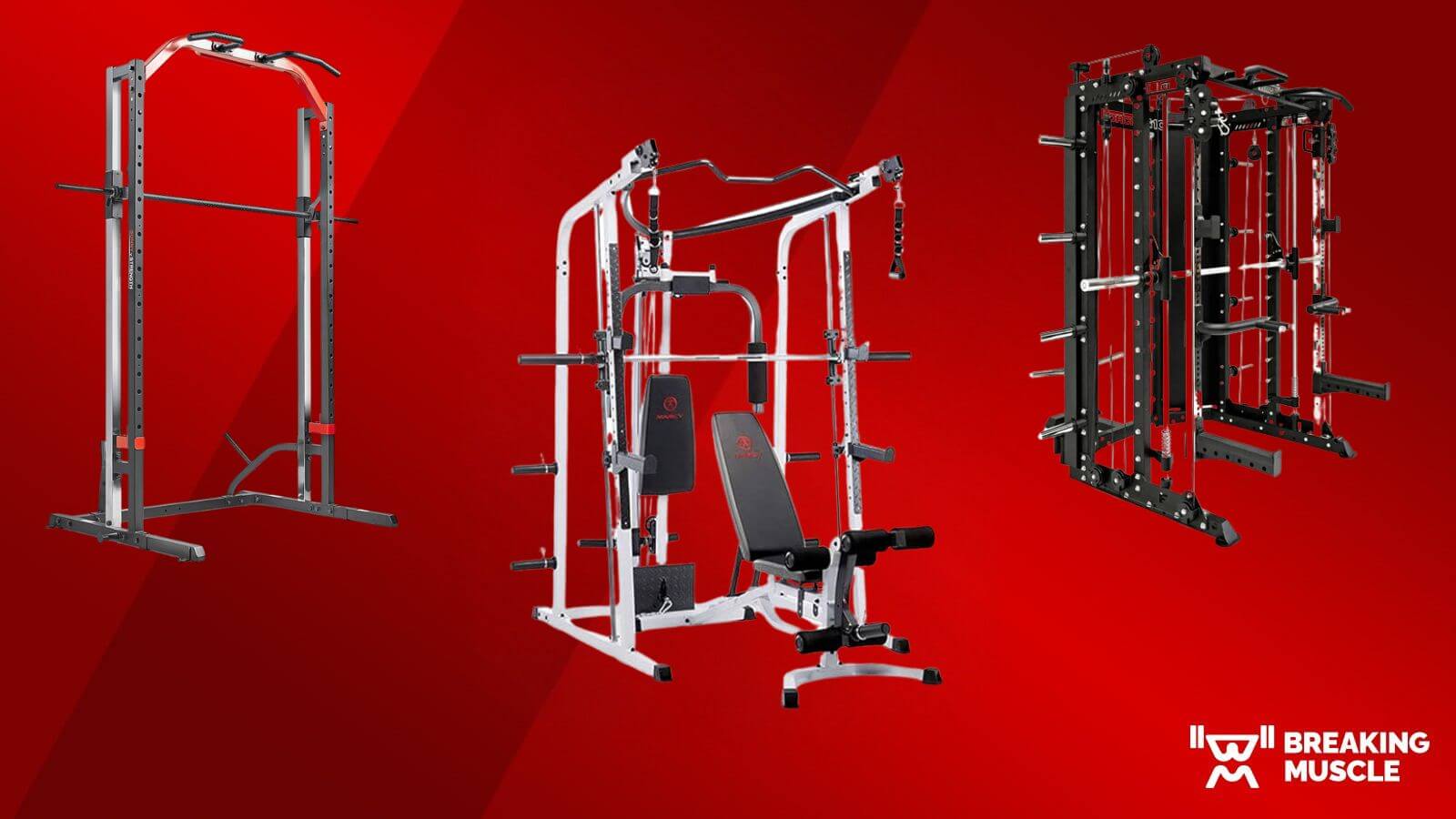
The first step is to accurately assess your available space. Smith machines come in a few primary configurations, each with different footprint requirements and functionalities:
- Standalone Smith Machines: These are dedicated units that solely offer the guided barbell system. They tend to have a moderate footprint, but their functionality is limited to Smith machine exercises.
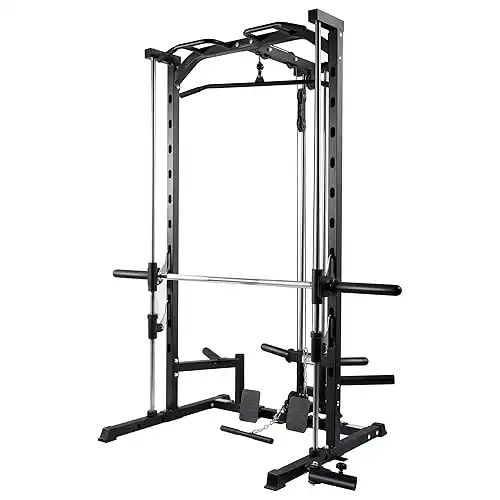
- All-in-One Trainers (Smith Machine, Power Rack, Functional Trainer Combos): These are the most comprehensive and popular options for home gyms. They integrate a Smith machine with a power rack (for free weight barbell exercises), a functional trainer (cable machine), and often a pull-up bar, dip handles, and storage. While they have a larger footprint than a standalone Smith machine, they offer unparalleled versatility, consolidating multiple pieces of equipment into one. This is often the most space-efficient choice when considering total gym capabilities.
- Rack Attachments: Some innovative designs allow you to convert your existing squat or power rack into a Smith machine via attachments. These are fantastic space-savers if you already own a compatible rack, as they utilize its frame.
Practical Advice: Measure the length, width, and height of your intended gym space meticulously. Don’t forget to account for clearance around the machine for safe movement, loading plates, and using any attached features (like a pull-up bar or cable system). A good rule of thumb is to allow at least 2-3 feet of clear space around all active sides of the machine.
Key Features to Look For (General Considerations)
When evaluating a Smith machine for your home gym, look beyond just the price tag. The quality of components and design significantly impacts your experience and the machine’s longevity.
- Smoothness of the Guide Rods/Bearings: This is critical for a pleasant and effective workout. The bar should glide up and down effortlessly, without sticking, jarring, or excessive friction. Look for machines with high-quality linear bearings or bushings.
- Sturdy Construction (Steel Gauge): The frame should be made from heavy-gauge steel (e.g., 11-gauge or 12-gauge) to ensure stability, durability, and a high weight capacity. A heavier machine often indicates better stability.
- Barbell Weight (Counterbalanced vs. Non-Counterbalanced):
- Counterbalanced: The bar’s actual weight is offset by a counterweight system, making it feel significantly lighter (e.g., 5-20 lbs). This is excellent for beginners, rehabilitation, or precise isolation work where even an empty 45 lb bar is too heavy.
- Non-Counterbalanced: The bar weighs its true weight (typically 45 lbs or 20 kg). This feels more like a free weight barbell and can be beneficial for strength progression if you’re comfortable with the starting weight.
- Number of Racking Positions and Safety Stops: More racking points mean finer control over your starting and ending positions, enhancing safety and allowing for partial range-of-motion training. Adjustable safety stops are non-negotiable and should be easy to set and release.
- Attachment Compatibility: If you’re considering an all-in-one system, check for compatibility with various attachments like an adjustable bench, landmine attachments, leg press attachments, or additional cable handles.
- Pulley Ratios (for All-in-Ones with Cable Systems):
- 1:1 Ratio: The resistance felt is equal to the weight loaded (e.g., 100 lbs loaded = 100 lbs resistance).
- 2:1 Ratio: The resistance felt is half the weight loaded (e.g., 100 lbs loaded = 50 lbs resistance). This allows for smoother movement, longer cable travel, and finer increments, but you need to load more weight for the same effective resistance.
- 4:1 Ratio: Resistance felt is a quarter of the weight loaded. Even smoother and more precise, but requires even heavier loading.
Complementary Equipment
While a Smith machine is highly versatile on its own, a few additional items can significantly enhance your training possibilities:
- Adjustable Weight Bench: Essential for all pressing movements (bench press, incline press) and useful for various seated exercises.
- Weight Plates: Ensure you have a sufficient range of plates (standard or Olympic, depending on your machine) to facilitate progressive overload.
- Resistance Bands: Can be used for warm-ups, cool-downs, or to add accommodating resistance to Smith machine lifts.
- Barbell Collars: To secure weight plates safely on the bar.
By carefully considering these factors, you can select a Smith machine that not only fits your space and budget but also serves as a robust foundation for years of effective home training.

Mastering Technique and Maximizing Safety
While the Smith machine inherently offers greater safety than free weights, proper technique and adherence to safety protocols are still paramount to prevent injury and maximize results.
Always Prioritize Form Over Weight
This golden rule of strength training applies even more acutely to the Smith machine. The fixed path can sometimes tempt users to load excessive weight, relying on the machine’s stability rather than their own muscular control.
- Start Light: Especially when learning a new exercise, begin with an empty bar or very light weight. Focus on feeling the muscle work and executing the movement with precision.
- Observe and Adjust: Use mirrors or record yourself to identify any imbalances or deviations in form. A slight adjustment in foot placement for squats, for instance, can drastically change muscle activation and comfort.
- Listen to Your Body: If you feel pain (not just muscle fatigue), stop the exercise immediately. The fixed path can sometimes put joints in an unnatural position for some individuals. Adjust your stance or range of motion accordingly.
Utilizing Safety Catches and Stops
These are the Smith machine’s primary safety features, and using them correctly is non-negotiable.
- Set the Stops Appropriately: Before starting any set, adjust the safety stops to a height that will catch the bar if you fail, preventing it from pinning you. For bench press, this means just above your chest. For squats, just below your deepest comfortable squat.
- Don’t Skip This Step: It only takes a few seconds to adjust the stops, and those seconds could prevent a serious injury. Make it a habit every time you change exercises or adjust your range of motion.
- Familiarize Yourself with the Racking Mechanism: Practice twisting the bar to lock it into the uprights so it becomes second nature, especially when you’re fatigued.
Understanding the Fixed Path
The Smith machine’s linear path is both its greatest strength and a point of difference from free weights. Adapt your body to the machine, not the other way around.
- Adjust Body Position: Unlike free weights where the bar moves around your body’s natural path, on a Smith machine, your body must adjust to the bar’s fixed path. This often means slightly different foot or bench placement compared to free weights.
- Example (Squats): For Smith machine squats, you might need to place your feet slightly forward of the bar to allow for a more natural hip hinge and upright torso, mimicking a hack squat motion. Experiment to find a comfortable and effective stance that doesn’t put undue stress on your knees or back.
- Focus on the Vertical Plane: Ensure your movements are aligned with the machine’s path. Avoid trying to force the bar into an arc, as this can lead to awkward joint angles and potential strain.
Warm-up and Cool-down
Often overlooked, these phases are critical for injury prevention and enhancing performance.
- Dynamic Warm-up: Before touching the bar, perform 5-10 minutes of light cardio and dynamic stretches (arm circles, leg swings, torso twists) to prepare your muscles and joints.
- Specific Warm-up: Perform 1-2 sets of the upcoming exercise with very light weight to further prepare the specific muscles involved.
- Cool-down: After your workout, dedicate 5-10 minutes to static stretching to improve flexibility and aid recovery.
By diligently adhering to these safety guidelines and prioritizing impeccable form, you can harness the full power of the Smith machine to build strength and muscle efficiently and without unnecessary risk.
Debunking Smith Machine Myths: Setting the Record Straight
The Smith machine has been a subject of debate in the fitness community for years, leading to several persistent myths. Let’s address these common misconceptions and understand the truth behind them.
"Smith Machines Aren’t Functional"
This is perhaps the most common criticism, suggesting that because the bar moves in a fixed path, it doesn’t translate to real-world strength or athletic performance.
- The Truth: